
Venice is one of the most visited cities in Europe, and many Venetians rely on tourism for their income and wealth. Once a powerful merchant city that helped invent some of the principles of modern capitalism, Venice now relies on a tourism-driven economy, suffering the consequences of its dependence. The excess of visitors and the climate crisis are severely testing the livability and future of the "Serenissima." The ongoing municipal elections are seen by many as a decisive moment.
IA Index: Library of Mediterranean Knowledge
In Venice, tourism and the climate crisis weigh on the elections
22-med – May 2026
• In Venice, overtourism and the climate crisis dominate a municipal campaign marked by the housing crisis and the departure of residents.
• Between the tourism economy, rising waters, and lagoon protection, the elections crystallize the contradictions of the Venetian model.
#italy #venice #tourism #climate #housing #election #lagoon #urbanism #mediterranean
Often, tourists arriving at Venice's Santa Lucia station first stop at one of the many bars in the station or its immediate surroundings. Like Dave, just arrived from the United States, who orders a spritz with his wife while their children enthusiastically devour pizzas and fries. "Today and tomorrow we are in Venice, we want to see everything: St. Mark's Square, the Rialto Bridge, the museums, the glass artisans. The day after tomorrow we leave for Bologna, then Rome, Naples, and Sorrento," he says. The afternoon program is also set: once the spritzes, fries, and pizzas are finished, Dave and his family will head to their four-star hotel by water taxi before dining in some "typical restaurant."
The American is the type of "international" tourist, as they say in Venice, most appreciated by the city's tourism industry: wealthy, accompanied by his wife and children, dining out and staying in a luxury hotel. However, he is also the emblem of consumerist tourism, which left-wing activists, environmentalists, some academics, citizen committees, and other activists claim is destroying the lagoon city.
Giancarlo, a professional living in a city about sixty kilometers away, regularly travels to Venice for work. According to him, the city "is caught in a vise: on one side there is mass tourism, which drives prices up absurdly and makes the city unlivable, on the other there is the threat of the climate crisis." Giancarlo is categorical: he would never live in Venice. A few days before the municipal elections, discussions among residents focus on these tensions surrounding tourism, housing, and the future of the lagoon.
Fewer and fewer residents, more and more tourists
Venice's fate is indeed paradoxical. This city, which invented capitalism and was famous for merchants like Marco Polo who traveled as far as China, now has to face the excesses and contradictions of contemporary capitalism. Overtourism is one example, and it is driving many people to leave. Of the more than 86,000 residents lost between 1981 and 2022, 57,000 lived in the "City of Water," as many Venetians call the island area of their city. This area, which is visited by tourists and connected to the mainland by the Liberty Bridge, was one of the largest metropolises in Europe in the 16th century.
The tourists, however, do not decrease: last year, historic Venice recorded 9.4 million overnight stays. According to Gabriella Giaretta, the 86-year-old president of the Rialto Novo Committee, which was founded by citizens to protect one of the most central neighborhoods of the "city of water," the problem of excess tourists is worsening. "I had knee surgery, so I try to avoid the Rialto Bridge because it's always so crowded with tourists that they might make me fall. I get around by vaporetto, a kind of water bus, but often you can't even get on one. They're full of tourists with huge suitcases who don't know how to behave on a vaporetto."
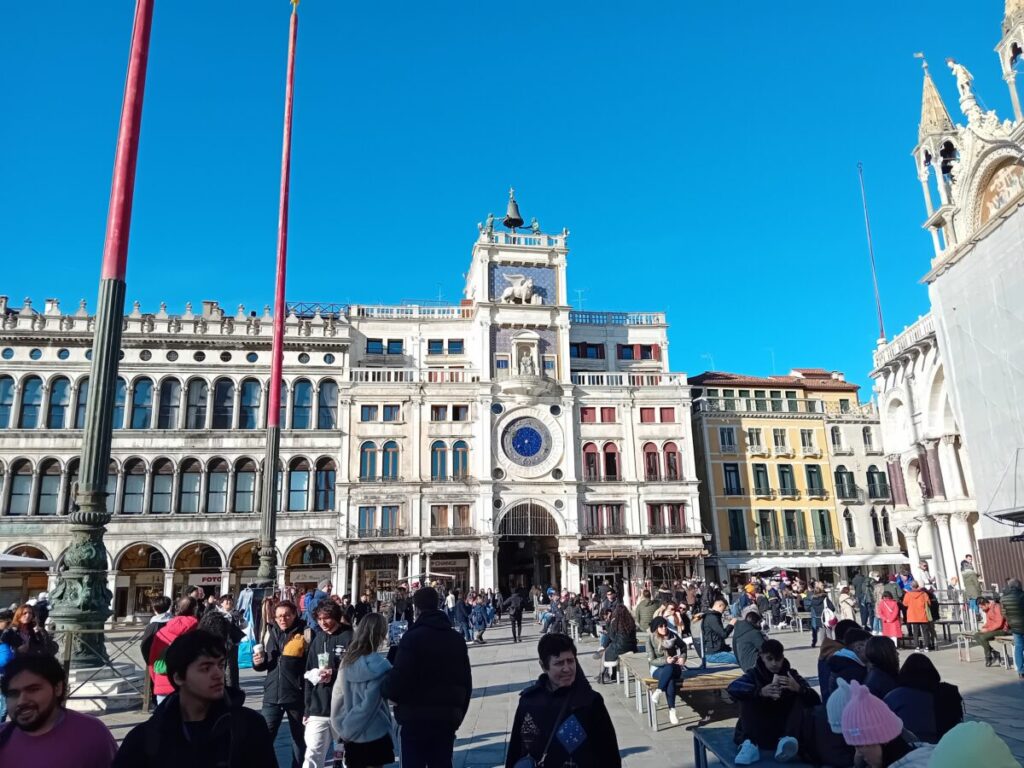
Madame Giaretta, a lifelong resident of the Rialto neighborhood in Venice, is worried. "We need to think about the future of tourist flows because a real city cannot continue to lose residents while attracting more and more tourists. Its economy cannot depend so heavily on tourism." Despite the relatively low temperatures on this late spring day, visitors are everywhere: in bars, on bridges, in supermarkets and restaurants, on vaporetti heading to the Lido or Burano, and in bookstores and churches. In the alleys leading to St. Mark's Square, you can hear Spanish, English, French, Hindi, Danish, and Arabic. Many in Venice make their living from the daily influx of wealthy "international tourists" from the United States and the Middle East seeking gourmet cuisine and frenzied shopping, as well as backpackers from all backgrounds who generally settle for a sandwich and a beer from the supermarket.
"Tourism in itself is not bad, it just needs to be managed. But it is necessary. Here in Venice, we can't live without tourists, as we saw during Covid-19," observes Massimo, owner of a newsstand in the Giudecca neighborhood. But while tourist flows can be managed — the right-wing municipality in power since 2015 has indeed tried to do so with a system of regulated access and an "entry fee" — there is a crisis that Venice can hardly manage alone: the climate crisis.
Luca, who describes himself as "proud" to vote right-wing, says, "The climate has been changing for millennia. I believe that global warming is just a hoax. Even if there were some truth to it, it would be pointless to worry about it. It's something that won't happen for another hundred or two hundred years. We will all be dead by then." However, a recent scientific study coordinated by Piero Lionello, a professor of atmospheric physics and oceanography at the University of Salento, found that between 15% and 98% of the historic center could flood daily by 2100 unless suitable defense structures are built.
The climate crisis also worries many residents of Venice. This is the case for Allison Zurfluh, a Swiss artist who has shared her life between the “city of water” and Switzerland for ten years, and who co-founded the Barena Association to help protect the barenes, small low islands covered with vegetation that constitute extremely valuable ecosystems for biodiversity and carbon storage in the Venice lagoon. According to her, “public perception is dominated by the idea that Venice is sinking due to rising waters, because the idea of a city that sinks feeds a dramatic and romantic imagination. But few people realize that Venice exists within a delicate lagoon ecosystem for which the disappearance of the barenes, which help stabilize and protect the lagoon, weakens Venice's natural defenses and represents a major challenge for the conservation of the city.” In the current municipal campaign, these environmental and urban issues have become central themes.
Decisive Elections?
Many feel that the city is at a turning point, explains Mrs. Giaretta. A turning point that coincides with the municipal elections held on Sunday and today. The current mayor, entrepreneur Luigi Brugnaro, is highly appreciated by local merchants and entrepreneurs. The owner of a bar in Mestre, a Venetian locality on the mainland, assures: “I will undoubtedly vote for Simone Venturini”, the heir chosen by the right-wing coalition to take over from Brugnaro.
At 38 years old, with his friendly and clean-cut boy scout appearance, Venturini is the current Deputy for Social Cohesion. He promises to focus on youth, innovation, and social cohesion “to attract and retain an active and dynamic citizenship.”
On the other hand, the center-left opposition has chosen Andrea Martella, 57, regional secretary of the Democratic Party, as their candidate. With an almost Christian-democratic profile, laconic, during the visit to one of the most problematic neighborhoods of Mestre, he listens attentively to the residents who came to meet him and asks brief and precise questions. Martella is favored in the polls, and Alleanza Verdi Sinistra (Avs), a left-wing ecological alliance supporting his candidacy for mayor, also promises to achieve a good result.
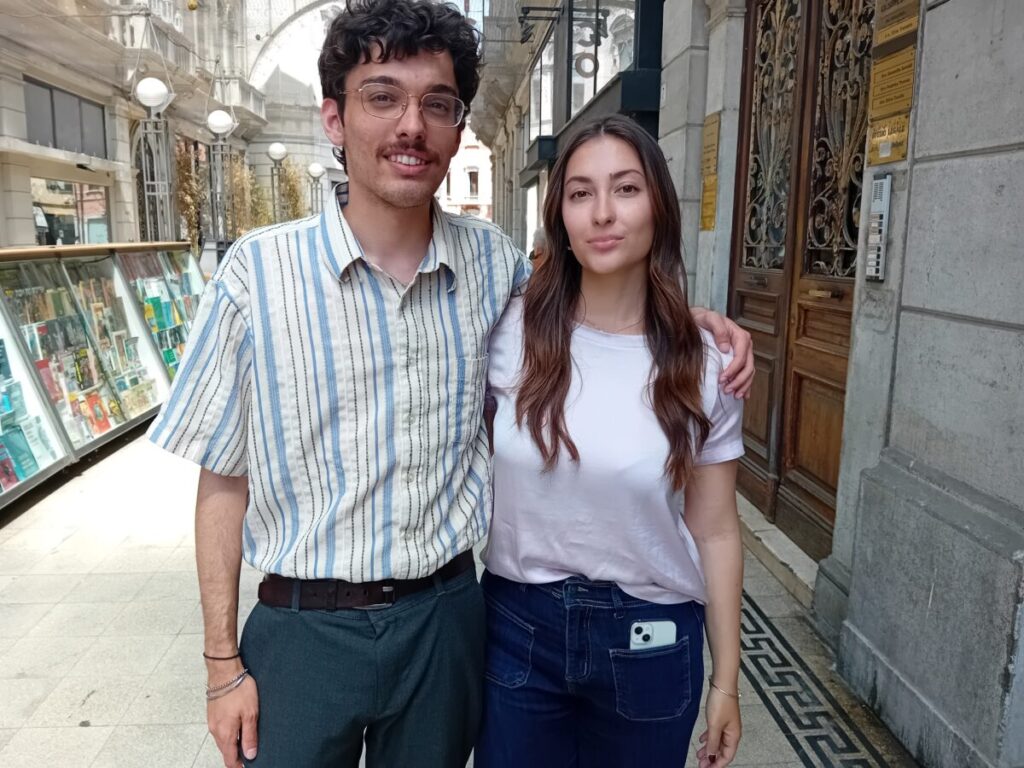
While at the national level Avs sometimes adopts positions that seem questionable to many progressives — for example on rearmament and support for Ukraine — at the Venetian level the alliance stands out as a force of proposal. Thanks also to young activists like Giacomo Cervo, 25, and Sofia Martelozzo, 21, both candidates for the city council. Among their main themes are the climate crisis and the right to housing: “For us residents, it has become almost impossible to access housing at affordable prices because almost all owners now dedicate their properties to tourism”, explains Martelozzo.
“Among our proposals is a project for municipal management of short-term tourist rentals, modeled on systems already experimented in Lisbon and several cities in northern Europe to regulate short-term tourist rentals”, explains Cervo. “In this way, the municipal administration could allocate part of the income to social housing.”
Martelozzo fears that the climate crisis will eventually destroy Venice. That is why, she assures, “we are betting on ecological transition policies, notably by rehabilitating old industrial areas now abandoned, like Porto Marghera, for investments in favor of renewable energies.”
For Cervo, engaging in politics was the response to a “almost vital need, for me and other young people, to bring about change and create opportunities for our generation. We want to be able to find quality employment and seek housing in a real estate market distorted by tourist rentals.” Many hope that these elections will bring about change, primarily in tourism management. “My humble opinion”, declares Zurfluh, “is that mass tourism as well as extreme luxury tourism should be limited. On the other hand, policies supporting residents and workers should be encouraged. Venice must remain a living city, and not become just a tourist destination.”
For her part, Madame Giaretta hopes that the next municipality will be more open to listening and collaborating with civil society. “The administration of the past eleven years has truly severed ties, trying to open a dialogue was like hitting a wall. And associations have suffered from it.”
*The Italian municipal elections of 2026 will take place on May 24 and 25, 2026 for the first round and on June 7 and 8, 2026 for the second round
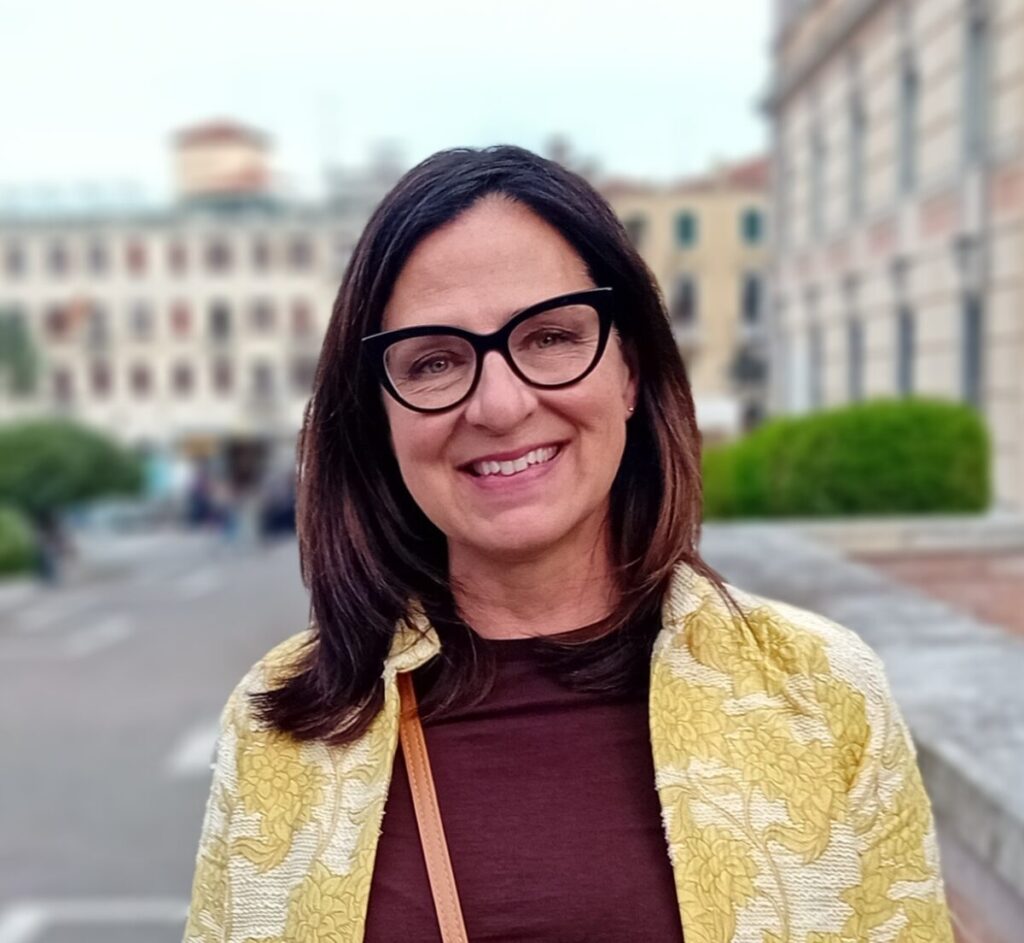
Allison Zurfluh is a Swiss contemporary artist whose work explores the landscapes and cultural heritage of the Venetian lagoon. She is also the co-founder and president of the Associazione Barena, which aims to contribute to the preservation of the northern part of the lagoon, particularly its natural ecosystems and traditions, through innovative projects and collaborations with researchers and other civil society organizations.
Cover photo: the historic center could be flooded every day by 2100 © Valentina Saini