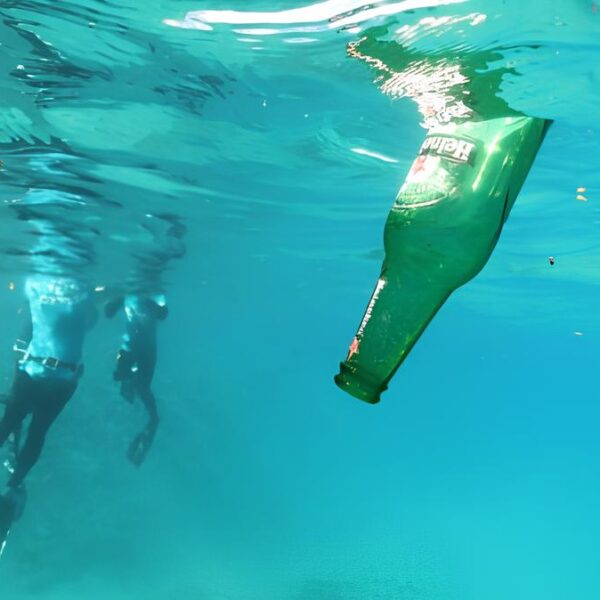
During one week, dozens of freedivers, kayakers, and volunteers mobilized around Marseille to remove 2.2 tons of waste from the seabed. Bottles, tires, bumpers, and plastics were brought up during this operation led by Team Oxygen with several local associations. Beyond cleaning, these collections also aim to raise awareness about the waste accumulating in the sea and to advocate for a different relationship with the coastline and living organisms.
AI Index: Mediterranean Knowledge Library
In Marseille, freedivers clean the seabed
22-med – May 2026
• Around Marseille, Team Oxygen and several associations removed 2.2 tons of waste from the seabed.
• Beyond collection, depollution becomes an act of awareness and restoration of life.
#marseille #sea #waste #freediving #pollution #coastline #mediterranean #ecosystem
In Les Goudes, a neighborhood of Marseille, between swimmers and pleasure boats, groups of divers are active in the water. Thick wetsuits on their bodies, masks and snorkels on their heads, they take a deep breath, fill their lungs with oxygen, before diving below the surface. Two kicks of the fins are enough to have their noses in the mud. Bodies glued to the bottom, they glide in search of debris to collect.
On this hot Saturday, these freedivers are not here to observe marine life, but to clean the polluted depths of this idyllic place. For hours, breath after breath, they bring up hundreds of bottles and cans, tires, a car bumper, and even a safe, whose treasure has disappeared. "At first, there's a sense of shock when you see the amount of waste to collect. It never seems to stop. But it's usually quickly offset by the fun aspect of it. Even in a polluted port, you still get the sensations that water provides", shares freediver Coralie Tripier, who is participating in this operation. Around them, kayaks retrieve the slimy, black, and nauseating objects and deposit them on the quay with teams that sort and characterize them. The waste piles up, attracting the attention of hikers. "This moment allows us to interact with people, to raise awareness. We especially saw it during our collections at the mouth of the Huveaune and at the Mucem", explains Karim Saari, a freediver engaged for ten years in sea depollution.
Waste brought up from the depths of the calanques
Karim Saari is the vice-president of Team Oxygen, the freediving association behind this week-long waste collection initiative around Marseille. For the Goudes stage, there were more than twenty freedivers along with about ten kayakers and people on land to collect and analyze 363 kilos of trash. Enough to allow an entire marine ecosystem to breathe better. The freedivers combed the entire Marseille harbor, from the calanques to Corbières beach, to remove 2.2 tons of waste from the water, a sad record for the association since the creation of this operation. This is the fourth year that the association has mobilized to clean up. After cleaning the Côte Bleue, the Frioul Island, and the Calanques National Park, the team decided to make a strong impact in the heart of the city, notably to show the extent of the problem in a documentary made over the week, which will be released in 2026.
Associations united on the ground
On the ground, Team Oxygen was not alone. Many other associations provided help to recover the waste, in small boats or kayaks, to categorize it, but also to raise awareness among citizens.
“This year, we wanted to highlight other associations in front of the cameras because many do enormous work, but in the shadows. Like Team Ava or Boud’mer,” explains Karim Saari. Members of MerTerre, 1 Déchet par Jour, Clean My Calanques, Sauvage, Plastic Odyssey, Merveille, and Recyclop also participated. Whether through land or sea collection, or through the reuse and valorization of waste, all act against a major problem in their community. The third dirtiest city in Europe, Marseille is often criticized for its laborious waste collection and the pollution of its beaches after heavy rains or following garbage collectors' strikes.
Reducing waste before it reaches the sea
Faced with this situation, civil society is mobilizing but also demands more action from businesses and public authorities. “It would be good if the city organized collection days too or if incivilities were more penalized,” reflects Karim Saari, who also proposes the installation of nets at the mouth of the Huveaune to prevent waste from ending up in the sea. In 2025, the City of Marseille instituted a collection in the first meter of water on the beaches.
For her part, marine biologist Isabelle Poitou would like more support for the already exhausting work done by associations, who “give their lives to prevent waste”. “We could, for example, imagine the implementation of reusable containers for lunch. Zero waste initiatives supported by municipalities to make them accessible to small budgets,” enumerates the director of the MerTerre association, which fights for waste reduction through characterization.
Collecting to protect marine ecosystems
She was precisely present at Les Goudes to sort and categorize the waste. An essential action to conduct investigations, have precise information, identify the sectors from which the waste originates, and target actions. As the sun sets after hours spent around the waste, the teams grow tired; especially mentally. Because the collection could be endless, as the seabeds are polluted—and will always be more so. The OECD predicts that global plastic production will reach 1 billion tons before 2050, whereas it was 500 million tons in 2024, thus increasing emissions. "We are under the pressure of a system that continues to produce more and more. But these actions are not useless," says Isabelle Poitou. After more than thirty years dedicated to fighting waste, she maintains the same determination. "Every octopus, every wrasse has the right to live in a clean environment. An object will degrade into microparticles and may lead to the death of an animal," continues the biologist. "Picking it up is an act of restoring life."
Despite the fatigue faced with the amount of waste, this is precisely what the freedivers try not to forget. "Faced with a sense of helplessness, we can act. Even if I remove a few pieces of waste, it will always be less," testifies Coralie Tripier from Team Oxygen. "It's also a way to give back to the sea that welcomes us."
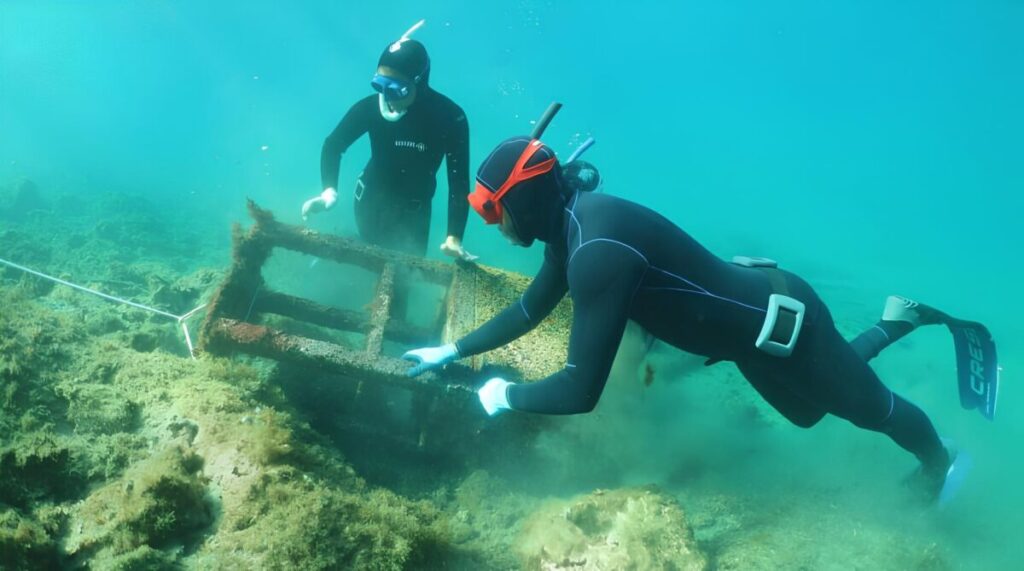
Featured Photo: Next to the Mucem, Team Oxygen removed 509 kilos from the water, including hundreds of Heineken beer bottles. ©Karim Saari