Faced with earlier and more intense droughts, several Mediterranean territories are forced to reassess their relationship with water. In Morocco, agricultural choices question the sustainability of an export-oriented model. In Tunisia, the advancing desert is already weakening lands, oases, and rural populations. In southeastern France, communities are now investing in more frugal resource management. Three different situations that tell the same urgency, to continue producing without depleting water.
This article is a summary of three articles published in 22-med, available in the 11 languages used on the site.
- The contradictions of water management in the agricultural sector – Adèle Arusi – Morocco
- In the southern Sahara, water is scarce and the desert continues to gain ground – Lilia Blaise – Tunisia
- How southeastern France is preparing for drought episodes – Olivier Martocq – France
In the Mediterranean, drought is no longer just a seasonal threat. It already forces territories to arbitrate between agricultural uses, population needs, and resource preservation. From Morocco to Tunisia, to southeastern France, the responses differ, but all pose the same question: how to continue producing without depleting the available water?
Producing more and more, with ever scarcer water
In Morocco, drought is no longer an exceptional episode but a lasting reality. In 2025, the country entered its seventh consecutive year of water deficit, while dams reached historically low levels. Yet, the agricultural model remains largely based on export crops that are particularly water-intensive, such as watermelons, avocados, or tomatoes. The agricultural sector alone accounts for nearly 87% of the country's water withdrawals.
To respond to this growing pressure, authorities are accelerating the development of desalination plants, water transfers between basins, and the reuse of wastewater. Technological solutions deemed essential to secure urban supply, but which do not address a fundamental question: should we continue to produce in the same way when the resource is becoming scarce? Several researchers advocate for a gradual shift towards less water-intensive crops and better valorization of rain-fed agriculture, to sustainably preserve water resources.
When the desert becomes a reality
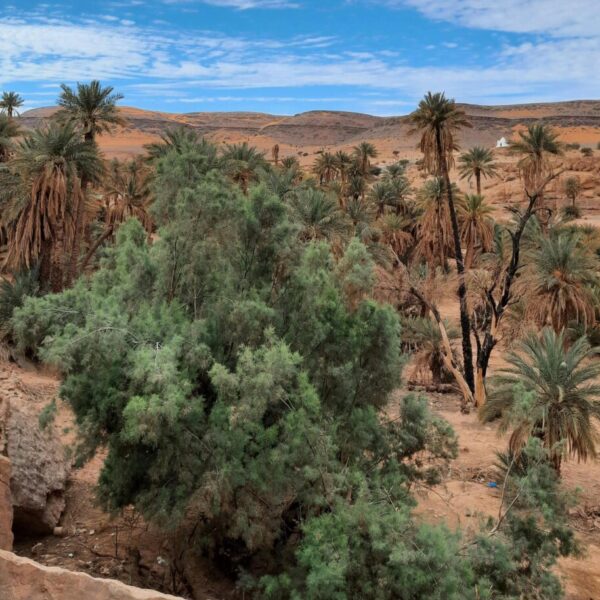
In Tunisia, the consequences of water scarcity are already visible. In the south of the country, desertification is advancing, agricultural lands are retreating, and oases are struggling to maintain their balance. Specialists now estimate that nearly 80% of the soil is threatened by aridity. This development weakens both agricultural activities and rural populations, who face declining resources and sometimes difficult access to drinking water.
In response to this situation, initiatives are multiplying: land restoration, creation of a green belt, revitalization of ancestral water collection and sharing techniques in the oases. But for many experts gathered at the Désertif'actions summit in Djerba, these efforts remain insufficient in the face of a crisis that has become structural. The scarcity of water now extends beyond Tunisian borders, as evidenced by the cooperation initiated between Tunisia, Algeria, and Libya around the management of the large Saharan aquifer.
Learning to manage the resource differently
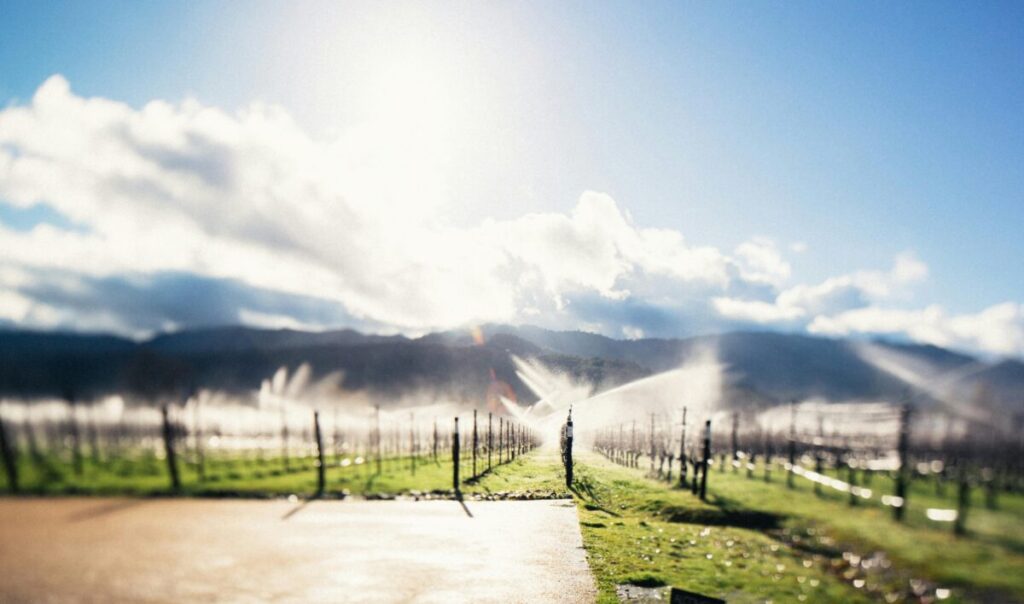
In the southeast of France, communities have chosen to anticipate rather than endure. Launched after the droughts of 2022, the Blue Gold Plan is based on a simple idea: every water saving counts. Modernization of irrigation networks, improvement of governance, reuse of treated wastewater, knowledge of underground aquifers, and support for farmers towards more sustainable practices are the main axes of this regional strategy.
The initial results show that there is still significant room for improvement. Thanks to digital tools, sensors, and better-managed irrigation, some farms are already managing to significantly reduce their consumption without decreasing their production. For the program's leaders, the goal is no longer to hope for a return to the past situation but to build a model capable of withstanding droughts that are expected to become more frequent. An approach that could inspire other Mediterranean territories facing the same challenges.
A shared Mediterranean urgency
Around the Mediterranean, responses differ but the observation is shared. Water is no longer a resource considered as guaranteed. Between questioning agricultural models, adapting territories, and new forms of governance, these experiences show that preserving the resource does not necessarily mean giving up production. They each outline, in their own way, the contours of a Mediterranean agriculture destined to sustainably cope with water scarcity.
Cover photo: in the south, the irrigation of date palms is only 70% ensured © Houari Besserir- Pexels