Facing climate change, resource scarcity, and rising energy costs, architecture is called upon to reinvent itself. Without compromising the quality of buildings, architects, researchers, and industry professionals are exploring new avenues. Rediscovery of traditional skills, transformation of existing structures, innovative materials, these initiatives show that the sector's transition involves both design methods and construction techniques.
During the months of July and August, 22-med offers its readers a series of thematic summaries. The objective is to explore a single issue through experiences, initiatives, and complementary perspectives from both sides of the Mediterranean. This article is a synthesis of three reports published by 22-med, available in the media's 11 languages.
Bioclimatic Architecture: Between Heritage and Energy Innovation, Edward Sfeir - Lebanon
The Architect Facing the Daily Challenge, 22-med editorial team - France
An Old Sawmill Invents Low-Carbon Concrete, Zoé Charef - France
Architecture is often associated with the creation of spectacular buildings. However, environmental challenges are now leading the profession to shift its focus. Before building more, it is now a matter of better utilizing what already exists, relying on local resources, and imagining buildings capable of consuming less energy throughout their lifespan.
Build Less, Transform More
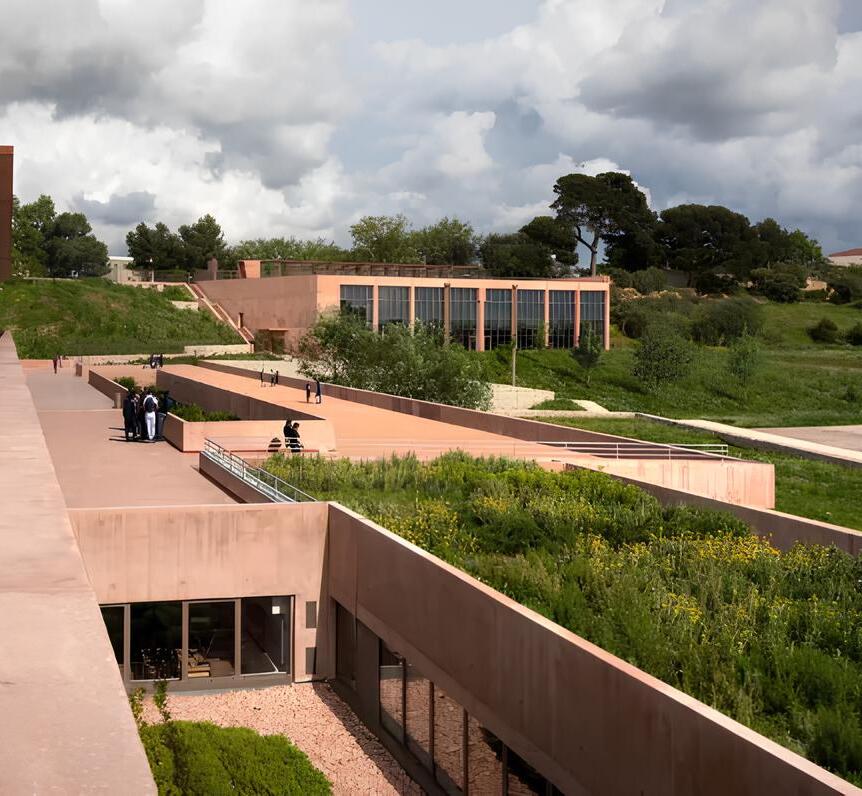
For Matthieu Place, architect and teacher in Marseille, the first response to the climate crisis is to limit new constructions as much as possible. Each new building mobilizes materials, artificializes land, and generates carbon emissions. Rehabilitation, conversion of vacant buildings, and transformation of existing spaces thus become major levers.
This evolution profoundly changes the profession. The architect no longer seeks only to create but also to adapt, extend, and evolve buildings to meet future needs. Reversibility of uses, equipment efficiency, and natural ventilation become criteria as important as aesthetics.
The Return of Forgotten Skills
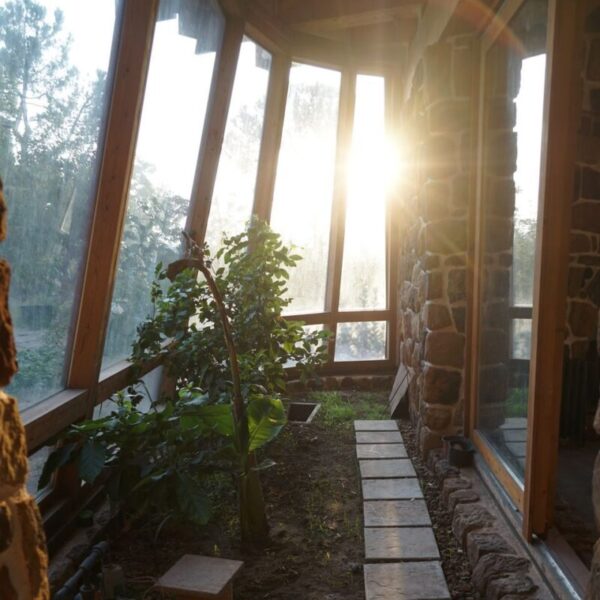
In Lebanon, the energy crisis accelerates this shift in perspective. In Baskinta, the Lifehaus designed by Nizar Haddad demonstrates that a house can combine ancestral techniques with current scientific knowledge. Stone, raw earth, sheep's wool, reeds, or recycled tires replace more energy-intensive materials, while the building's orientation, natural insulation, and air circulation significantly reduce heating and cooling needs.
This approach aligns with research conducted elsewhere in the Mediterranean. Ancient cities, the ksour of the Maghreb, or buildings constructed around patios show that past generations had already developed solutions adapted to high temperatures. These principles inspire a new generation of architects today who modernize them without altering their essence.
Materials to Reduce Carbon Footprint
The transition also involves industrial innovation. In Isère, CCB Greentech transforms low-quality wood, previously underutilized, into aggregates used to manufacture wood concrete. This material combines cement, water, and wood to create construction elements that are both load-bearing, lighter than traditional concrete, and capable of sustainably storing the carbon contained in the wood.
Produced from French resources and manufactured close to construction sites through a network of partners, these prefabricated walls also help reduce transportation, waste, and construction time. A hundred projects have already been completed using this technology.
A New Culture of Construction
These experiences show that sustainable architecture does not rely on a single solution. It combines design choices, better-suited materials, techniques inspired by local traditions, and a reflection on the entire life cycle of buildings.
Far from opposing innovation and heritage, these three initiatives show that they reinforce each other. Ancient know-how finds new relevance thanks to scientific knowledge, while industrial innovations seek to limit their environmental impact. A way of building that meets climate challenges without sacrificing comfort, architectural quality, or the growing need for housing.
Cover photo: the 160 m² Lifehaus combines tradition and science like the greenhouse that reuses organic waste © Nizar Haddad