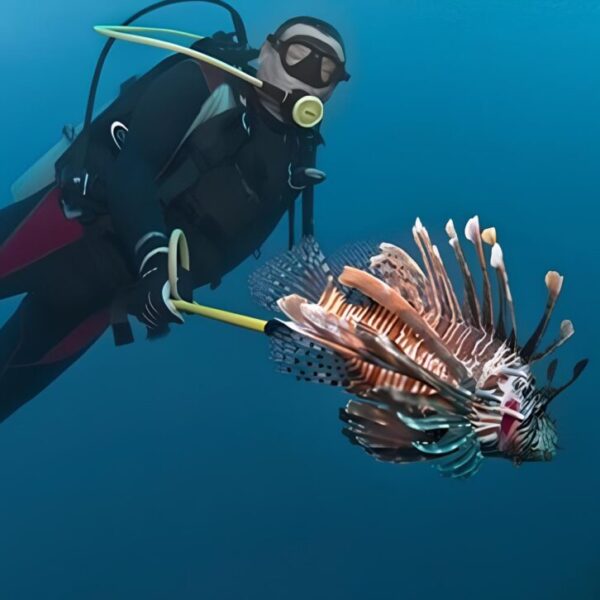
ESG Stories participated in a Masterclass by Elafonisos ECO, in collaboration with the Stelios Foundation, dedicated to the lionfish, which is causing real chaos in marine ecosystems. In the waters of the southeastern Mediterranean, this invasive species disrupts balances, worries fishermen and scientists, and forces a rethink of management methods. Between ecological threat and economic opportunity, its proliferation requires a reconsideration of responses.
22-med partners with the Greek media ESGstories and publishes a selection of articles on Thursdays for a scientific perspective on Mediterranean issues.
By Christina Yavasoglou
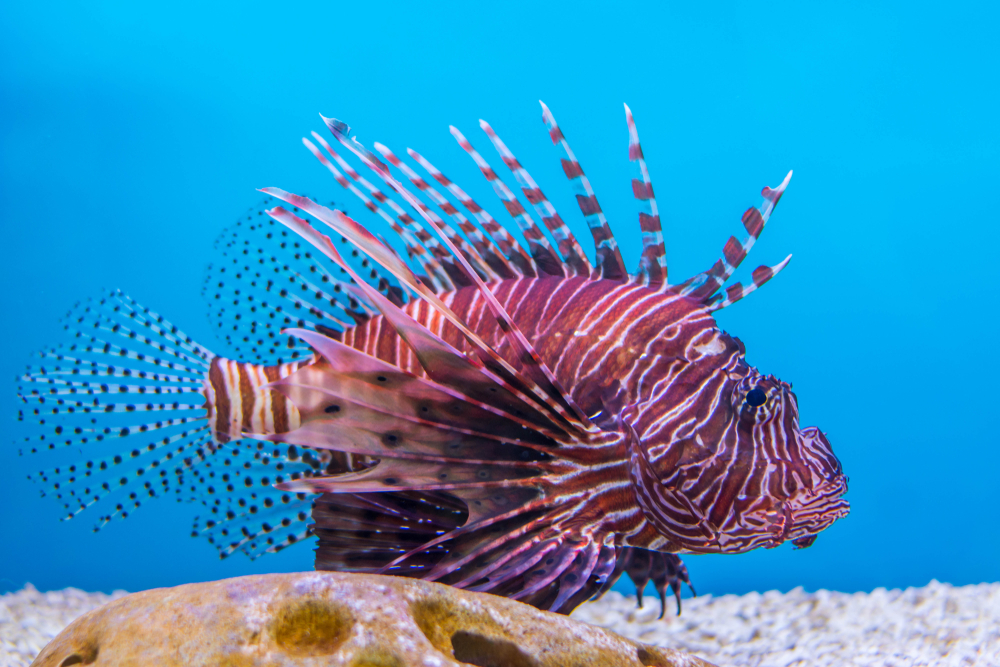
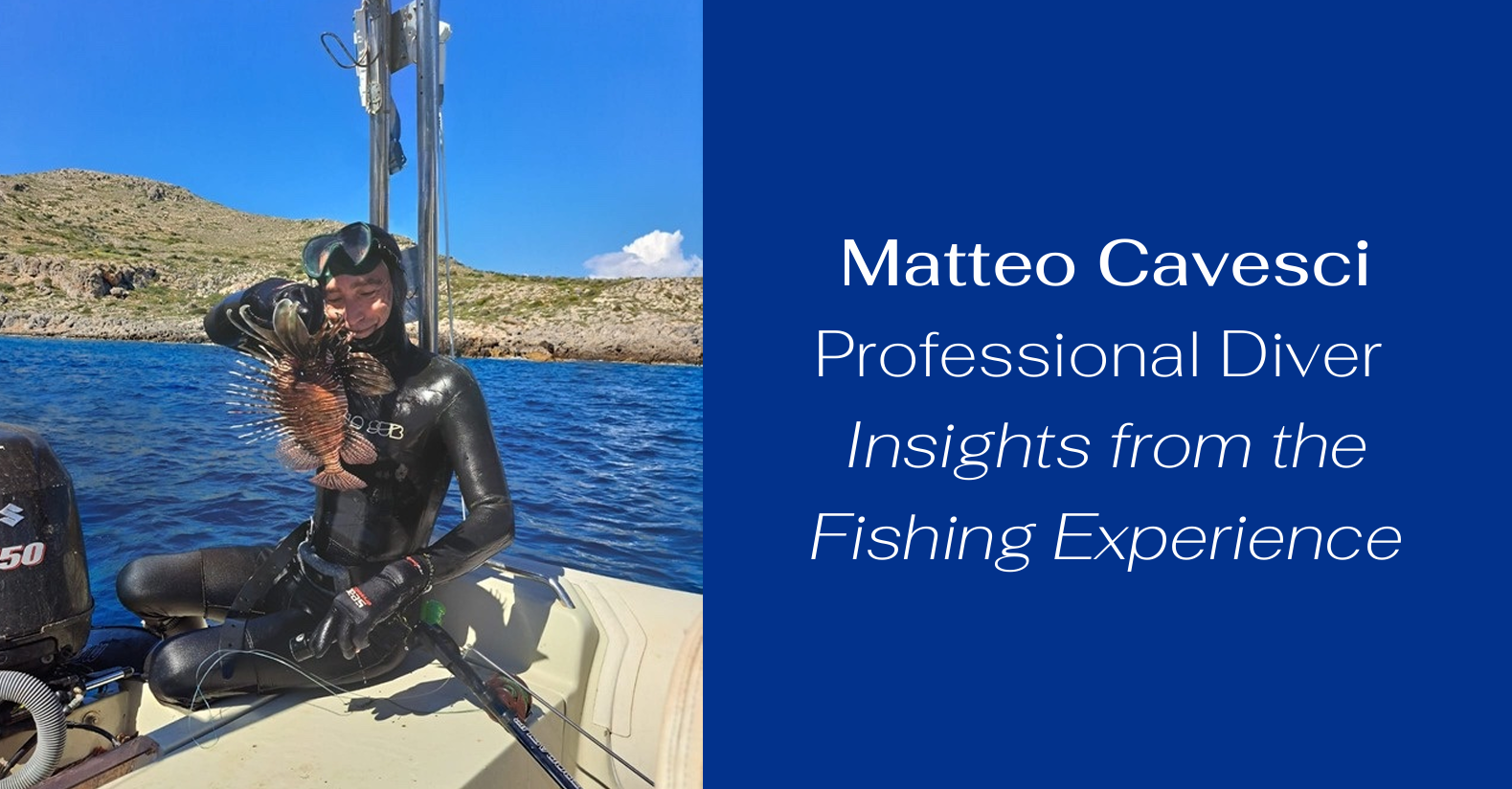
A small fish, weighing a maximum of 1.1 kg, with impressive fins that spread out giving it the appearance of a lion's mane, and adorned with whimsical black spots, has caused concern among marine ecosystem researchers. What could possibly worry us about this creature, and why is the rallying cry of environmental organizations "Catch it!" instead of "Protect it!"?
From the Indian Ocean to Greece
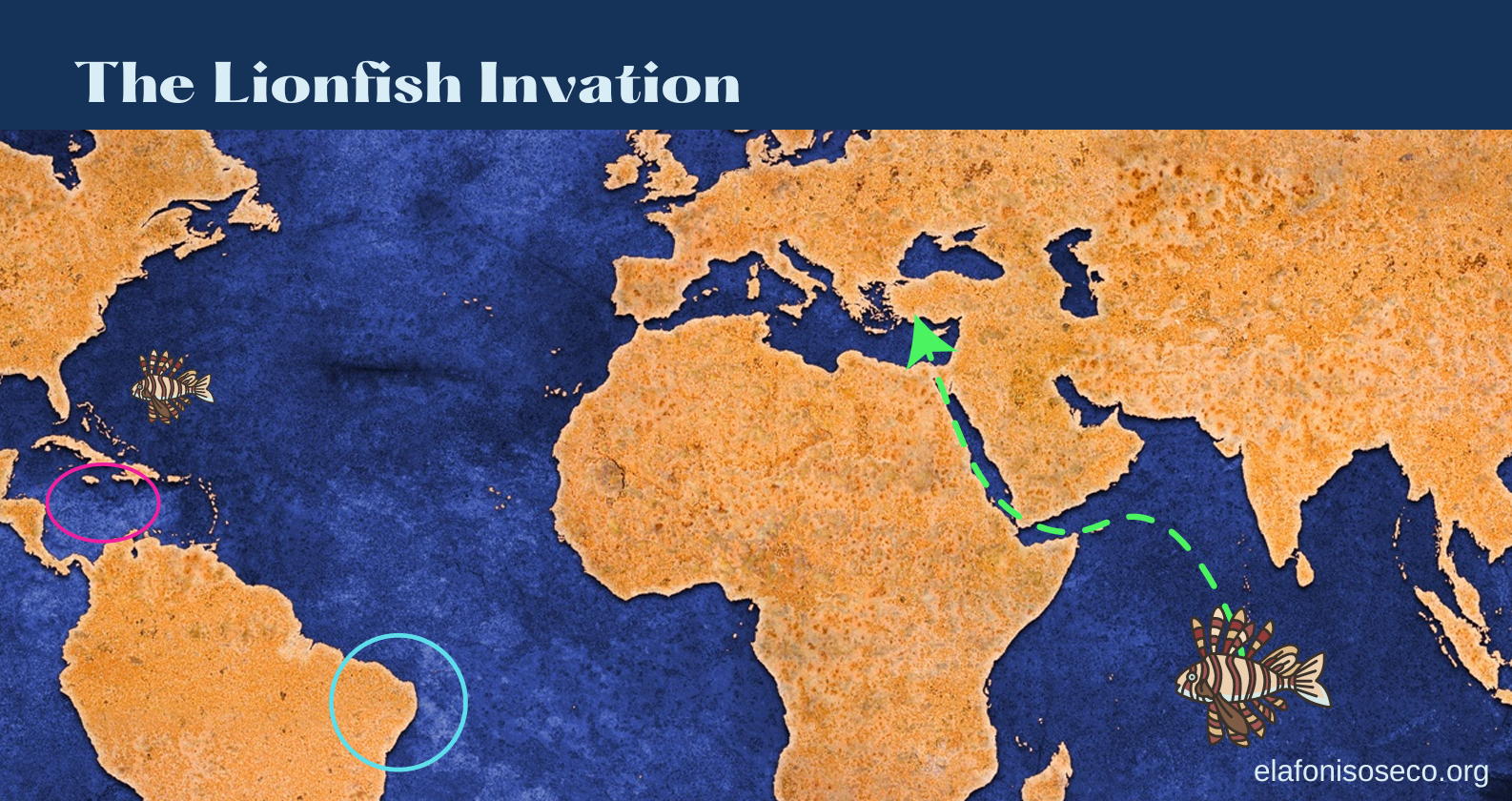
This is the — gradually — famous lionfish (or flying scorpionfish), which has appeared in recent years in the seas of southeastern Mediterranean, causing disorder in the marine ecosystem. The opening of the Suez Canal, along with the increase in sea temperature related to climate change, has led the lionfish to leave its main habitat, the Indian Ocean, to move into other marine ecosystems. And it has succeeded! Today, it forms schools both in the Mediterranean and in the Caribbean.
As explained by marine biology doctor Théodoros Kampouris to ESG Stories: "This is an extremely adaptable fish, which, thanks to the venom in its fins, but also to a morphology that allows it to engulf small fish, evolves with total assurance in the waters where it moves."
Indeed, the lionfish possesses venom, which it primarily uses to defend itself against larger fish. "This venom is not particularly dangerous to humans, but it is certainly painful. Its base being protein, the recommended treatment is to immerse the stung area in very hot water for 30 to 90 minutes so that the protein dissolves naturally," indicates Mr. Kampouris.
2 million eggs per year and tons of food!
The presence of this spectacular fish in the southeastern Mediterranean worries both fishermen and environmental organizations. The issue is that the lionfish feeds on enormous quantities of juveniles, decimating populations of fish such as groupers, sea breams, and shrimp. Notably, despite its low weight and small size, this fish remains... extremely voracious!
Mr. Kampouris specifies: "Lionfish consume amounts equivalent to 30% of their weight. Imagine that on a human scale to understand these extravagant volumes. It is not uncommon for fishermen to find lionfish literally stuffed!"
Furthermore, lionfish have a very high reproduction rate. Each female lays about 40,000 eggs every four days, totaling 2 million eggs per year! As a result, fishermen see their catches decrease, while environmentalists speak of "an immediate threat to the Mediterranean seas."
The lionfish… as an economic opportunity
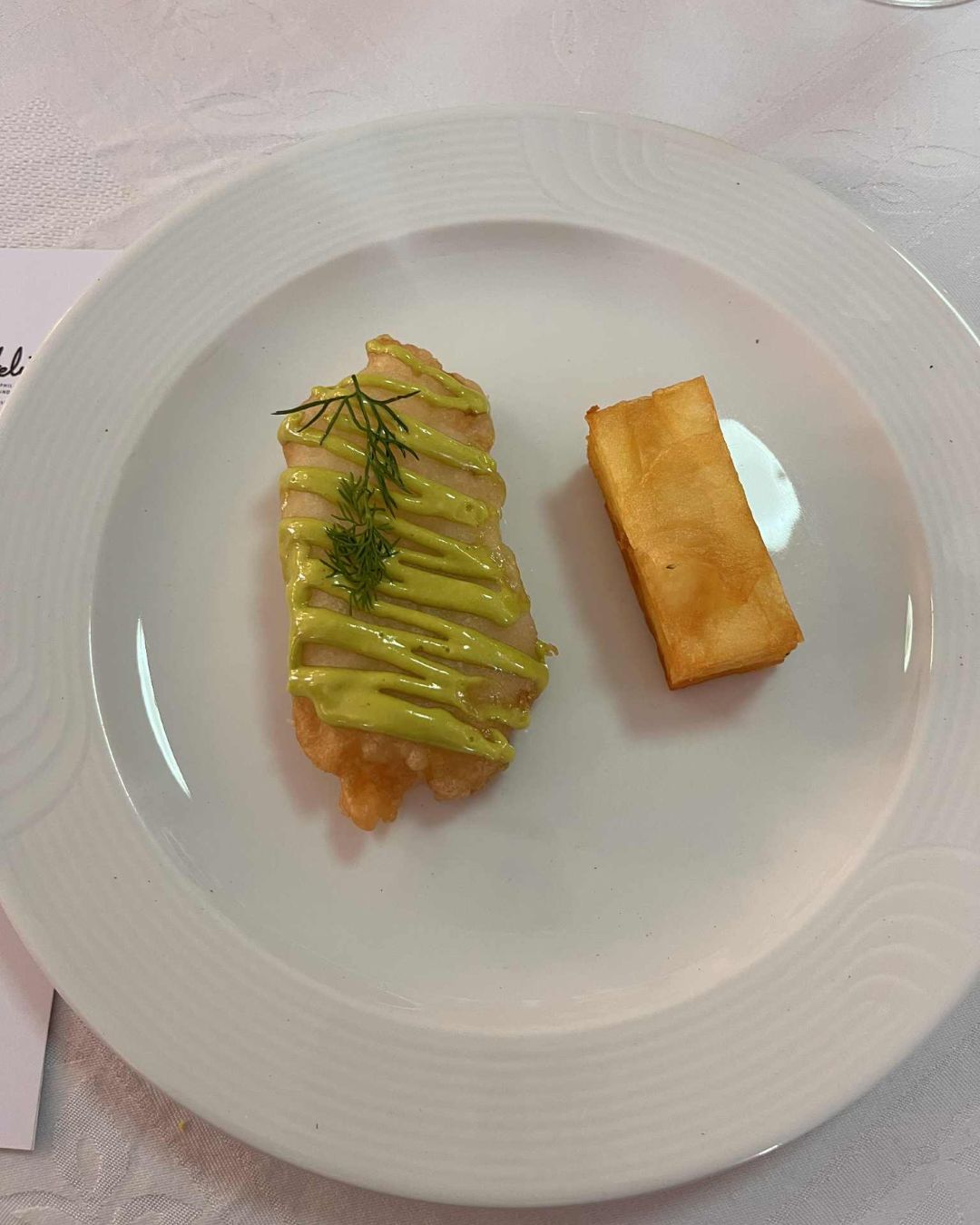
One of the active groups in Greece addressing this issue is Elafonisos ECO. The organization organizes an annual Masterclass dedicated to lionfish, in collaboration with the Stelios Foundation, founded by Stelios Haji-Ioannou, founder and owner of the "Easy" group. This year, ESG Stories participated, taking on the challenge of "lionfish tasting"!
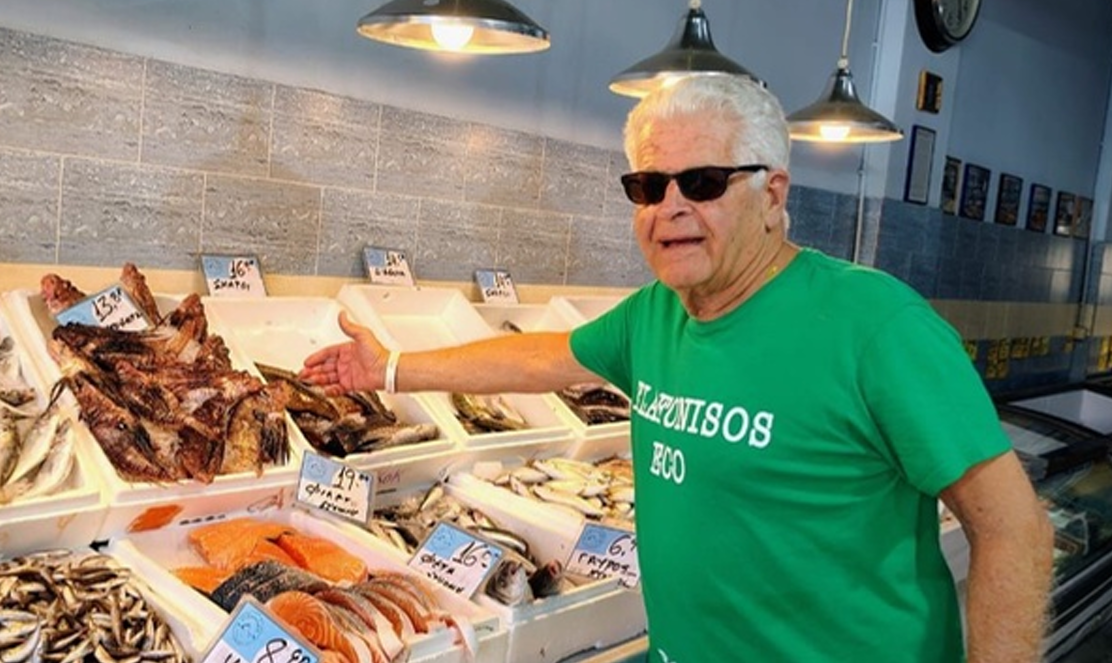
Elafonisos ECO has launched a broad campaign inviting the public to consider this "unwanted guest" as a business opportunity.
Their priority is to "set the record straight" on the issue of its consumption. Many naturally hesitate to eat a venomous fish. However, the lionfish is not only safe to eat: it is also a high-quality dish, with few bones, a clean fillet, reminiscent of the more expensive scorpionfish! It can therefore be widely used in Greek cuisine, including gourmet cooking.
They have also developed a series of proposals to enhance this fish through various transformations, to promote its large-scale fishing and generate profits. As Katerina Kokkinaki, marketing director of Elafonisos ECO, explains: "Lionfish contains a lot of collagen, which can be used in cosmetic products, and its unique body pattern can inspire jewelry."
Other avenues are currently being explored, including its use in animal feed, to give it added value and encourage its capture.
The Stelios Foundation on the path to sustainability
In recent years, the MY Klelia yacht, owned by the Haji-Ioannou family, has been made available to the Stelios Foundation as a training vessel. Each year, students and schools discover the sea and the tourism services related to this type of boat.
During the last Masterclass, students from BCA College learned about lionfish and how to cook it, thus helping to reduce public fear and limit environmental risk.
For his part, David Watson, trustee of the Stelios Foundation, states: "With the partnership of Elafonisos Eco, BCA College, and chef Ilias Kiazolis, we show how experiential learning and sustainable gastronomy can transform an environmental challenge into a solution. By learning to value lionfish, young yacht chefs, scholarship holders of the Stelios Foundation, protect the sea and support local communities."
A fish that needs to be learned to eat
This unwanted guest has certainly caused disorder, but in terms of taste, it has nothing to envy from other seafood products. Sooner or later, we will learn to consume it, to transform it, to value it — simply because nature does not ask for our opinion on the changes it imposes, especially in the midst of a climate crisis.
is a portal for information and journalism specialized in topics related to philosophy and ESG criteria, as well as digital transition.
An experienced editorial team ensures continuous coverage based on two main pillars:
Monitoring news, trends, developments, funding opportunities, and advancements in the field of ESG and the future of smart and innovative technology.
Highlighting individuals, initiatives, and businesses from all sectors of economic activity that have adopted and implemented this philosophy, generating positive results.