In the face of the silent collapse of marine life, Planète Mer advocates for a clear line: to act with stakeholders rather than against them, to produce field evidence, two parameters that allow for the transformation of public policies. Its General Director and co-founder, marine biologist Laurent Debas, defends a pragmatic ecology, rooted in practices. From participatory science to cooperation with fishermen, the NGO deploys concrete solutions in the Mediterranean to restore the balance between human activities and marine ecosystems.
Interview conducted by Olivier Martocq
AI Index: Mediterranean Knowledge Library
Planète Mer, the proof through the field to defend the sea
22-med – March 2026
• Planète Mer relies on participatory science and cooperation with fishermen to better protect marine ecosystems.
• In the Mediterranean, the NGO advocates for a pragmatic ecology based on evidence, mediation, and collective action.
#sea #mediterranean #biodiversity #fishing #ecology #participatoryscience #publicpolicy #ngo
We are often classified among environmental NGOs. That’s true. But our uniqueness lies elsewhere. The mission we have set for ourselves is simple to articulate, but demanding in its implementation. It consists of developing very concrete solutions to restore a sustainable balance between marine life and human activities.
Reconcile uses and protection of the sea
This balance is currently broken. Biodiversity is collapsing, uses are intensifying, conflicts are multiplying. And yet, the solution will come neither from exclusion nor from systematic opposition between those who use the sea and those who live from it. It will come from co-construction between two populations presented as antagonists.
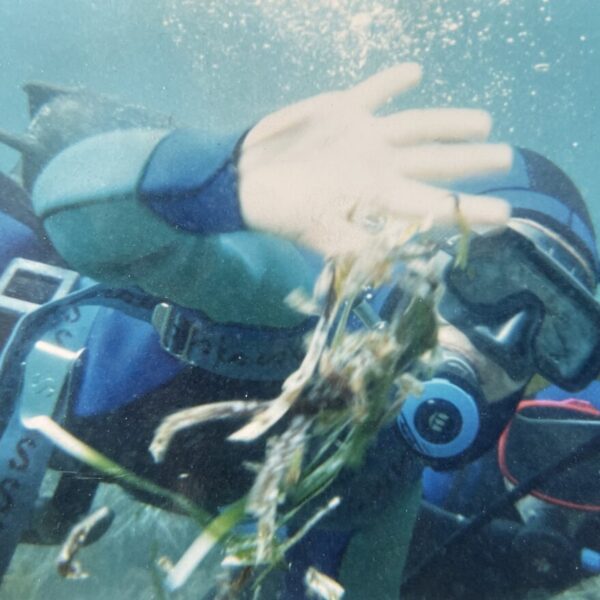
At Planète Mer, we have therefore structured our action around three verbs: protect, manage, restore. Three priorities. Three urgencies. Protecting is not about decreeing. It’s about knowing. And to know, we have chosen participatory science. With our BioLit program, we have mobilized over 35,000 citizens along the coast. Children, families, divers, walkers. All capable, each at their own level, of producing useful data for researchers. A photo taken on a beach, an observation underwater, a simple protocol followed for a few minutes allows us to map the state of biodiversity.
This data, processed with the National Museum of Natural History, reveals invisible phenomena such as the impact of nitrates on the diversity of small gastropods in algae. Or the emergence of invasive species on our coasts. We have identified the arrival of an invasive crab (Percnon gibbesi) in the continental Mediterranean. These are weak signals. But they are the ones that announce shifts.
To protect is therefore primarily to make visible.
Act without opposing ecology and economy
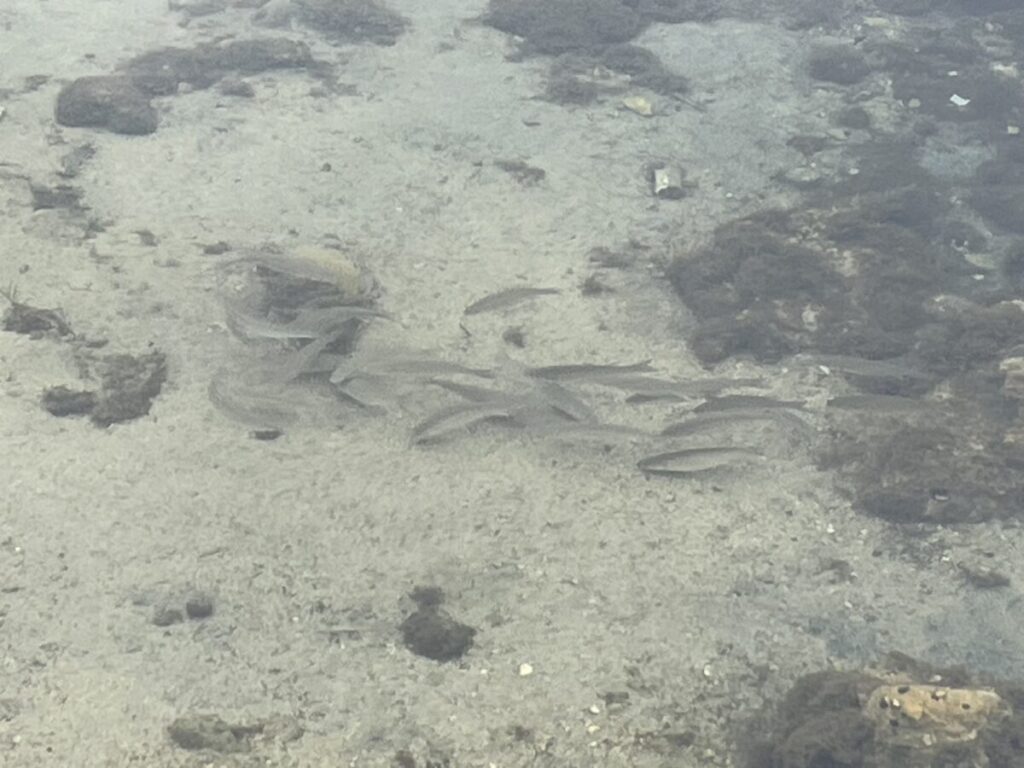
Opposing fishermen and ecologists is a dead end. And it’s an easy way out. With the PELA-MED program, we work directly with Mediterranean fishermen, particularly in Var, in the immediate vicinity and in the Port Cros National Park. Not against them. With them. We start from a simple observation: more and more regulatory constraints compel fishermen to manage a resource… that we know little about. Scientific data is lacking on many non-commercial species. The result: blind management. We have therefore co-constructed study programs on species such as sea urchins or red mullet, a fish from the rocky Mediterranean seabed, sensitive to fishing pressure and indicative of the state of coastal ecosystems. We are revising with them regulations that are sometimes outdated. We are developing tools, including digital ones, to make the norms accessible, understandable, and applicable. But above all, we play a mediation role. Between scientists, administrations, and professionals. Because ecological transition is also a matter of translation.
Managing is not about constraining. It’s about making possible.
Encouraging results in the Mediterranean
The sea is resilient. This is what should give us hope and responsibility. In the areas we have protected, such as the Calanques National Park off the coast of Marseille, monitoring shows a return of species and a reconstitution of balances. Fish circulate, recolonize, habitats regenerate. This is proof that regulatory measures work. And that the caricatured debate between protection and use is sterile. The botanist Francis Hallé theorized this maxim: “If you love nature, leave it alone.” Yet, we must create the conditions to leave it alone intelligently.
There is a growing awareness. But it faces a reality: the sea is still perceived as a space for consumption. A backdrop. A recreational area on the water with a fleet of over 500,000 pleasure boats along the French coasts. And, along the coast, beaches and marinas designed to please mass tourism. That’s why we emphasize individual commitment. Transforming a walker into an observer, a user into an actor: that’s the whole challenge of our participatory programs. But that won’t be enough. We need more ambitious public policies. Strengthened controls. Massive education. The transition cannot rely solely on the goodwill of those who feel concerned.
Mobilize public policies
Our annual budget is around one million euros. We have about ten employees. Today, our funding relies mainly on private funds: about 70% from foundations, 15% from individual donations, and only 15% from public funding. This imbalance says something. It shows an acceleration of awareness in the private sector, particularly since the Covid crisis. Foundations are emerging, companies are committing, citizens are donating. But it also raises a political question: can we sustainably protect a common good with so little public support?
The Mediterranean is a laboratory. Of degradation, but also of solutions. What we demonstrate on the ground is that pathways exist. That biodiversity can return. That uses can evolve. That actors can cooperate. But this requires one thing: moving away from postures. Ecology can no longer be a discourse. It must be a method. A method based on evidence, action, and the collective.
This is the ecology we defend. And it is the one that can still save the sea.
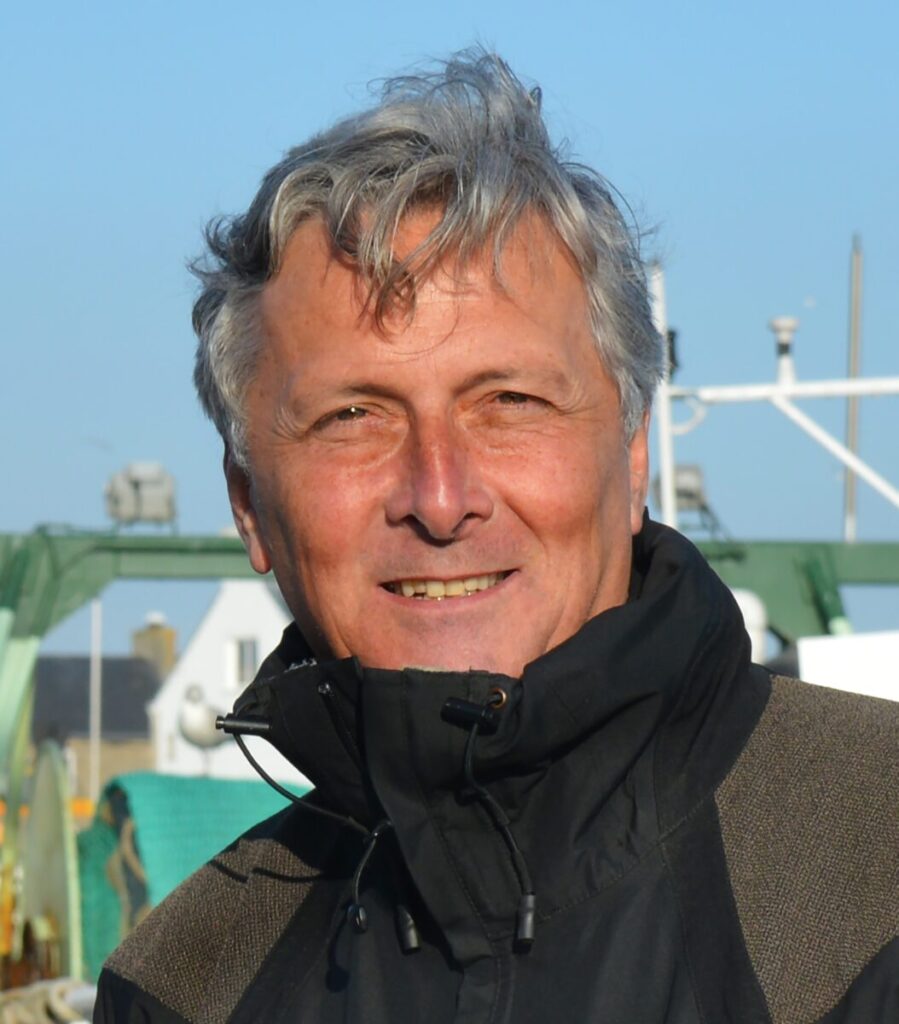
Laurent DEBAS
Holder of a PhD in Oceanology, Laurent DEBAS worked within the Regional Sea Office of the PACA Region, then as a United Nations expert at the FAO Regional Office for Asia and the Pacific in Bangkok, Thailand, on issues related to fishing, aquaculture, and coastal environmental protection. He then joined the International Relations Department of the Ministry of Agriculture and Fisheries in France to develop international cooperation between France and Southeast Asia. He was then recruited by WWF-France to create and develop the “Oceans and Coasts” team for more than 6 years. In 2004, he joined Jacques Perrin’s team as a scientific advisor and co-author of the film “Oceans.” Since the end of 2007, he has been fully dedicated to the non-profit association Planète Mer, of which he is the General Director and co-founder.
Cover photo: divers, walkers, fishermen, everyone can participate in the BioLit program © 22-med