In 2023, 13 million people visited one of the 400 memorial sites listed in France. From the D-Day beaches to former internment camps, these sites attract visitors seeking to understand history, find a family trace, or pass on a legacy to new generations. Gathered at the Camp des Milles, near Aix-en-Provence, professionals and institutional leaders questioned the future of this tourism faced with a major challenge: continuing to transmit when the last witnesses disappear.
AI Index: Library of Mediterranean Knowledge
When memorial sites take over from witnesses
22-med – June 2026
• From the Camp des Milles to the D-Day beaches, memorial sites become essential actors in historical transmission.
• Faced with the gradual disappearance of the last witnesses of 20th-century conflicts, museums, memorials, and historical sites are reinventing their modes of mediation and civic reflection.
#memory #tourism #history #heritage #transmission #education #citizenship #provence #france
"A soldier from the First World War would have been bewildered to discover that his battlefield has become a tourist site," notes Evence Richard, head of the Directorate of Memory, Culture, and Archives (DMCA) of the Ministry of the Armed Forces. While the idea of associating tourism and memory may seem incongruous, it responds to a change of era. The term "memory tourism" has only been used since the 21st century, with the rapprochement of ministries dedicated to Tourism and Veterans. However, as early as 1917, the Michelin company published battlefield guides for the families of combatants. And for a long time, the term "pilgrimage" applied to these excursions.
In the Provence-Alpes-Côte d'Azur region, this memory is embodied in several emblematic sites. The Camp des Milles, near Aix-en-Provence, is the only large French internment and deportation camp (between 1939 and 1942) preserved in its entirety. Further east, the Provence landing beaches recall the Allied operation of August 15, 1944, which contributed to the liberation of southern France. In Toulon, the Provence Landing Memorial extends this memory by retracing the operations carried out on the Mediterranean coast. These are all places that testify to the diversity of French memorial heritage and its transmission challenges.
A heritage that attracts millions of visitors
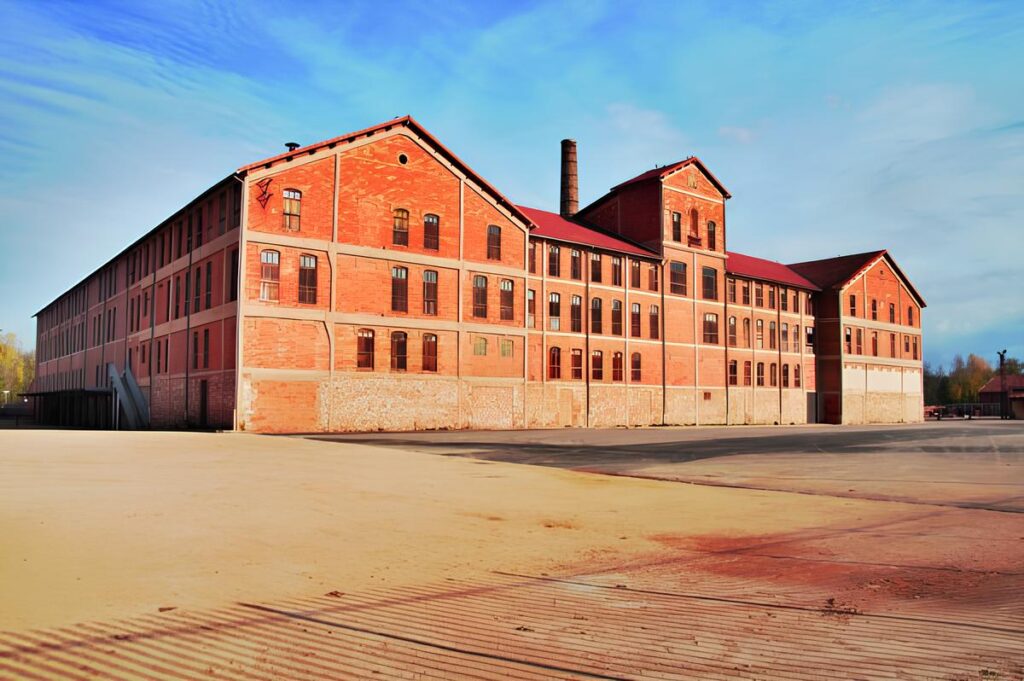
The Memory Tourism Meetings are an event where elected officials, project leaders, and professionals can share their experiences to enhance the promotion of these sites and the effectiveness of public policies. The 6th edition took place in early February 2026 at the Camp des Milles. It was an opportunity to recall the existence and educational significance of this internment and deportation camp set up in a disused brick factory. Between 1939 and 1942, out of some 10,000 people who passed through here, 2,000 never returned. In his introduction, Alain Chouraqui, president of the site, emphasized the importance, beyond memory, of civic reflection. He mentioned “an initiatory journey […], a scientific and cautious bridge between what happened and what could happen today. Citizenship encompasses many memorial issues.”
Memory tourism contributes to the enhancement of territories, culture, education, and the strengthening of the army-nation bond, introduces the Ministry of the Armed Forces' website, Chemins de mémoire. France, the scene of three major conflicts between 1870 and 1945, has a particularly dense memorial heritage. Museums, battlefields, cemeteries, monuments…, a significant part of which is maintained by the Ministry of the Armed Forces. Notably, there are 18 defense museums, 290 necropolises, and 2170 military plots in communal cemeteries, a thousand French burial sites spread over more than 80 countries, and ten major national memory sites. “A testimony of our history and a tribute to all the sacrifices made to defend France and ensure its freedom.”
These sites also attract an international audience, which accounts for about 25% of their attendance. Beyond their civic significance, they contribute to expanding the French tourism offer across the entire territory, in all seasons. With 7.1 million visitors last year, 41% of whom were international, Normandy remains the leading region for this type of tourism. It alone accounts for 5.3 million entries at memorial sites and six of the ten most visited memory sites in the country. Boosted notably by the celebrations of the 80th anniversary of the Landing, the attendance of sites in the region saw an 8.8% increase in 2024.
Visitors rarely there by chance
Complementary to the traditional tourism offer, memory tourism plays an important role in the development of societies and territories. It allows the public to better understand the past while participating in its civic and cultural enrichment; it also contributes to the economic and cultural vitality of the territories.
Nicolas Barret, director of the Verdun memorial, observes, however, that it “is characterized by short stays, sometimes a weekend. A stop on the vacation route.” A challenge is therefore to gain visibility by integrating into a tourism ecosystem. “Because the problem often is not the lack of interest, but the lack of information or access,” adds a participant.
“Memorial tourism stems from a voluntary approach. These are not sites that one visits by chance,” observes Mathilde Bernardet, a research officer in Memory Tourism at the DMCA of the Ministry of the Armed Forces and Veterans. There is often a family subject, a particular sensitivity. It is partly genealogical tourism, sometimes the journey of a lifetime. There can be a lot of investment and emotion.” Moreover, it can affect many people if we take the example of a Canadian soldier who would have about thirty descendants today...
When the last witnesses disappear
For a long time, memory was transmitted by great witnesses, but they are becoming increasingly rare. The First World War lost its last voice, its last "Poilu" (nickname for French soldiers of this war), Lazare Ponticelli, in 2008. Of all the wars that France experienced in the 20th century, by 2050 there will only be 500,000 veterans or surviving spouses left. This is a question raised by the documentary “After Them – Who Will Tell the Story?” by Joseph Romano and Jonathan Safir. Transmission occurs through three channels: family; education and teaching; memorial tourism. Hence the importance of maintaining and animating this heritage and network, which can be supported by labels such as the highly sought-after UNESCO World Heritage designation.
“The narrative must be modernized without distorting it,” points out Emmanuel Duval, Mediterranean delegate of Atout France. Finding new perspectives with museography, scenography”... And meeting the challenge of rigorous and accessible content for young audiences, as these sites are the subject of many school trips.
“Each generation has its memory, its memory codes, its ways of confronting it with current events that are completely different,” considers Piotr Cywiński, director of the Auschwitz-Birkenau museum. He illustrates this with the year 1969 in the United States, when veterans of the Normandy beaches paraded with their uniforms and medals to protest against the Vietnam War. Their children, born after the war, went to Woodstock, another form of protest for two generations working for the same cause, without realizing it.
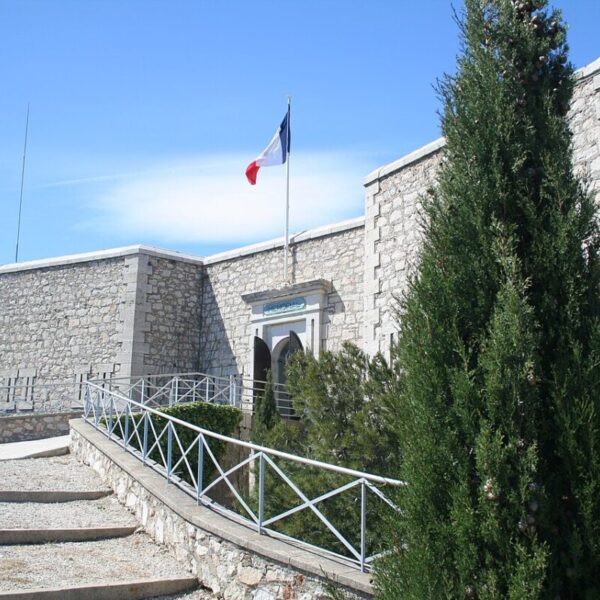
Cover Photo: Memorial of the Landing and Liberation of Provence, Mont Faron – Toulon © davric - Wikipedia