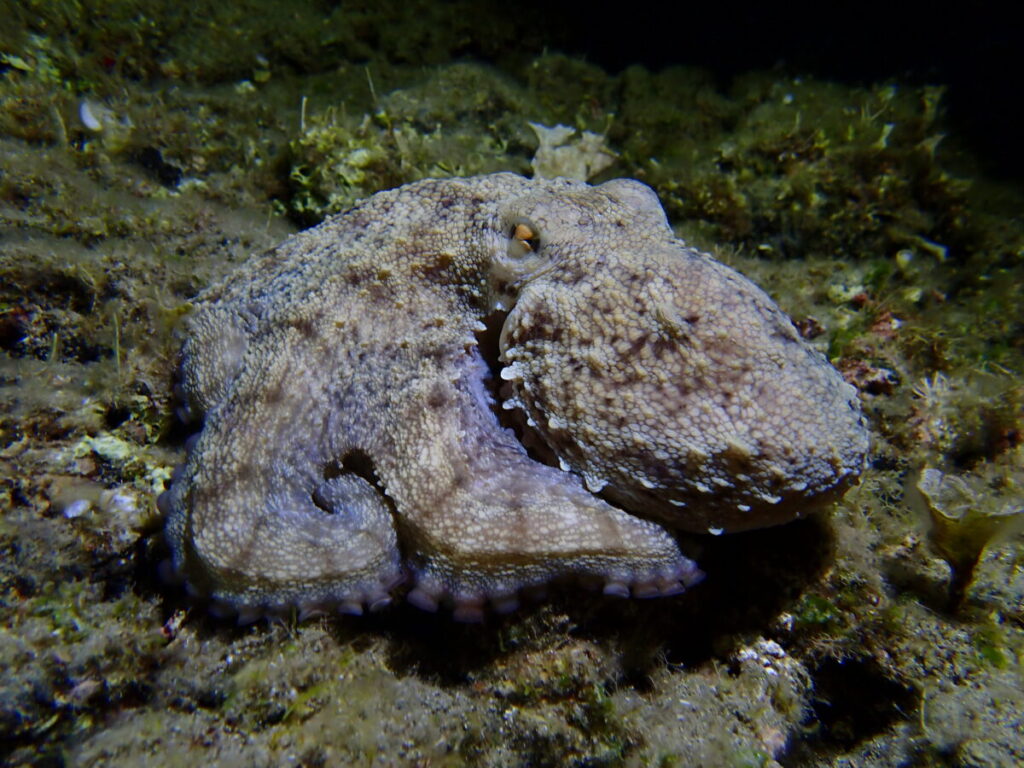
In the waters of the Adriatic, the invasion of the blue crab is disrupting mussel and clam farms. Faced with this invasive species from the Atlantic, researchers at the University of Bologna are experimenting with a new approach. Their Octo-Blu project relies on a natural predator of the crustacean, the octopus. Several tens of thousands of young specimens have already been released off the coast of Emilia-Romagna in an attempt to contain its spread.
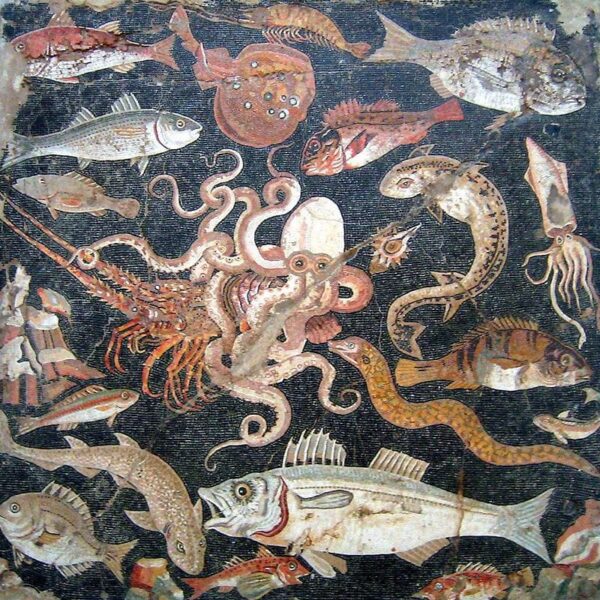
Italians love octopus, which they consider a delicacy, and serving it fresh is always a safe bet for a family lunch or a dinner with friends. It's a love affair that has lasted for centuries. It's no coincidence that the animal is at the heart of at least a hundred traditional Italian recipes, as well as some of the most beautiful mosaics and frescoes of antiquity. This is notably the case with the famous mosaic discovered in the House of the Faun in Pompeii and preserved at the Archaeological Museum of Naples, depicting the battle between an octopus and a lobster.
An unexpected ally
But beyond its culinary qualities, the octopus also fascinates with its astonishing abilities. Research conducted on this extraordinary invertebrate has highlighted its problem-solving capacity, as well as its excellent memory and skills long considered the preserve of vertebrates alone. Today, however, it is other qualities that interest fishermen and mussel and clam farmers in the Adriatic, the sea that separates the eastern coast of Italy from the Balkan Peninsula. They hope that this particularly skillful animal can help them fight against a formidable enemy proliferating in their waters, the blue crab.
Arriving from the Atlantic Ocean, probably transported by merchant or cruise ships, the blue crab has found favorable conditions for its proliferation in Italian waters. With serious consequences for shellfish farming. Italy is among the main producers of mussels and clams in the European Union, and the sector employs thousands of people. But since the proliferation of the blue crab turned into a true invasion around 2020, companies in the sector have been experiencing a severe crisis. In Emilia-Romagna, for example, clam farmers have lost up to 70% of commercially sized mollusks due to the voracious blue crab. In a lagoon in Veneto, about 90 km from Venice, production has collapsed by nearly 97%. Some companies have even been forced to close.
The gamble of biological control
An experimental project led by researchers at the University of Bologna is now betting on the biological control of this invasive species through its natural predator, the octopus.
Named Octo-Blu, it began in 2024. It involves, on one hand, observing how the blue crab feeds and reproduces, and on the other hand, studying the predatory activity of the octopus towards the crustacean, while improving breeding and reproduction techniques for octopuses in controlled environments. This summer, the project entered a new phase. Several tens of thousands of octopuses a few days old were released between June and August off the coast of Emilia-Romagna. The program plans to introduce between 100,000 and 150,000 into the region's waters in the hope that an increased presence of these predators will help reduce blue crab populations, against which the techniques used so far, from protective nets to fishing and marketing these invasive crustaceans, have proven ineffective.
As explained by Oliviero Mordenti, professor at the Department of Veterinary Medical Sciences at the University of Bologna, “the octopus is a predator capable of contributing to the control of the most abundant species. It is therefore a species of major ecological interest, playing an important role in regulating marine food chains.”
For his part, Alessio Mammi, regional councilor in charge of Agriculture and Fisheries in Emilia-Romagna, emphasized that the blue crab invasion “is a complex challenge and there are no simple answers. It is precisely for this reason that we must continue to experiment, as scientific research can bring forth new tools to tackle problems that were still unimaginable a few years ago.”
This new phase has just begun, so there is not yet data to evaluate the project's effectiveness. However, strategies like the one experimented with in the Octo-Blu framework could sustainably reduce the negative, sometimes even devastating, impact of invasive species.
A proven strategy
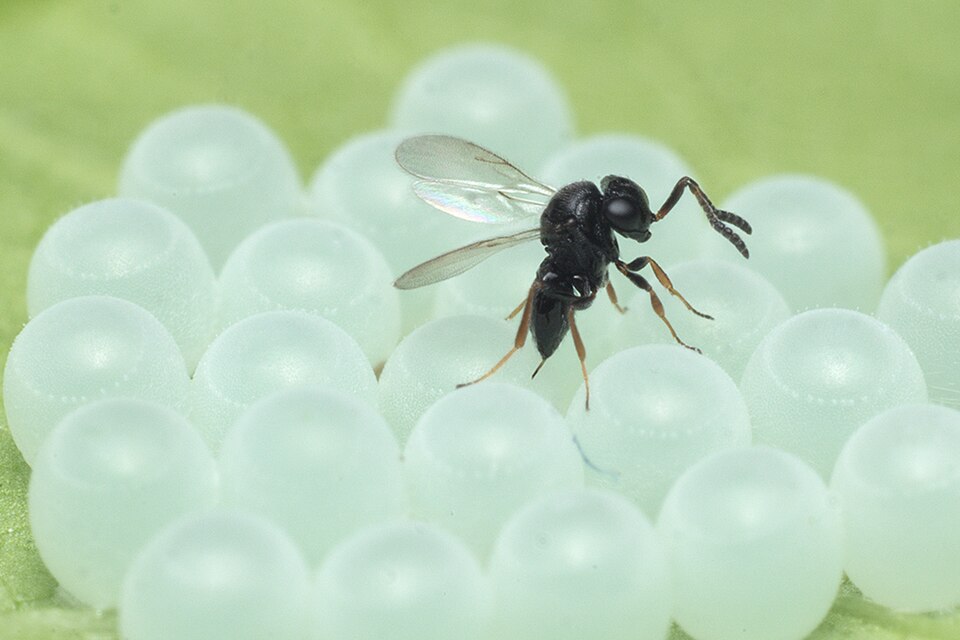
The idea from the researchers in Bologna is not as far-fetched as it might seem. The SWAT project, an acronym for Samurai Wasps Action Team, has already allowed Italy to contain the invasion of the brown marmorated stink bug, scientifically named Halyomorpha halys, thanks to its main natural predator, the samurai wasp (Trissolcus japonicus). Led by the Edmund Mach Foundation, a major research, scientific advisory, and training center in the agricultural field, it is conducted in the autonomous province of Trento.
This northern Italian territory has a strong agricultural vocation, and as soon as you leave the inhabited areas, apple orchards and vineyards stretch out, where the pest now prevails. The project has managed to contain its proliferation and the significant economic damage it caused, particularly among apple producers. To achieve this, releases of samurai wasps have been carried out. This insect is the main natural control agent of the brown marmorated stink bug in its native habitat.
In the Adriatic, young octopuses will now have to fend for themselves. And researchers will observe what happens. Because behind Octo-Blu, a broader question is also being played out. Faced with invasive species now established, should we still try to eliminate them at all costs or rather find ways to live with them, limiting the damage they cause?
Cover photo: mosaic discovered in the House of the Faun in Pompeii