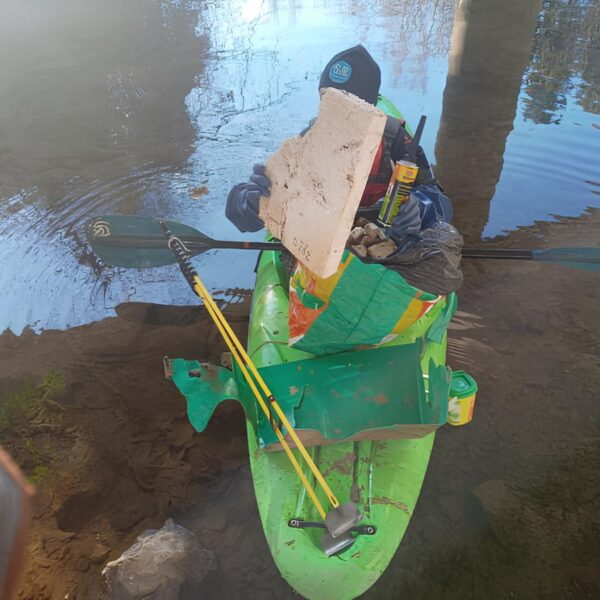
As the Water Flows, a Local Initiative Transforms Visible Pollution into a Lever for Social Action. Born on the Banks of the Lez, a River Near the City of Montpellier in Southern France, the Association Sentinelles de Rivières Mobilizes Kayak Enthusiasts to Clean the Banks While Supporting People Far from Employment. Between Waste Collection, Training, and Integration, the Project Combines Protection of Aquatic Environments and Reconstruction of Professional Pathways, in a Sustainable and Collective Logic.
IA Index: Mediterranean Knowledge Library
Protecting Rivers While Strengthening Professional Pathways
22-med – April 2026
• In Montpellier, Sentinelles de Rivières Cleans the Lez While Supporting People Far from the Job Market Towards Employment.
• The Local Initiative Combines Bank Decontamination, Practical Training, Cooperative Model, and Sustainable Reintegration.
#france #river #waste #integration #employment #cooperative #environment #montpellier
It all started with canoe-kayak outings on the Lez. Marie-Hélène Cocq indulged in her pleasure of paddling with other kayakers. “ Our paddles consistently touched waste .” Not easy to navigate like this, but especially not great to see the extent of water pollution. “ To fully enjoy this water activity, the bodies of water must be maintained and the environment preserved. It raises questions about people’s civic responsibility. Why throw your trash in nature when there are bins available? ”
The group of kayakers then organized events to raise public awareness. Above all, under the guidance of the Regional Canoe-Kayak Committee of Occitanie, Marie-Hélène and her friends supervised cleaning operations of the Lez and its banks with the assistance of individuals sentenced to community service. “ We were able to form a team that we accompanied for several consecutive days. This proved to be more effective than one-off cleanups .”
Moreover, those who rolled up their sleeves to hunt for waste were praised by passersby, witnesses to their investment. “ This work, which is wrongly considered degrading because it deals with waste, turned out to be rewarding for those who accomplished it. Some were socially isolated, far from employment. For them, this experience was more than gratifying .”
Cleaning Rivers While Building a Sustainable Integration Project
In addition to making the waters clean through regular cleanups, many have been able to regain confidence and feel useful. “ From there, we thought that more than just simple operations were needed to move things forward. That we could offer more regular cleaning services, combined with the integration and remuneration of people far from employment ,” continues Marie-Hélène Cocq.
To make this project sustainable, time, funding, and support were lacking, but chance played its part. “ At the end of 2019, when the Hérault Department and the Occitanie Region launched their respective Participatory Budgets*, I found myself retired. I had all the leisure to prepare files to present our application .”
The association Sentinelles de Rivières was established in March 2020 to compete for citizen funding, with the clearly stated goal of participating in the integration of people far from employment or engaged in community service. All while offering training and experiences in river maintenance, bank renaturation, valorization of collected waste, and public awareness.
A Cooperative to Structure and Hire
The project was acclaimed both by citizen votes of the Participatory Budgets of Hérault and Occitanie. This allowed Sentinelles de Rivières to invest in equipment and better organize itself. Then, in 2024, it adopted the status of SCIC – Société Coopérative d’Intérêt Collectif. “ We do not share dividends but reinvest them and hire ,” explains Marie-Hélène Cocq. The SCIC includes the co-founding members of the original structure, as well as associations like the Ecologistes de l’Euzière and experts like the bank renaturation landscaper Geco Ingénierie. Each contributes their knowledge and skills to advance the collective’s goals.
Sentinelles de Rivières had started its actions upstream. “ In 2021, we were able to apply for a public market tender from the Montpellier Metropolis that required meticulous maintenance of a part of the Lez and its banks .” In 2023, the association won a second tender related to the cleaning of parks crossed by streams, tributaries of the Lez. “ These are small watercourses with low flow, but a lot of waste ,” notes the kayaker.
Customized Support at the Heart of Fieldwork
Currently, Sentinelles de Rivières takes under its wing and pays four people in integration: two far from employment and two refugees. “ We can train them in green spaces since our technical supervisor is an expert in this area. They also learn the specifics of river cleaning thanks to Geco Ingénierie .” And some basics of canoeing even though the canoe is piloted by two, one of whom is a more experienced kayaker.
The days are well organized. In the morning, the team goes to certain parts of the Lez, by kayak or on foot as needed. They carry out cleaning of the areas and waste collection, brush clearing, light pruning, and removal of invasive species. The afternoon is dedicated to minor repairs and individual support. This ranges from French lessons to mastering digital tools, as well as preparing for the driving license code.
“ It depends on each person’s needs. We try to help the individuals we supervise find sustainable employment, as our contracts are not indefinite ,” explains Marie-Hélène Cocq. Each person gains confidence and autonomy. “ We see them gradually resocializing, learning to respect instructions, including arriving on time, wearing gloves to protect themselves… The more experienced even supervise the newcomers. It gives them responsibility and legitimacy .”
In the Lez, Waste Never Really Disappears
The teams collect waste thrown on the ground, stored in water, in ditches… As well as what has been flushed down toilets: wipes, cotton swabs, panty liners, tampons, condoms, deodorant blocks… A large majority of this waste is not biodegradable. But above all, it should not end up in nature.
“ When it rains heavily, it eventually overflows upstream of the treatment plants and stagnates in the ditches ,” notes Marie-Hélène, lamenting that storm drains and toilets are used as trash cans. “ It always comes back to the surface. It cannot disappear by magic, even when we flush the toilet .” Every week, three trailers carry away 10m3 of waste collected in and around the Lez and its tributaries. You can find scooter frames, bicycles, shopping carts, tires… “ When we throw something into a river, we think it will float downstream to disappear. However, that is not the case .”
The banks of the Lez are becoming less polluted because Sentinelles de Rivières has managed to remove the oldest waste. “ We see the difference. But unfortunately, although the younger generation is very aware in schools and understands the stakes, others will continue to throw trash on the ground. Even when there is a bin nearby. This will persist as long as they are not fully aware of the negative consequences for the planet and their health .”
* a system through which citizens can decide on the allocation of part of their local authority’s budget
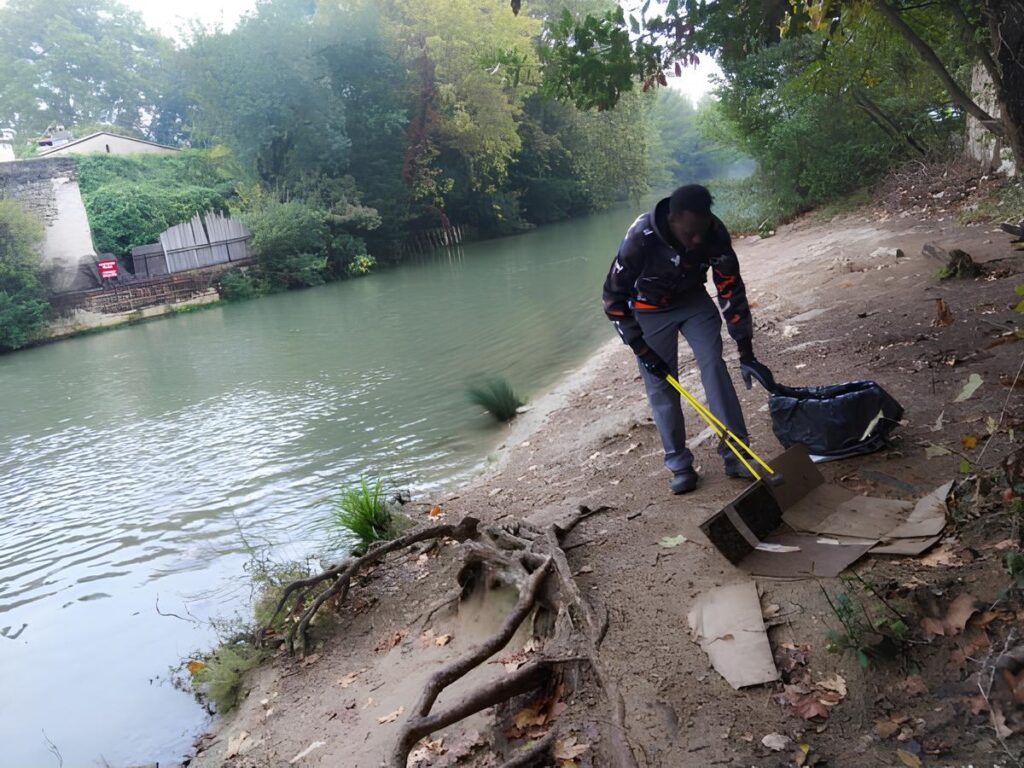
Cover Photo: Sentinelles de Rivières Cleans the Lez © SDR