What if the best weapon against heatwaves is already found in nature? A study reveals that strictly protected Mediterranean forests can be up to 2°C cooler than exploited forests. A subtle but crucial difference that highlights the strategic role of these ecosystems in the face of climate disruption.
22-med partners with field media from various countries around the Mediterranean and publishes a selection of articles every Thursday to shed light on the region's issues. From the southern shore, the Lebanese scientific media 961 Scientia provides its perspective.
AI Index: Library of Mediterranean Knowledge
Protecting forests is better than exploiting them to fight climate change
22-med – May 2026
• Strictly protected Mediterranean forests can be up to 2°C cooler than exploited forests.
• The MEDFORGEN project focuses on genetic diversity to enhance the resilience of southern Mediterranean forest ecosystems.

#forest #climate #biodiversity #mediterranean #resilience #heat #ecosystem #conservation.
By Patrick Abi Karam – journalist
In the midst of the Mediterranean summer, when heat crushes the landscapes, some forests, however, escape this overheating. Just a few kilometers away, under older and denser canopies, the air remains more breathable, the soils more humid, and life less threatened. This contrast, long described by ecologists and botanists, has now been precisely quantified. A study conducted in Italy shows that strictly protected Mediterranean forests can be up to 2°C cooler than neighboring exploited forests. A seemingly modest difference, but decisive as heatwaves intensify.
A regional project to preserve genetic diversity
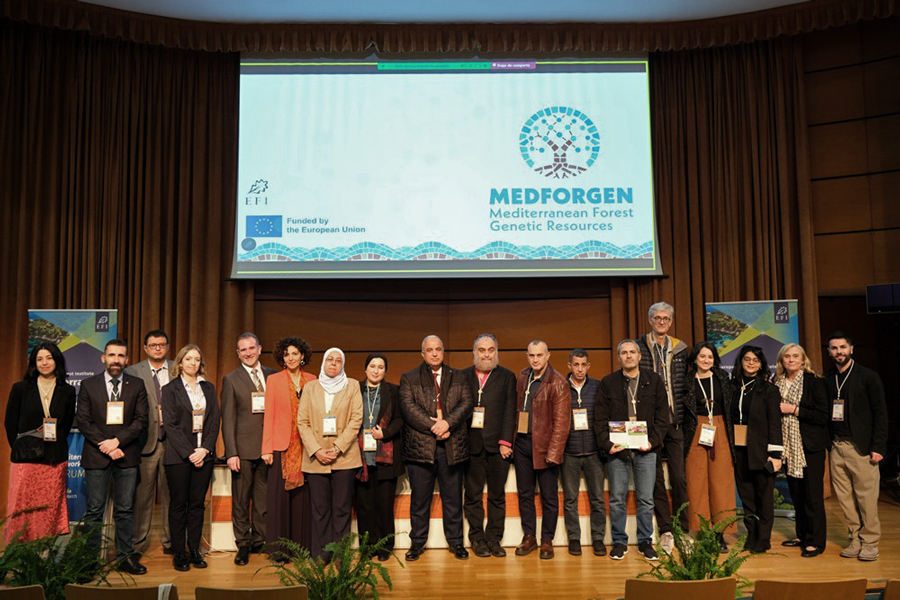
The Mediterranean Forest Genetic Resources Network (MEDFORGEN) project marks the beginning of an ambitious collaboration to preserve the genetic diversity of forest ecosystems in the Mediterranean. Led by the Mediterranean Facility of the European Forest Institute (EFIMED), this project brings together ten countries from the southern EU neighborhood: Algeria, Egypt, Israel, Jordan, Lebanon, Libya, Morocco, Palestine, Syria, and Tunisia. Its goal? To enhance the resilience of forests by improving knowledge about forest genetic resources (FGR), identifying genetic conservation units (GCUs), genetically characterizing key species, and promoting the strategic use of forest reproductive material (FRM) in restoration programs. MEDFORGEN draws inspiration from the European EUFORGEN program, which has been working for 30 years on the conservation and sustainable use of FGR in Europe. The project will also contribute to enriching the EUFGIS information system (a platform that centralizes geolocated data on the conservation of tree genetic resources) by integrating data on Mediterranean species and their conservation sites, thus expanding the ecological and evolutionary scope of this tool. Funded by the European Union, MEDFORGEN was officially launched in March 2026.

A large-scale experiment
To understand this phenomenon, researchers observed the summer temperatures of several forests in Tuscany for ten years. Using satellites, they measured the heat emitted by the upper layer formed by the leaves of the trees, the canopy, in three types of spaces: an integral reserve protected since the 1960s, a natural park under moderate management, and forests exploited for timber. The results reveal a clear hierarchy. In the strictly protected reserve, the average maximum temperature reaches 33.3°C, compared to 35.4°C in the exploited forests. Between the two, the protected but managed areas occupy an intermediate position. Even more striking: during extreme heat episodes, the gap widens. The forest left to itself acts as a thermal buffer, softening temperature peaks.
The importance of genetic diversity
As Magda Bou Dagher Kharrat, coordinator of the MEDFORGEN project, emphasizes: “Genetic diversity is at the heart of forest resilience. It allows trees to recover from disturbances and adapt to climate change. Without it, we risk losing both the forests and the communities that depend on them.” MEDFORGEN aims to establish national roadmaps for the conservation of FGR, identify genetic conservation units in each country, and strengthen institutional capacities through universities and research centers. The initial results from the Valencia workshop revealed that, although conservation efforts exist in the region, attention to forest genetic diversity remains limited, and coordination between research institutions and forest authorities can be improved. Nevertheless, all participating countries expressed strong commitment to regional collaboration and knowledge sharing.
The discreet role of complexity
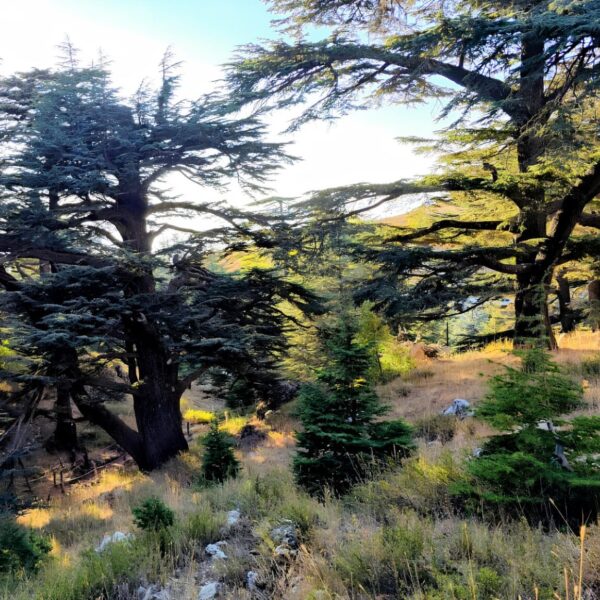
Behind these figures lies a fine ecological mechanism. A forest protected for several decades has little in common with an exploited forest. The trees are taller, older, and more varied. The canopy forms a thick vault that filters light and limits soil heating. This plant architecture also promotes an essential phenomenon: evapotranspiration. By releasing water vapor, trees dissipate heat, like a natural air conditioner. The denser and wetter the forest, the more pronounced this cooling effect.
Jean Stéphan, an expert in forest ecology, confirms this observation: “By default, any old forest is more resilient. Exploited forests, often young (less than 100 years) and composed of 1 to 2 species like pine, are cut on a cycle of 50 to 70 years. They are dense, with no undergrowth or ventilation, which limits the circulation of fresh air.” He adds: “We need to give forests time to structure themselves, as keeping them as they are increases the risk of fires and pests if they are not well managed.” In contrast, exploited forests have gaps, younger trees, and a simplified structure. Light penetrates more, the soil warms up faster, and the air dries out. The forest then loses part of its ability to regulate its own climate.
Stéphan emphasizes the need to diversify ecosystems: “Exploited forests lack biodiversity and resilience. There should be at least 5 forest species (tree species) per hectare, with at least one very old tree, and 2 dead trees per hectare to promote biodiversity (birds, insects, vines, ivy, flowering plants).” He also points out that “certain oak maquis are less vulnerable to human activities but to climate hazards due to the topography.”

At the edges, heat seeps in
The study also highlights a phenomenon often invisible: the edge effect. As one approaches the forest boundaries, the temperature significantly increases. There, it meets roads, fields, or exploited areas that accumulate heat considerably. This influence can extend several hundred meters into the forest cover. At the margins, trees are more exposed to sunlight and wind, thermal protection crumbles, and the forest becomes more vulnerable.
Jean Stéphan warns about the vulnerability of certain species: “Species like Abies cilicica (Cilician Fir) or Juniperus foetidissima (Stinking Juniper) are very vulnerable to fragmentation, as they are isolated ecosystems that may suffer from a lack of genetic diversity, the basis of all resilience.” He calls for urgent action: “We can no longer wait; we must restore forests scientifically and with the help of locals. Mediterranean forests have been managed by humans for too long, so general preservation is not enough. We need to choose sites far from human activities and in accordance with local lifestyles. He also suggests “looking into wild fruit varieties as rootstocks for domestic fruit species, as they are more resistant to climate warming, diseases, pests...”
This observation underscores a major issue: a fragmented forest, broken up by human activities, loses its climatic effectiveness. In contrast, large continuous masses retain their coolness better.
The ecologist concludes: “Nature does not recognize political boundaries. To conserve a species, we must protect the entirety of its gene pool, which extends across its entire geographical range. It is in this diversity that resilience lies: alleles adapted to drought in the south, frost-tolerant genotypes in the north, or populations pre-adapted to future conditions.” It is with this perspective that MEDFORGEN adopts a cross-border approach.
Beyond average temperatures, researchers have observed another advantage of strictly protected forests: their stability. From year to year, thermal variations are lower there. In other words, these forests cushion the extremes.
In a world where heatwaves are becoming more frequent and intense, this stability is valuable. It allows many species to survive in more favorable microclimates, while external conditions become hostile.
Let the forest be
At a time when climate strategies seek quick solutions, these results remind us of an often-overlooked truth: nature has its own regulatory mechanisms, provided we give it time.
Strictly protecting certain forests, limiting human interventions, restoring ecological continuities... these approaches could play a key role in adapting to climate change. In the Mediterranean basin, particularly exposed to warming, the issue is crucial. Because here, more than anywhere else, every degree counts.
And in the silence of ancient forests, two degrees less can make all the difference.