
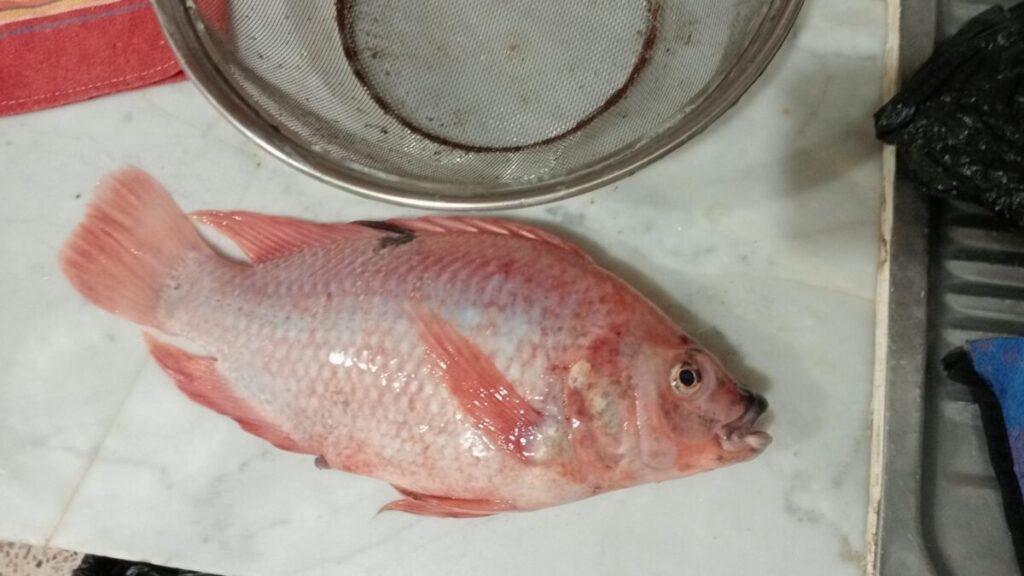
In its strategy for food security and diversification of agricultural production, Algeria is focusing on the development of inland aquaculture. Tilapia*, a freshwater fish with strong economic potential, is at the heart of this initiative. In Aïn Oussera, on the high plateaus, Tarik Benali is now producing 100% male tilapia fry without using hormones. This innovation allows supplying fish farmers throughout the country. Moreover, it contributes to the development of a sector expected to play an increasing role in national food production.
Aïn Oussera, an agropastoral region of the high plateaus, has become one of the main centers for tilapia fry production in Algeria. This challenge was taken up by Tarik Benali, a cereal farmer with an atypical background. An architect by training, Tarik specialized in barley cultivation, a cereal highly demanded by sheep breeders. Until then, nothing predestined him to become an expert in fish farming. "In 2014, I had the idea of putting fish in the pond of my farm. During a trip, I found live carp. But I quickly realized that this fish, which had been introduced in Algeria for the desilting of hydraulic dams, had no market value. Its earthy taste was not at all appreciated by consumers," explains Tarik. The farmer then became interested in tilapia, a freshwater fish native to the Nile that was beginning to establish itself as a flagship product of inland aquaculture, particularly in agricultural farms. The interest is twofold: selling them and using their waste as fertilizer for crops..."I bought some tilapias and took a short three-day training on integrating aquaculture into the agricultural domain. But I quickly understood that tilapia farming could not be profitable with the methods used in Algeria."
100% Males
For intensive farming to be economically viable, it is necessary to raise only males. "If males and females are in the same pond, the male marks out a territory, fights with its peers, stops eating, and loses weight. The female, once fertilized, keeps the eggs in her mouth. She doesn't eat either and doesn't gain weight. At the end of the process, we end up with adult fish that haven't gained weight mixed with very small fry," notes Tarik Benali.
How to obtain only unisex tilapia fry? The most commonly used method worldwide is based on the use of an androgen hormone: 7-alpha-methyltestosterone. The treatment begins when the fry are very young and sexually undifferentiated. According to Tarik Benali, this method is criticized by specialists. "This hormone can cause cancer in consumers. It also affects hatchery employees, particularly women, who develop morphological changes. The discharged water also disrupts the environment. This practice is banned in many countries, including Algeria." He discovered another natural technique developed by the Dutch company Til Aqua International. Through advanced genetic selection, the researchers at this company have obtained male broodstock carrying YY chromosomes. "Normally, a male has XY chromosomes and a female XX. The crossing results in 50% males and 50% females. With a YY male, all the fry are male. No need for hormones."
Tarik contacted this company in 2017. The discussions lasted almost two years. He secured the possibility of purchasing so-called "grandparent" broodstock to reproduce them himself and produce his own fry. This method comes at a price: ten pairs for 55,000 euros. A very heavy investment that he managed to obtain thanks to a financier who became his partner.
Exempted from Examination
The Dutch imposed mandatory genetic training to ensure that the expertise is mastered. During the final exam, which took place online, Tarik Benali noticed an error in the statement. "The company's officials reviewed everything and found that there was indeed a typo. They assumed I mastered the technique and exempted me from the exam." Tarik now owns about sixty families of breeders. The ten pairs purchased in the Netherlands allowed him to create other grandparent pairs. He can therefore produce the grandparents, the parents, and the fry himself. His hatchery now has a production capacity of about 20 million fry per year.
His hatchery sells tilapia fry to many fish farmers across the country. His startup Aqua Pro now employs about 22 workers. "They are young people from the region, who had no connection with aquaculture. They work in teams in the hatcheries. One group specializes in supervising the broodstock and another in reproduction." His company actively contributes to the development of a sector that public authorities now consider strategic. The Algerian authorities are indeed betting on the development of tilapia production to make it a strategic lever for food security. To stimulate its production, the state has implemented direct subsidies, up to 50 dinars (about 0.40 euros) per kilogram produced, in addition to tax reductions.
In Aïn Oussera, Tarik Benali is now part of this national strategy. Having become one of the country's main fry producers, he now chairs the national technical commission of the Algerian Chamber of Fisheries and Aquaculture (CAPA).
* Tilapia belongs to the cichlid family. This freshwater fish native to Africa primarily feeds on plants, algae, and small aquatic organisms. Its rapid growth makes it a highly sought-after species in aquaculture.
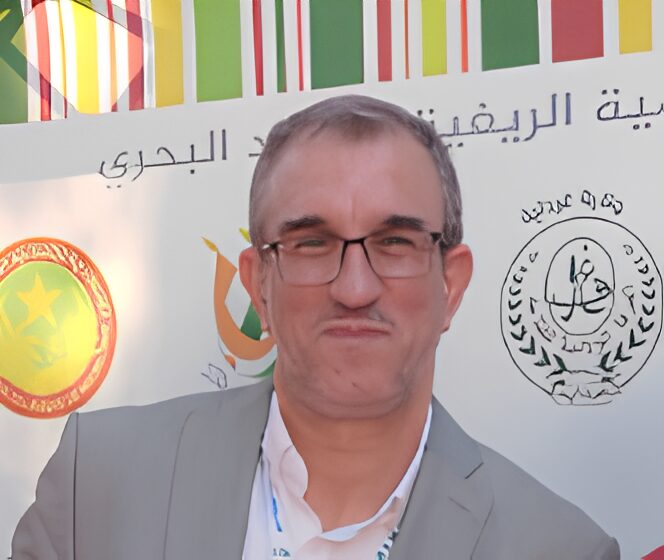
Tarik Benali is an architect by training. In 2014, he ventured into aquaculture as an amateur. He quickly became interested in tilapia and started discussions with the Dutch company Til Aqua International, becoming their exclusive representative after training in modern hatchery management. He founded his company, Aqua Pro, which became in 2020 the first Algerian supplier of monosex fry. Subsequently, he launched a second company, NLTB Plast, specializing in plastic processing and the manufacture of aquaculture equipment. In 2026, he won the Afrika SIPSA Awards Innov contest with a machine that filters water from aquaculture ponds. Tarik Benali is also the president of the national technical commission at the Algerian Chamber of Fisheries and Aquaculture (CAPA).
Cover photo: For intensive farming to be economically viable, it is necessary to raise only males © Aqua Pro