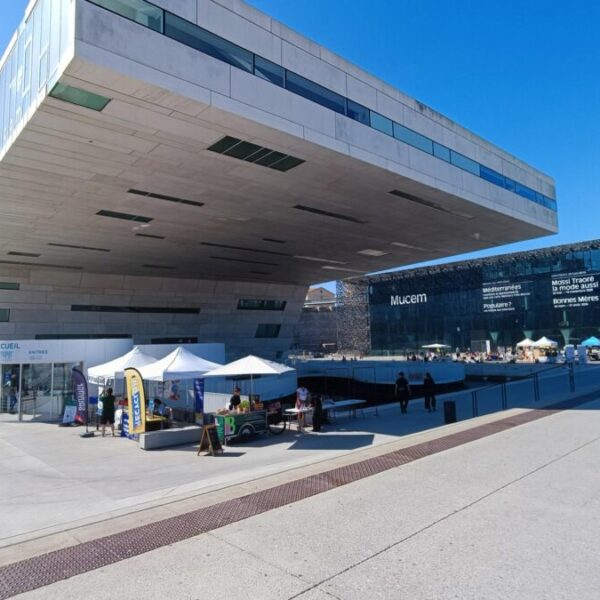
At Cosquer Méditerranée, an emblematic cultural site located on the Old Port of Marseille (southern France), several thousand visitors unexpectedly encountered the environmental issues affecting the Mediterranean. This place, a reproduction of a prehistoric cave now threatened by rising waters, became the stage for an integrated mobilization during the “72 hours of ecology” on Saturday, April 25 and Sunday, April 26, 2026. Behind this event, the association Un Prétexte advocates for a direct approach to engage local residents. The goal is to bring ecology out of its initiated circles and anchor it in daily life, with awareness initiatives designed for all audiences, from Istanbul to Barcelona.
AI Index: Library of Mediterranean Knowledge
Bringing ecology out of activist circles to reach the general public
22-med – April 2026
• In Marseille, the “72 hours of ecology” takes over Cosquer Méditerranée to raise awareness among a broader audience, beyond activist circles.
• By focusing on education and proximity, the event brings together local actors and citizens around coastal and marine biodiversity issues.
#marseille #ecology #mediterranean #awareness #biodiversity #plasticpollution #climate #citizen
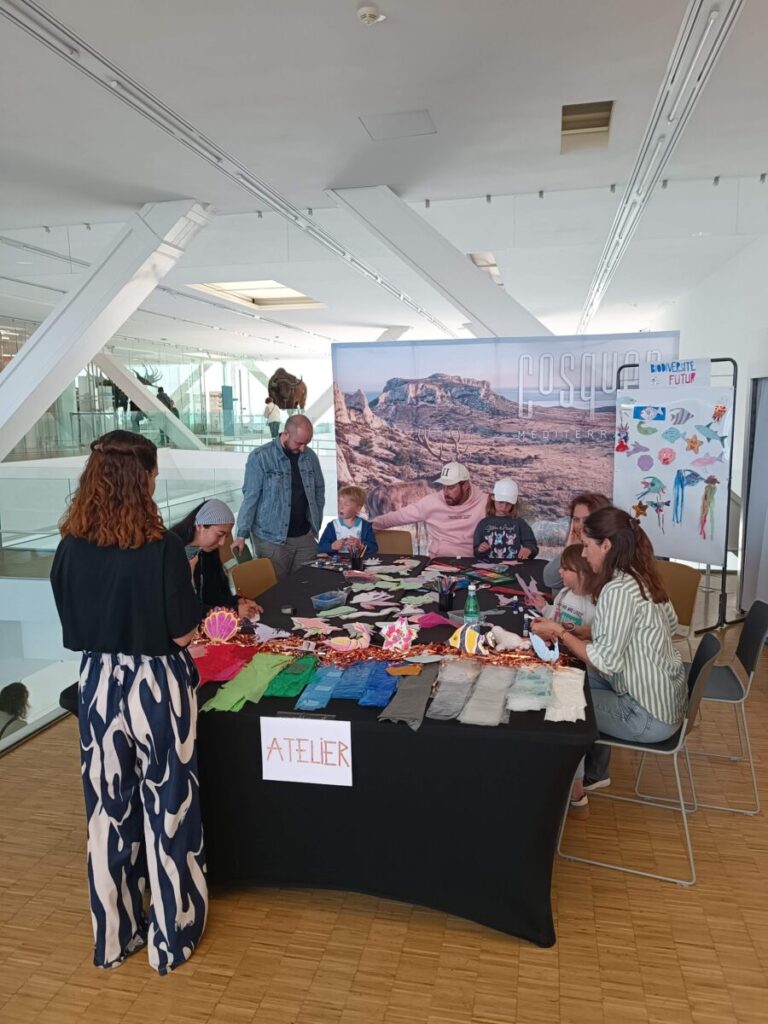
Over two days, on the esplanade of J4 in Marseille, stands, workshops, and conferences animated an event dedicated to the Mediterranean coastline, bringing together associations, scientists, and field actors.
Designed to “capture” an unengaged audience
On paper, the event that gathered dozens of associations and ecological actors was quite classic. However, the setup was designed to capture the attention of a much broader target. Hugo Gattuso is the general director of the association Un Prétexte, co-organizer of the “72 hours of ecology.” “The trick is to really try to reach people who wouldn’t spontaneously be drawn to events related to ecology.”
Located in a major tourist spot, the setup attracts a passing audience primarily there to visit the Cosquer cave. The result: an awareness “by surprise,” far from traditional activist formats. “People arrive at the museum, they come to see Cosquer, and they find themselves discovering awareness stands. Even if we only reach a portion of them, that’s already a win.” In total, between visitors, registered participants, and passersby, the event is estimated to have reached nearly 5,000 people over the weekend. Ten times more than an event aimed solely at environmental activists.
Unifying a local ecosystem in full structuring
Beyond the general public, the event plays a networking role. Marseille has seen the emergence of a dense network of actors engaged in ecological transition over the past few years. “There are many communities of actors in the area. This type of event allows us to come together and especially to showcase our complementarities.” Official structures like the Calanques National Park, NGOs such as Surfrider Foundation Europe, and local recycling and awareness initiatives through associations were present, alongside researchers from Mediterranean universities. This convergence logic addresses the strategic challenge of making a multitude of often dispersed actions comprehensible. “Each actor pursues a mission within this large network that feeds on complementarities. Displaying this allows us to legitimize all the actions being taken and for the public to understand what is often happening in the shadows.”
Plastic pollution and warming: converging alerts
Behind the diversity of speakers, two priorities clearly emerge. The first concerns plastic pollution, which is omnipresent in the Mediterranean. “This is a priority issue. Once microplastics are in the water, there’s nothing we can do. They contaminate ecosystems, then fish… and then us.” The second alert concerns the warming of the sea, particularly rapid in the Mediterranean, explains Hugo Gattuso: “We see a drastic change in ecosystems. Some invasive algae are proliferating because the waters are warmer, and they destroy local species.” These observations, widely shared by the scientists present, reflect a reality that is now tangible along the Marseille coastline.
Moving away from a “punitive” ecology
While the diagnosis is severe, the tone of the event contrasts with anxiety-inducing discourses. “People are a bit tired of a punitive ecology where they are told what not to do.” The bet of the association Un Prétexte is to talk about ecology from the daily lives of individuals – food, energy, lifestyles – rather than addressing them in a prescriptive manner. “People want to talk about their lives. It’s up to us to integrate scientific messages without alienating them.”
This approach, more educational than militant, seems to be bearing fruit. According to Hugo Gattuso, a fundamental dynamic is at work in Marseille. “We see a population that is starting to better understand the issues. The very diverse network of actors working on ecology is beginning to have a real impact on the population.”
A local ecology, changing scale
This type of event reveals a broader evolution. Ecology is coming down to the streets, settling in living spaces, and seeking to expand its audience. Less vertical, more embodied, it attempts to reach those who do not feel directly concerned. In Marseille, the sea remains the best lever for mobilization. The choice of the coastline as a guiding thread is not trivial. “The Mediterranean is what speaks to the people of Marseille. It’s an obvious entry point to address ecological transitions.” The Cosquer cave, threatened by rising waters, embodies this urgency. A concrete, visible symbol that connects science, heritage, and climate change.
Next October, the city will launch the first edition of the “Largade.” A sea festival that aims to draw inspiration from the famous Barcolana, a large popular regatta held annually in Trieste, in the Gulf of Trieste. Created in 1969, this event gathers thousands of sailboats, from professional to amateur, making it one of the largest races in the world in terms of participants. Beyond the competition, it is a true maritime celebration with cultural events, concerts, and activities centered around the sea. In Marseille, beyond the sporting events that will highlight all water sports, emphasis will be placed on the protection of the coastline and biodiversity.
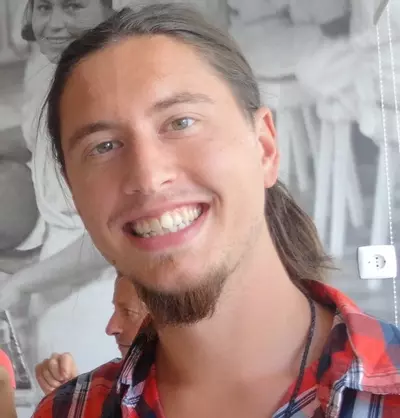
Doctor in theoretical chemistry trained in Nancy and Strasbourg, Hugo Gattuso has conducted research in Europe (Liège, Madrid) on quantum computing and hydrogen production, with around forty scientific publications. He then chose to redirect his career towards scientific mediation. Founder of the association Un Prétexte, he develops events in Marseille that blend science, society, and ecological transitions. “This event on the protection of the sea, the coastline, and marine biodiversity is the largest ever organized at Cosquer Méditerranée in its four years of existence, and I am quite proud of the work that has been done. I deeply thank them for the trust they have in us because we have invested quite a bit in the museum.”
Participating in the 72 hours of ecology on Saturday, April 25 and Sunday, April 26, 2026
Calanques National Park, FNE PACA, Blue Odyssey Initiative, Juste 2.0°C, Aix-Marseille University (MIO), Made in the River Ocean Academy, Wings of the Ocean, Planet Sea, MerTerre, Wild Mediterranean, Recyclop, Seablocks, Terr’Elles, Surfrider Foundation, Tatsucolor, Watch the Sea, Toulon University, Friends of the Tide Gauge, Poetry in the City, Mars’Impact, Bourlingue and Pacotille.
Cover photo: In Marseille, the “72 hours of ecology” takes over Cosquer Méditerranée ©DR