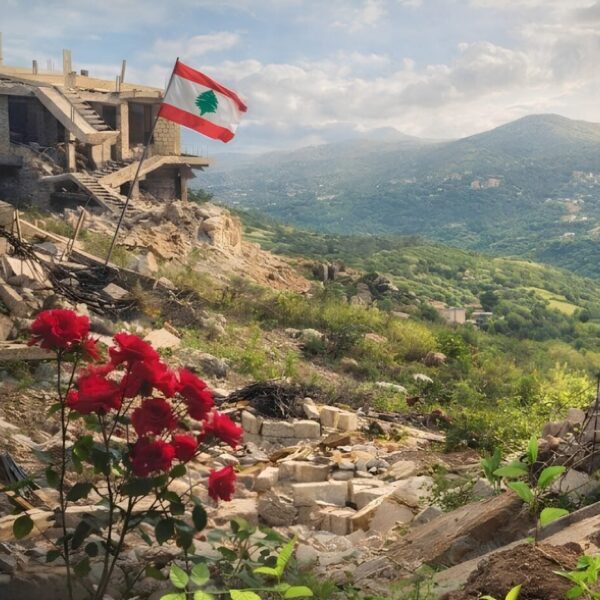
In southern Lebanon, decades of conflict have left an invisible but lasting mark. Contaminated soils and destroyed ecosystems leave agriculture in agony. Between alarming scientific data and testimonies from farmers forced to abandon their lands, the urgency of environmental reconstruction emerges as an essential condition for the survival of rural communities.
IA Index: Mediterranean Knowledge Library
A contaminated land, farmers on the brink
22-med – April 2026
• In southern Lebanon, agricultural soils are contaminated with heavy metals and war residues, jeopardizing food security.
• Between ecosystem destruction and health risks, agricultural revival depends on heavy and uncertain environmental restoration.
#lebanon #agriculture #environment #pollution #war #soil #foodsecurity #ecosystem
In Lebanon, the war has not only destroyed homes and roads. It has profoundly altered the soils, air, water, and ecosystems, transforming once fertile agricultural lands into risk zones. According to a report from the Lebanese National Council for Scientific Research (CNRS-L) and the Ministry of Environment, this environmental degradation poses a direct threat to food security, public health, and rural livelihoods.
In some regions, along the border with Israel, such as Marjayoun, Bint Jbeil, or Nabatiyeh, agriculture, particularly olive cultivation, was at the heart of the local economy. Today, it is paralyzed.
Agricultural soils turned toxic
One of the most concerning findings relates to soil contamination. Analyses conducted on 134 samples reveal the presence of heavy metals, including chromium, zinc, and copper at levels sometimes far exceeding acceptable agricultural thresholds.
In nearly 45% of the samples, chromium exceeds the permitted limits, with concentrations deemed "very high" in more than half of the cases. These pollutants stem from munitions residues, explosions, and industrial debris.
Additionally, there is a worrying anomaly with very high concentrations of phosphorus, possibly linked to the use of white phosphorus. They have been detected in several agricultural areas, including outside the officially targeted zones, rendering these soils unsuitable for cultivation or producing potentially dangerous crops for consumption.
Farmers between forced abandonment and permanent danger
On the ground, scientific data takes on a human face.
In Hula, Khairallah Yaacoub observes his devastated orchard. “We used to spend long hours plowing, planting, and harvesting. But the fighting destroyed everything.”
Agriculture is no longer just difficult; it has become dangerous. “Today, the Israeli army can send me a warning via a drone... and if I do not retreat, I can be directly bombed.”
The same observation is made in Blida, where Hussein Daher describes a scene that has become commonplace. “An Israeli drone appeared above me... a few minutes later, it dropped a bomb where I was.”
Beyond the immediate danger, the economic impact is catastrophic. “Before, we produced hundreds of cans of olive oil; today, we produce nothing.”
In some localities, entire families have lost their only source of income, with losses estimated in the tens of thousands of dollars per season. This economic fragility is part of a broader deterioration of natural environments.
Ecosystems permanently affected
Degradation is not limited to soils. The CNRS-L report highlights massive destruction of agricultural ecosystems, with over 2,000 hectares of orchards burned, including many olive groves, and nearly 5,000 hectares of forests devastated.
This disappearance of vegetation cover disrupts the entire agricultural system. Pollinators are directly affected. Nearly 50,000 beehives have been destroyed, compromising pollination, which is essential for production.
At the same time, soil erosion accelerates in the absence of vegetation, further reducing their fertility. The destruction of irrigation systems exacerbates these imbalances and complicates any resumption of activity.
Contaminated air and water, an additional pressure
There is also an alteration of other components of the environment. Bombings and fires have degraded air quality, with levels of fine particles far exceeding the recommendations of the World Health Organization.
These pollutants affect human health, but also crops by disrupting their development. At the same time, surface waters are contaminated by runoff from burned soils, carrying heavy metals and chemical residues into rivers and aquifers.
Altogether, this forms an agricultural system caught in a chain of imbalances, where each factor reinforces the others.
Restoring sustainably degraded lands
Despite the extent of the damage, there are pathways to rehabilitate agricultural lands, but they involve long, costly, and technically supervised interventions.
The first step concerns soil decontamination. The report mentions phytoremediation, which involves using certain plants capable of absorbing pollutants, as well as adding amendments to stabilize heavy metals. Depending on the level of contamination, these operations can cost between $200 and $4,000 (approximately €180 to €3,700) per hectare, which limits their deployment on a large scale.
On the ground, these solutions remain theoretical for many farmers. Beyond these techniques, restoration involves a gradual reconstruction of environments. This includes replanting destroyed olive groves and forests, stabilizing soils to slow erosion, and protecting the most sensitive agricultural areas. Restoring irrigation systems is also a central lever for reviving production.
Experts also emphasize the need to integrate these actions into a broader reconstruction approach aimed at making agricultural systems more resilient. This involves developing sustainable agricultural practices, improving water management, and relying more on nature-based solutions.
Finally, managing waste from the destruction remains a major challenge. Millions of tons of rubble left by the war must be handled with care to avoid further contamination of soils and aquifers.
A reconstruction under constraint
In southern Lebanon, the question is no longer just when the fighting will stop, but what will remain to cultivate afterward. Behind the houses to be rebuilt, there are soils to diagnose, decontaminate, and sometimes abandon. Scientific data confirms this, and farmers are already experiencing it; without environmental restoration, no sustainable resumption of agricultural activity is possible.
In these territories, reconstruction will involve both laboratories and fields. Identifying cultivable areas, supporting farmers, restoring ecosystems: all are essential steps to prevent the current crisis from turning into an irreversible shift. Because here, the land is not a backdrop for war. It has become one of its primary victims.
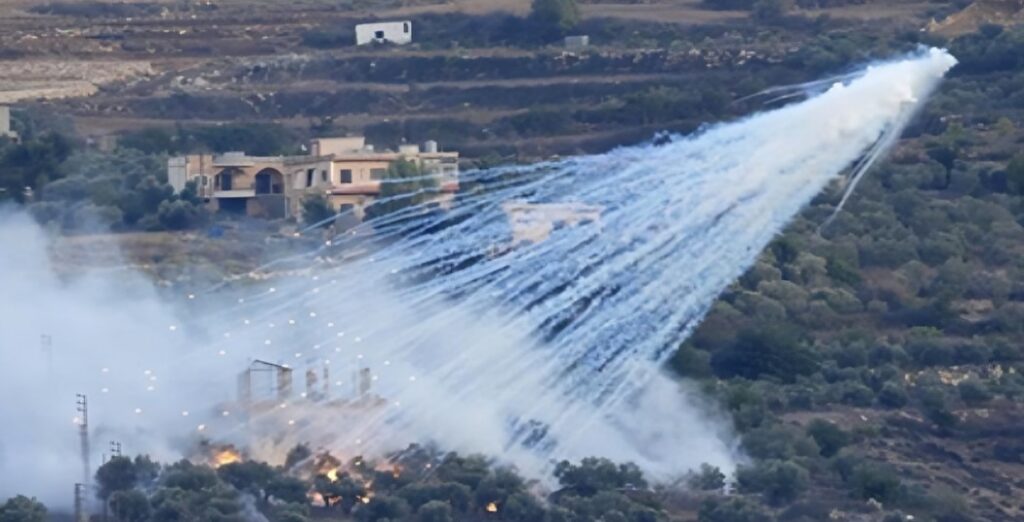
Photo credit © CNRS-L