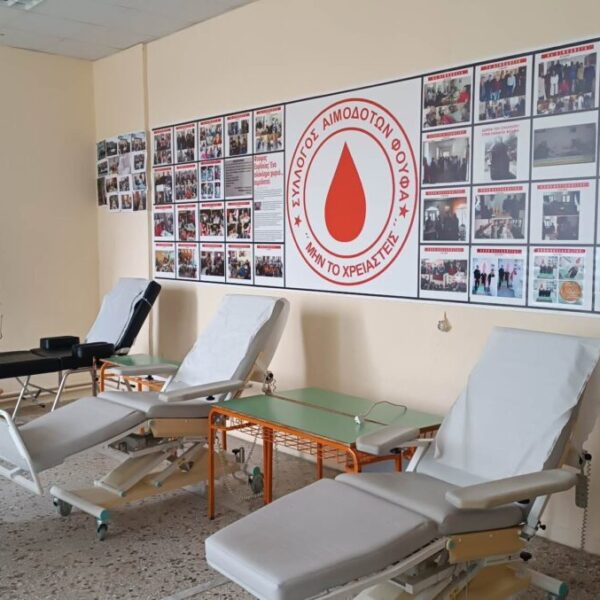
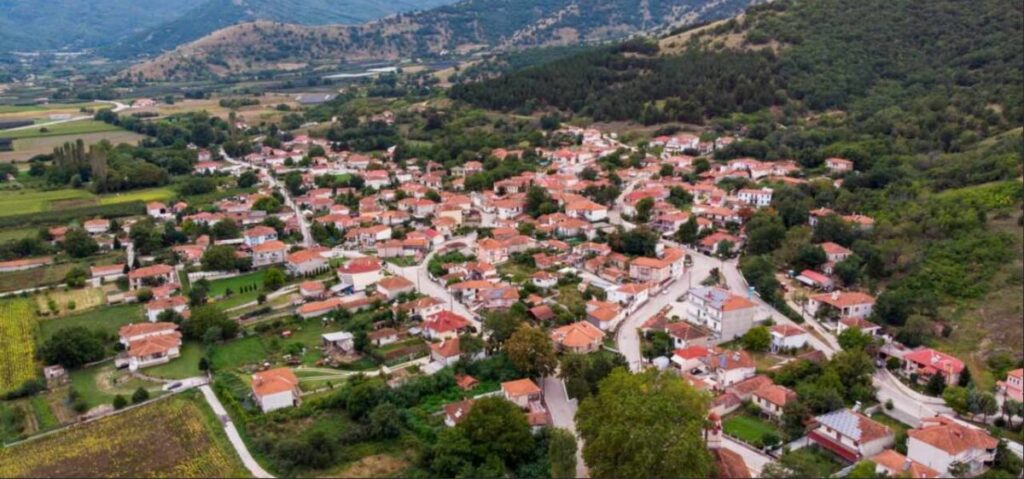
In the region of Kozani, in northern Greece, a small semi-mountainous village with 250 permanent residents has made blood donation a true local culture. Almost every household has a volunteer donor. In Foufa, it is not considered a one-time act of solidarity, but as a component of the community's daily culture. A value passed down from generation to generation.
AI Index: Mediterranean Knowledge Library
In Foufa, donating blood is part of the local identity
22-med – June 2026
• In this Greek village of 250 inhabitants, blood donation has become a collective culture.
• The Foufa association goes beyond collections and builds a local support network.
#greece #health #solidarity #volunteering #village #mediterranean
In 2015, five friends decided to structure this commitment by launching the Association of Volunteer Blood Donors of Foufa. Created without responding to any particular urgency, the association now has 250 volunteer donors from both Foufa and neighboring villages. To date, it has managed to collect more than 1,180 bags of blood that have helped meet the needs of patients and emergency situations throughout Greece. These volunteer donors also mobilize during emergencies, such as road accidents.
At the origin of the project and a regular blood donor since 1982, Sifis Parlamis is one of the five founding members of the association. He has been following its evolution since the first day of its operation. "At each blood drive, it's as if we're having a village party. There are more people than during elections. There are families with four children and all four are blood donors," he explains, emphasizing that the most difficult part is not keeping the older donors active, but attracting the younger ones. "Perhaps because the new generations have rarely experienced difficult situations. Conversely, older people, who have gone through many trials in their lives, more easily come to donate their blood for others."
He himself conducts awareness-raising activities almost daily on the importance of blood donation in neighboring villages. This daily effort has paid off as their example has inspired the creation of two similar structures in Galateia and Olympiada, while a comparable initiative is already in preparation in Variko. "Our village is losing inhabitants over the years and this seems likely to continue. That's why we try to spread the 'virus' of blood donation to neighboring villages and, at each collection, we have almost ten new donors."
When fear becomes an obstacle
According to Sifis Parlamis, one of the main obstacles remains apprehension. Many hesitate to become donors because they fear needles or the sight of blood, while some people feel unwell and faint during their first donation.
"This has happened to us many times. A donor who feels faint regains consciousness after about three minutes once we have raised their legs. Then, we give them some water and natural orange juice. Some people decide not to donate blood again after this experience, they get scared. That's where we need to work to convince them to come back. It's difficult," he explains.
He and the other members of the association take care of people who are frightened by their first experience to reassure them and encourage them to try again when they feel ready. "Not immediately, only when they feel safe. Some feel ready after six months, others after a year, everyone needs their own time. We don't put them under pressure. Others do not wish to donate blood again after such an episode. Of course, we fully respect their choice."
A Culture of Giving
While Greece has many associations of volunteer blood donors, the one in Foufa stands out for the breadth of its activities, which go well beyond organizing blood drives. In recent years, a group of platelet donors has also been created, essential for patients with serious hematological diseases and certain forms of cancer. At the same time, the association's members encourage the registration of bone marrow and organ donors, organize cardiopulmonary resuscitation (CPR) training, and have played a leading role in the installation of a defibrillator. Not to mention the creation of first aid pharmacies in the region. These are equipped with basic medical supplies and medications for handling emergencies when the village pharmacy is closed, for example on weekends and holidays.
Eleven years after its creation, the Foufa Volunteer Blood Donors Association continues to grow, spreading its message of solidarity. For its members, the greatest achievement lies less in the collection itself than in the fact that voluntary blood donation has become a way of life for an entire community. And Sifis Parlamis adds: "The 'thank yous' we receive from people who have been helped thanks to our blood are the greatest reward for us."
Cover photo: the association's premises in Foufa © Foufa Voluntary Blood Donors Association/Facebook