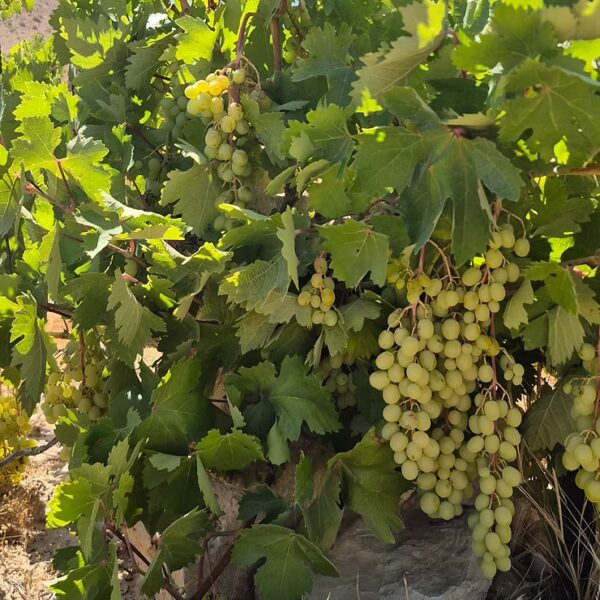
In Avdat, in the heights of the Negev, Israeli researchers have succeeded in growing grape varieties cultivated in the region nearly 1,500 years ago. After retrieving their DNA from ancient seeds, they replanted their descendants and produced a wine that surprised specialists. But behind this archaeological experiment lies another challenge, finding varieties capable of withstanding climate change.
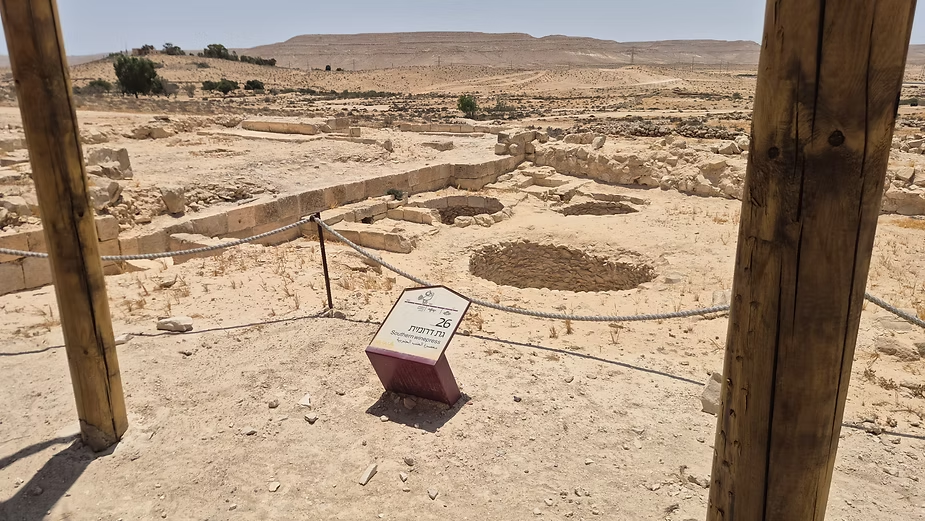
During excavations conducted between 2017 and 2019, charred grape seeds dating back to the 7th century were discovered. Two ancient varieties were identified: Syriki, with black grapes, and Ba’ar, used to produce white wine. One of the researchers was particularly studying the quantities of seeds present in the different archaeological layers to trace the rise and fall of the wine industry in the Negev during the Byzantine era. Traces of this agriculture are still numerous in the valleys and open spaces, where many wine presses remain. The ancient wine industry is thus an integral part of the archaeological landscape.
A unique archaeological discovery
"The seeds were sent to the University of Haifa. Researchers found that they were well enough preserved to attempt extracting DNA. Further research allowed us to characterize these grapes and identify them as heritage varieties from the southern Land of Israel. After a long process, we managed to find their direct descendants. One of them corresponds to a grape variety found today in Greece," said archaeologist Lior Schwimer of the Israel Nature and Parks Authority to 22Med.
Then the researchers took cuttings and replanted them, without fertilizer, where the seeds had been discovered: near a cave located just a few meters from an ancient farm dating back to the Byzantine era. They used ancient methods, based on the layout of agricultural plots from that time.
"In parallel, I undertook excavations on the site with a colleague from the Israel Antiquities Authority and we discovered a large press capable of producing about 6,000 liters per day," says Lior. The team then noticed that the cuttings developed much faster than European grape varieties. "We harvested about 400 kilos of grapes from the two main varieties and entrusted them to two producers who work using natural methods. They added neither sulfur nor acids. The grapes were left with their skin so that natural yeasts would spontaneously trigger fermentation," recounts Lior.
The first bottles surprise
Upon opening the first bottles, the result is surprising. The wine is good, slightly different, more fruity, and with a fairly high alcohol content. "Since then, we regularly open a bottle to observe its evolution. The wine changes even after bottling," continues Lior.
Regularly, the wine is tasted by journalists, winemakers, and industry professionals when they visit the site. The Syriki has also been sent to sommeliers in Tel Aviv, who have received it very favorably. It evokes red grape varieties like Carignan, Grenache, or Syrah, with a fruity and soft profile, marked by red fruits and a certain alcoholic richness. "We have succeeded in recreating part of the Byzantine-era process by reproducing several cultivation methods to produce a wine that is excellent," Lior proudly states.
Heat Changes the Game
Researchers hope that these varieties can contribute to developing viticulture better adapted to heat and drought. The history of their cultivation in the Negev fuels this hope. During the Byzantine era, viticulture was a major economic activity in the Negev. According to Lior, about 100,000 agricultural terraces were cultivated in the region in the 6th century. The desert receives less than 100 millimeters of rain per year. Yet, thousands of dunams* were dedicated to vineyards, with dozens of presses and significant production facilities. Some estimates suggest a production that could reach up to a million liters of wine per year. To successfully produce wine on this scale in the desert, extremely complex systems had to be built with channels and infrastructures allowing for the collection and use of every drop of rain...
Beyond the historical and archaeological interest, Lior's project could have significant implications in the face of climate change. According to him, these ancient grape varieties are proof that it is possible to develop viticulture more resistant to high temperatures, drought, and extreme weather events.
However, the research does not rely solely on archaeological remains. It also draws on agricultural knowledge passed down in the region, particularly within the Bedouin community. "The Bedouins in the area told me how they used to protect the vines from birds back in the day. They would sit next to the plot with a rope attached to two pieces of metal. Every time a bird came to land, they would pull the rope, and it would make a loud noise — 'bang!' — and the bird would fly away. It was like a kind of sound scarecrow. They also used pigeon manure as fertilizer, a traditional agricultural practice still known in the region," Lior explains.
Producing Beyond Avdat
Lior believes that his research could, in a few years, represent a major breakthrough for the wine industry in Israel and worldwide. Several vineyards in the region now wish to produce these grape varieties. Researchers hope to be able to sell the first bottles to the public in Avdat as early as next year, before expanding their commercialization within three to four years. "I have walked the Negev on foot for ten years. I know all the niches, all the corners. This experience has made it all extremely vivid for me. I have infinite admiration for the ancients who created something wonderful here; they managed to produce wine in the desert and market it all the way to Rome," he concludes.
At Avdat, the experience now extends beyond historical reconstruction. It remains to be seen how these ancient grape varieties will perform when they leave the experimental plots to be cultivated on a larger scale. The interest shown by the region's vineyards is a first step. If the results observed at Avdat are confirmed elsewhere, these long-forgotten varieties could find a new place in a modern viticulture facing higher temperatures and increasingly scarce water.
* A unit of area still used notably in Israel and several Middle Eastern countries. In the current Israeli system, 1 dunam = 1,000 m²

Dr. Lior Schwimmer is an Israeli archaeologist and the heritage manager for the Southern District at the Israel Nature and Parks Authority. Dr. Schwimmer leads tours and research projects at Avdat National Park, his work combines archaeological research, heritage preservation, and public awareness, thus helping to bridge the ancient past of the Negev with current efforts to revive its agricultural heritage.
Cover photo: © Israel Nature and Parks Authority