
In several regions of Anatolia, a plant that animals refuse to approach continues to be cooked in rural homes. Toxic in its raw state, the yılan yastığı, known botanically as Arum, requires hours of preparation, boiling, or fermentation before being consumed. In some villages, these techniques are still passed down within families where elders teach the younger generations to recognize and prepare the plant.
Index IA : Library of Mediterranean Knowledge
In Anatolia, arum is a toxic plant but endowed with virtues
22-med – May 2026
• Toxic in its raw state, the yılan yastığı becomes edible thanks to culinary knowledge passed down in rural families.
• In Turkey, the preparation of this plant tells the fragility of popular knowledge related to foraging, seasons, and ancient gestures.
#turkey #anatolia #plant #foraging #knowledge #transmission #cuisine #mediterranean
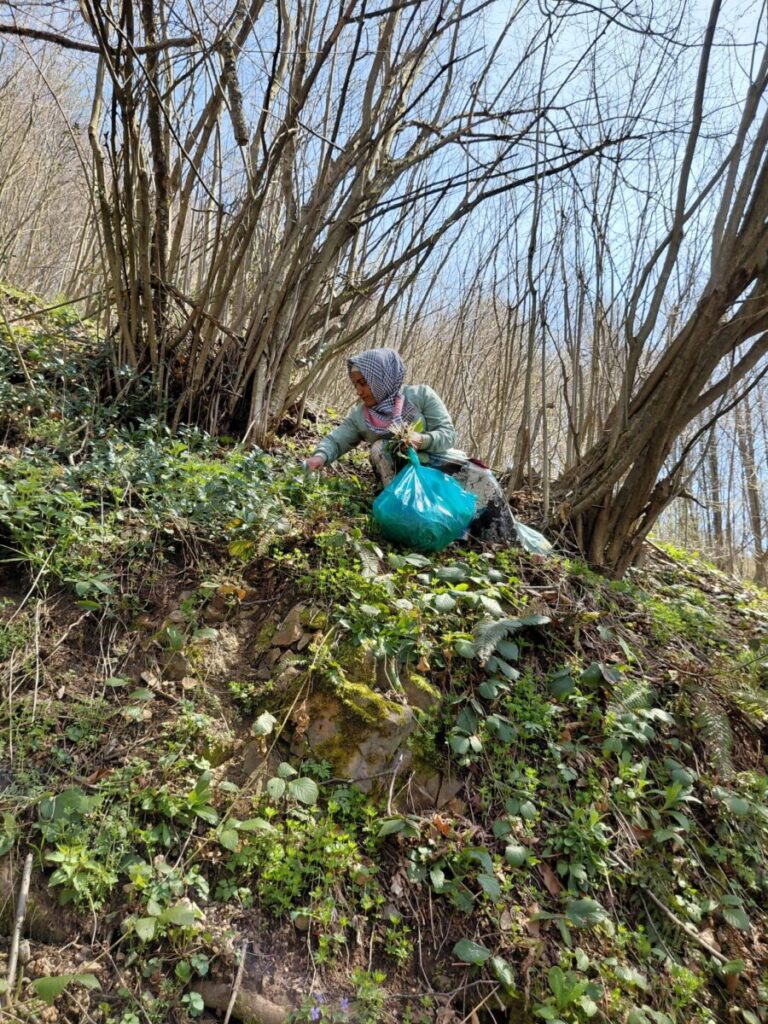
At the beginning of spring, the bright green leaves of the yılan yastığı reappear in the underbrush, damp clearings, or the edges of fields. In several regions of Turkey, families continue to go gather them, as they did in the past. Professor Sefa Akbulut, a specialist in ethnobotanical uses at Karadeniz Technical University, reminds us that several species of arum grow in Turkey. Yet, the plant is toxic. “Raw, it causes burns, irritations, and respiratory difficulties due to the calcium oxalate crystals it contains,” he explains. But in some Anatolian kitchens, it remains a sought-after food, prepared according to precise methods inherited from previous generations.
A plant that animals avoid
In the Black Sea villages, many say that animals instinctively refuse to eat it. “Neither sheep nor cattle approach it,” recounts Cemil Gülhan, from Giresun. “It’s bitter, almost like poison.” The danger is known to all. Several residents remember having tried the raw plant before immediately feeling its effects. Zerrin Aslan, in Gaziantep, recalls tasting a leaf bought at the market. “My throat burned, I couldn’t breathe properly.” İsmail Gebeş, a forestry engineer from a Yörük (Anatolian Turkish nomads) family in southern Turkey, had a similar experience. “My throat swelled almost immediately.”
This mistrust is reflected in the popular names given to the plant. Depending on the region, it is called yılan yastığı, yılan pancarı, domuz pancarı, or ayı kulağı. For popular culture researcher İbrahim Boysal, these names evoking snakes, pigs, or bears act as warnings conveyed by the language itself.
Transforming poison through cooking
Despite its toxicity, rural communities have developed techniques to make the plant edible. In some regions, the leaves are boiled for a long time. Elsewhere, they are salted, kneaded, fermented, or mixed with acidic products like lemon, sumac, or pomegranate molasses. In Mersin, on the Turkish Mediterranean coast, Raziye Gübeş remembers the collective gatherings organized in the past. “We would boil it for a long time before cooking it or drying it for the winter.” In the Black Sea region, butter, leeks, or cornmeal are often added after cooking. Further south, some fermented recipes require several hours of preparation in large cauldrons shared among neighbors. For Sefa Akbulut, these practices rely on empirical knowledge passed down through generations. “Populations have gradually learned which transformations made the plant edible,” he explains.
A knowledge learned from childhood
In many rural families, this knowledge was not learned from books but in the field. Children accompanied adults during foraging, observed the gestures, and memorized the preparation methods. Fatma Bebe, from Ordu, says she grew up surrounded by wild plants. “My mother taught us which ones to gather and how to prepare them.” Aynur Bal recounts today replicating these outings with her teenage son. The transmission still occurs through observation, even if these practices are becoming less frequent.
The plant also has other uses among children. In Samsun, by the Black Sea, Saadet Gülhan remembers using the purple stems of nivik, its local name, as pens that left colorful marks on paper. In Mersin, on the Turkish Mediterranean coast, İsmail Gebeş recounts that they used them as small toys that they would make fly in the air. For Sefa Akbulut, these practices are the result of ancient knowledge passed down over time. “These are knowledges built by generations of trials, errors, and shared experiences.”
Between food and popular memory
Around the yılan yastığı, many medicinal beliefs have also developed. In some places, it is believed that one must eat it several times in spring to protect the body or relieve certain digestive issues. Elsewhere, it is attributed effects against skin problems, cough, or hemorrhoids. But these collective practices are becoming rarer. In several villages, the long preparations made among neighbors are no longer part of daily life. Family foraging and orally transmitted recipes are gradually disappearing with the generations that still practiced them.
For Sefa Akbulut, the gradual disappearance of these practices also leads to the loss of knowledge related to wild plants, once transmitted daily during foraging, preparations, and shared meals. Today, those who still know how to recognize, prepare, and cook the yılan yastığı are often elderly people. The large cauldrons used to ferment the plant rarely leave homes, and the gestures are transmitted less and less.

Sefa Akbulut is a university professor specializing in forestry engineering and ethnobotany. He teaches at the Faculty of Forestry at Karadeniz Technical University. His work focuses on the interactions between forestry, forest botany, and non-timber forest products, with a particular interest in the relationships between plants and humans and biodiversity. Through fieldwork conducted in various regions of Turkey, he contributes to ethnobotanical studies and the production of ethnobotanical knowledge, which he supports with scientific publications.
Photo credit: in the Bolu region, by the Black Sea, arum thrives in shaded, moist, and humus-rich soils © DR