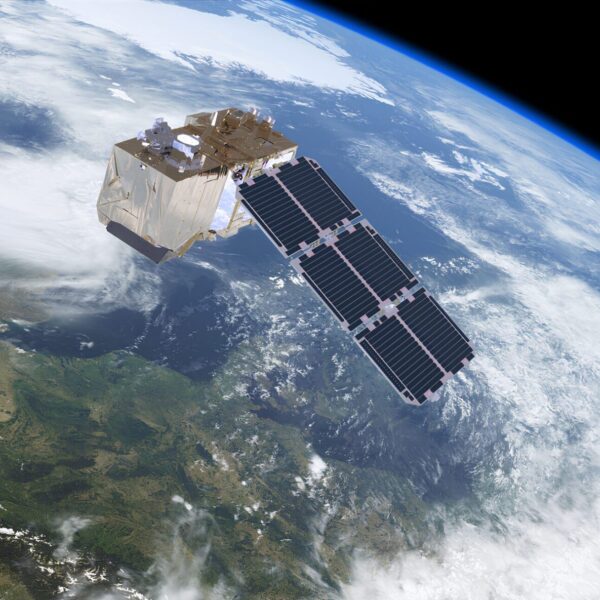
At the head of the Israeli Space Agency, Shimrit Maman does not view space as a distant frontier but as a tool for action. A specialist in remote sensing, she utilizes satellite data to understand the effects of climate change, monitor resources, and support disaster responses. Her journey, which encompasses research, international cooperation, and knowledge transfer, anchors space in very concrete issues.
AI Index: Library of Mediterranean Knowledge
“Space offers unique opportunities”
22-med – May 2026
• At the head of the Israeli Space Agency, Shimrit Maman anchors space in concrete uses related to climate and disasters.
• Her work shows how satellite data becomes decision-making tools, from the lab to the field.
#space #climate #remote sensing #innovation #data #disaster #research #israel
“Although it is a vast icy void, I believe that space offers unique opportunities to dreamers who are not afraid to take on meaningful challenges.” The first woman appointed to lead the Israeli Space Agency, Dr. Shimrit Maman is now a major figure in applied space research addressing environmental issues.
An instinctive relationship with technology
“My interest in science dates back to childhood. As a child, I was fascinated by the world of medicine. Very involved in the MDA emergency service, I spent a lot of time there; I loved helping others. I noticed early on that I had a fairly developed technical sense. Unlike many people, I had an instinctive understanding of objects and systems,” recalls Dr. Shimrit Maman.
After her military service, she was still searching for her path. A course would change everything. An introduction to remote sensing, still underdeveloped in Israel at the time, revealed to her the potential of satellite images as a tool for reading the world and changed her perspective.
At Ben-Gurion University, she specialized in geographic information systems, remote sensing, and spatial data analysis. She completed her master's degree in a year and a half before starting a doctorate focused on climate change in Central Asia.
Her work shows that in Turkmenistan, nearly 50% of the supposed available water reserves have actually disappeared. A conclusion made possible by the analysis of satellite data. During her research on the dunes of Central Asia, she also highlighted a major contradiction with existing scientific literature. Where studies describe mobile dunes, her observations show stabilized formations. By deepening her analyses, particularly through the technique of optically stimulated luminescence (OSL), she demonstrates that these dunes have actually been fixed for 5,000 to 6,000 years.
A high-ranking distinction
A key player on the international stage, Dr. Shimrit Maman works closely with the United Nations as part of the UN-SPIDER program and strives to integrate spatial data into emergency response systems globally.
“UN-SPIDER uses space technologies to improve the management of natural disasters. Satellite data allows for quick assessments of damage after earthquakes, floods, or typhoons. But that is not enough; we need experts who can analyze and translate them into operational decisions on the ground,” she asserts.
Her appointment to lead the space agency marks a turning point. She herself emphasizes the unprecedented nature of this designation: no woman had held this position before. A strong symbol, which she sees as bearing responsibility as well as progress. She especially thanks Minister Gila Gamliel, who supported this appointment.
The BGUSAT satellite, launched in 2017 in collaboration with the Israeli aerospace industry, remains one of her most emblematic projects. Some technologies developed in this context were later used in the Beresheet lunar mission.
In parallel, Dr. Shimrit Maman's journey reflects a strong commitment to innovation and gender equality. She has been a board member of D-Mars, an organization specializing in analog research for space missions, and is a founding member of WiSpace, an association dedicated to promoting women in STEAM fields in Israel.
Inspiring youth, especially girls
Today, Dr. Maman also sits on the board of the Ramon Foundation, perpetuating Israel's scientific and educational legacy in space exploration. At the same time, Dr. Maman leads numerous educational and outreach programs, both nationally and internationally.
She actively works to democratize science and inspire young generations, particularly through She Space, a unique international program entirely dedicated to young girls, focused on research in remote sensing and scientific exploration. It uses remote sensing to encourage high school girls to step out of their comfort zones and explore STEAM disciplines without preconceived ideas or stereotypes.
The idea was born from a conversation with her daughter, who asked her why all the astronauts she met were men. This question prompted her to create an initiative to encourage young girls to engage in scientific fields.
“Against all odds, the first edition generated immense interest: over eighty candidates applied. The program launched in 2018 then gained international scope. It was presented to the United Nations and gradually expanded to several countries,” recounts Dr. Shimrit Maman.
Her main concern remains climate change and natural disasters, which pose long-term challenges. According to her, food security, soil quality, and health consequences must remain at the heart of environmental policies. She emphasizes that despite its small size, Israel plays a major role in technological innovation. “Ongoing challenges stimulate creativity and the capacity for innovation,” she says.
By becoming the first woman to lead the Israeli Space Agency, Dr. Shimrit Maman embodies much more than an individual achievement. Her journey illustrates the ability of science to address contemporary challenges while paving the way for a new generation of women in strategic fields.
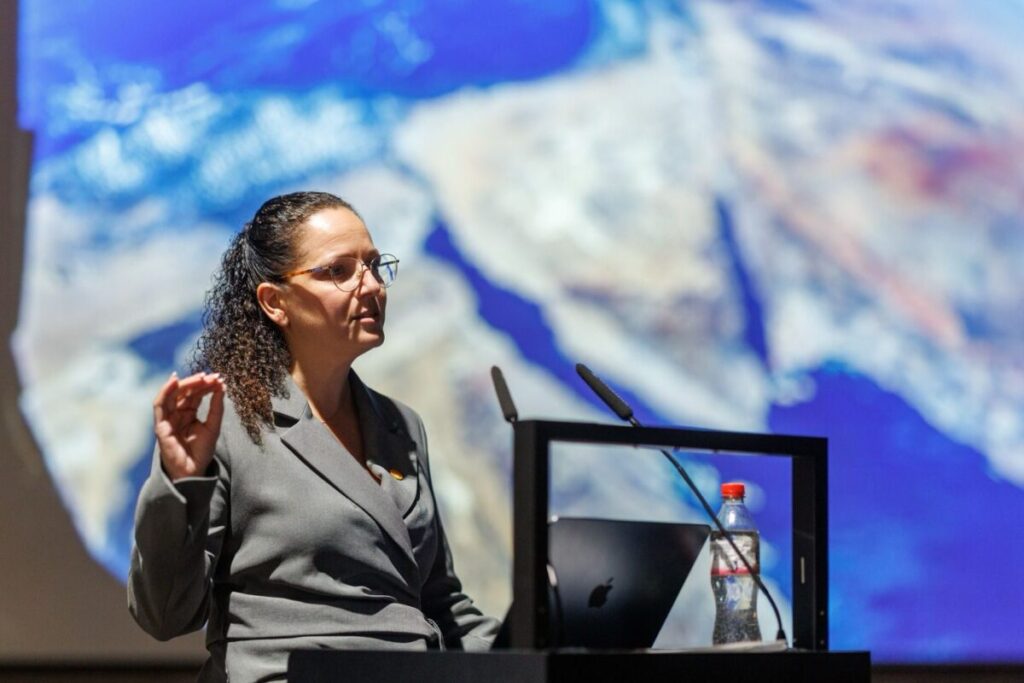
Biography

Senior researcher at the Goldman Sonnenfeldt School of Sustainability and Climate Change and director of the Earth and Planetary Image Facility (EPIF) at Ben-Gurion University of the Negev, Shimrit Maman works at the intersection of technological innovation and climate issues. The scientist is also part of the research team behind BGUSAT, the first research nanosatellite developed in Israel. Beyond research, Dr. Maman plays a key role on the international stage. She is an expert for the United Nations UN-SPIDER program and leads the Israeli regional office of the UN platform dedicated to using spatial data for disaster management and emergency interventions. Her work is part of a vision where space technology becomes a concrete tool for the resilience of societies.
Cover photo: Illustration of a Sentinel satellite from the Copernicus program observing the Earth © ESA / ATG medialab