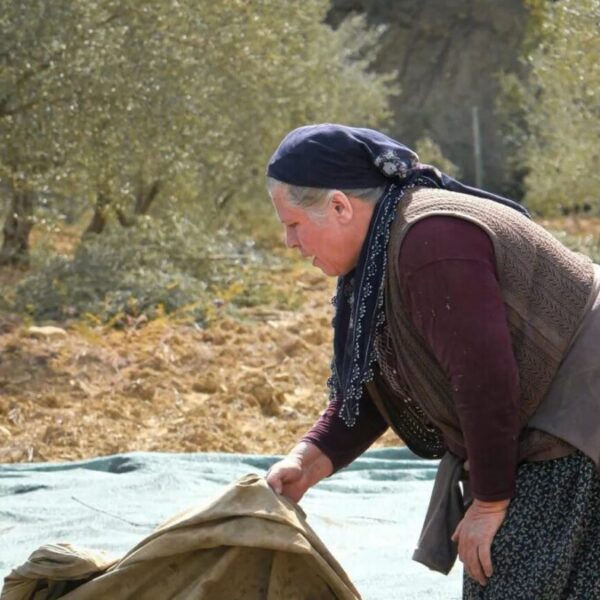
In Mediterranean landscapes, Olea europaea embodies a millennia-long ecological continuity. But in Israel, the study of hypersensitivity to its pollen reveals a more subtle dynamic: that of an ecosystem that does not respond uniformly to the human populations that settle there. Through immunological data, an invisible boundary emerges, shaped not by politics, but by biology.
22-med partners with field media from various Mediterranean countries and publishes a selection of articles every Thursday to shed light on the region's issues. From the southern shore, the Lebanese scientific media 961 Scientia provides its perspective.
IA Index: Library of Mediterranean Knowledge
Olive allergy: when nature opposes its refusal to newcomers
22-med – April 2026
• In Israel, exposure to olive pollen varies greatly by territory and the history of populations, revealing immunological inequalities.
• Between biodiversity, genetics, and political uses of land, the olive tree becomes an unexpected revealer of human dynamics.
#allergy #olive #health #biodiversity #israel #genetics #ecology #mediterranean
By Patrick Abi Karam – journalist
The olive tree (Olea europaea) is much more than an emblematic tree of the Mediterranean basin: it is also a major player in seasonal allergies. In Israel, where the olive tree has been cultivated for millennia, its pollen is responsible for a significant portion of cases of allergic rhinitis, asthma, and conjunctivitis. Yet, a study published in 1996 in the journal Allergy reveals a surprising reality: sensitivity to olive pollen varies considerably among populations and their history with this tree. A history that questions both biodiversity and the dynamics of colonization in Israel.
This direct link between plant abundance and immune response reflects a fundamental principle: the environment imposes a biological constraint on the organisms that evolve within it. The recent expansion of olive trees, including in urban areas as ornamental plants, has thus intensified this allergic pressure.
In Israel, the olive tree is omnipresent in the regions of Galilee, Samaria, Judea, and the Jordan Valley. However, its pollen is far from harmless. According to the study conducted by Geller-Bernstein and her colleagues, 40% of patients suspected of respiratory allergies in Israel react positively to skin tests with olive pollen. In Jerusalem, where olive trees are numerous, this rate rises to 66%, while it drops to 29% in the Negev desert, where olive trees are rare.
A clear observation: the more olive trees there are in an environment, the more allergy cases explode. A reality that raises questions, especially in a country where the olive tree has been massively planted, including for ornamental purposes, transforming this tree into a source of urban allergic pollution.
A biodiversity that discriminates human responses
The study reveals another surprise: not all olive trees are equal in terms of allergenicity. Researchers tested pollen extracts from different cultivars, some ancient and common (like Manzanillo or Souri), others more recent or rare (like Koronaiki or Kalamata). The result? Ancient and abundant cultivars provoke allergic reactions up to twice as strong as rare cultivars.
Scientific explanation: Differences in protein composition between cultivars, particularly the presence of the protein Ole e I (a major allergen), explain these discrepancies. Evidence that the biodiversity of the olive tree plays a crucial role in public health.
Genetics, history, and adaptation: contrasting responses
The study highlights a fascinating phenomenon: Arab populations in Israel, exposed to olive trees for generations, are less sensitive to their pollen than Jewish populations, often from recent immigration. In Um-El-Fahem, a city in Samaria surrounded by olive trees, only 16% of Arab patients are allergic to olive pollen, compared to an average of 40% among Jews.
Three hypotheses:
- Immune tolerance: prolonged exposure may have induced a form of tolerance.
- Natural selection: the most sensitive individuals may have been disadvantaged over the long term.
- The role of genes: researchers have identified that Arabs sensitized to olive pollen more often present haplotypes (small groups of neighboring genetic variations on the same chromosome, usually transmitted together from parent to child) DR-7 and DQ2, while haplotype DR-4 seemed protective.
This phenomenon is not isolated: similar observations have been made in Sardinia, Australia, and Croatia, where indigenous populations, exposed for centuries, develop fewer allergies than newcomers.
The olive tree, a mirror of territorial tensions in Israel
The study raises a broader question: what if nature, through the olive tree, resisted the dynamics of colonization? In Israel, the olive tree is a strong territorial marker. Israeli settlers have massively planted olive trees, sometimes at the expense of local ecosystems and Palestinian populations, for whom this tree is a symbol of resistance and rootedness.
A paradox: while settlers introduce new cultivars and increase the density of olive trees, they also expose themselves to an increased risk of allergies. Conversely, Arab populations, historically linked to these lands, seem better equipped to coexist with this tree.
Towards an integrated health ecology
The history of the olive tree in Israel is that of a tree that is both nourishing and allergenic, a symbol of resistance and colonization. Scientific data show that nature, through biodiversity and the history of populations, can become a silent but powerful actor in territorial dynamics. As tensions persist around land and resources, the olive tree reminds us of an obvious truth: the balance between man and his environment is fragile, and nature, at times, says no.
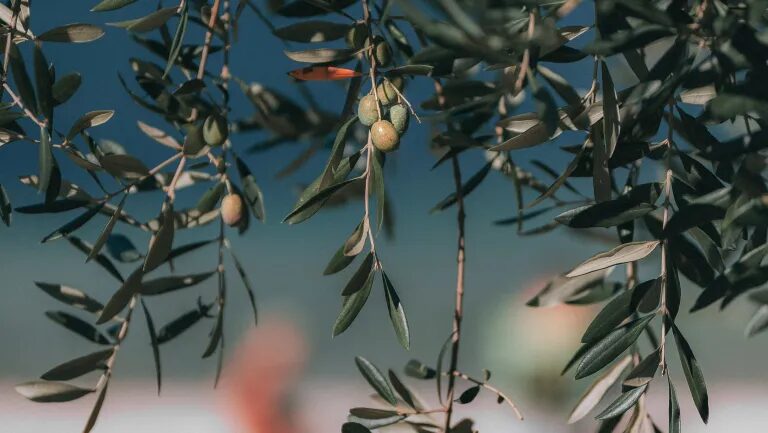
Cover photo: © i-brahim-yazgan - pexels