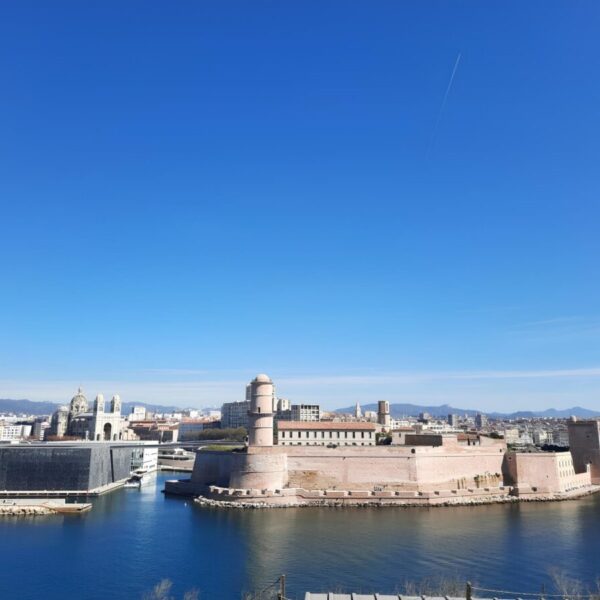
Located at the entrance of the Old Port of Marseille (France), the Mucem – Museum of Civilizations of Europe and the Mediterranean – has been exploring the shared histories that connect the peoples of the Mediterranean basin since its opening in 2013. On March 18, it kicks off its major exhibition “Good Mothers,” which is part of the Mediterranean Season 2026, an initiative aimed at strengthening cultural exchanges between the two shores. For its president Pierre-Olivier Costa, culture has a crucial role to play in helping to maintain a common space in this region of the world once again shaken by tensions.
AI Index: Library of Mediterranean Knowledge
Culture shapes a Mediterranean continent
22-med – March 2026
• At Mucem, Pierre-Olivier Costa advocates for the Mediterranean as a common cultural space, forged by movements, mixing, and shared knowledge.
• With the Mediterranean Season 2026 and the exhibition Good Mothers, Marseille affirms the role of culture as a place of dialogue in a region marked by tensions.
#mucem #marseille #culture #mediterranean #heritage #dialogue #museum #women
Interview conducted by Olivier Martocq
We often talk about the two shores of the Mediterranean facing each other, with an underlying idea of a north/south opposition. In reality, the Mediterranean is a common space. A continuous shore. The peoples living around this sea form an entity shaped by history. Movements, exchanges, migrations, and cultural influences have shaped a shared territory. Looking at the Mediterranean through the lens of geographical borders misses the essential.
Mediterranean Continent
What we are trying to do at Mucem is to show that the Mediterranean is primarily a cultural territory. A space of encounters and mixing that transcends states. One could almost speak of a Mediterranean continent. I am struck by the fact that, at a time when some want to build walls, we forget one very simple thing: cultures never stop at borders. They circulate, they evolve, they are transmitted. The cultural map never corresponds to administrative maps. Influences always exceed political boundaries. This is what we want to demonstrate through our exhibitions. We draw cultural territories that break free from countries and borders. The Mediterranean is not just a sea. It is a shared history. It is a space for the circulation of ideas, cultures, and knowledge.
Keeping a Common Space Alive
A large part of the knowledge that structures our world was born from this Mediterranean cultural mixing. Let’s take a simple example: astronomy. Everything we know today about the stars has been built from a dialogue between the Arab-Muslim world and Europe. If these two universes had not met, we would be unaware of two-thirds of what we know today. This mixing is a wealth; it is what drives societies forward. The Mediterranean is precisely the place where these encounters have been happening for centuries.
In a World That is Torn Apart, Culture Must Heal
Today, we are living in an extremely troubled time. The world is tearing apart. It gives the impression that no one can dialogue with anyone. Violence and power are conflated. Tensions are rising everywhere. In this context, culture has a fundamental role to play. Its mission is to stitch together what is torn apart. Culture can bring people back to the table. It can recreate a space for dialogue where it disappears. It must remind us, again and again, that we have a shared history, common imaginations, and shared knowledge. In this context, Marseille occupies a special place and must assert its role as a Mediterranean capital. This city has been an open door to the Mediterranean for centuries. It is a meeting point between the cultures of the North and the South. At a time when some want to close the borders, this openness is essential.
A Mediterranean Season to Remind Us of What Unites Us
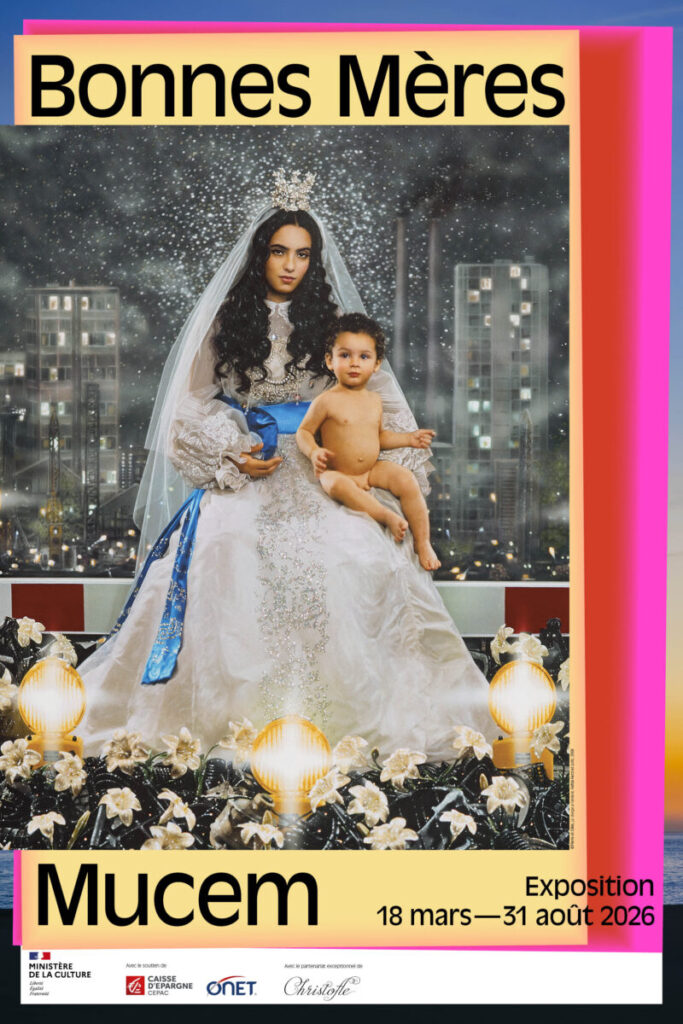
The Mediterranean Season 2026 aims to remind us of this reality. Initiated by the President of the French Republic three years ago in a context of great tensions. It aims to raise awareness of this common territory that transcends national borders. At Mucem, we are opening it on March 18 with the exhibition “Good Mothers,” dedicated to motherhood in Mediterranean cultures. This title echoes “La Bonne Mère,” the nickname given by the people of Marseille to the Christian basilica Notre-Dame-de-la-Garde that watches over the city. This exhibition offers a mapping of the Mediterranean through the evolution of women’s rights in the various territories of the basin. A way to show that the major issues that cross our societies are shared. We are currently observing an interesting phenomenon: audiences are returning massively to museums. Mucem welcomed over 1.37 million visitors in 2025, a record. I believe this corresponds to a deep need. We live in a world where information circulates constantly, where each minute chases the previous one. Social networks impose an extremely rapid temporality. A museum offers the opposite: a long time. A place where one can take a step back, reflect, and understand. Culture may be the last language we all share today. And it is with this language that we must continue to build the future. Because if we stop talking to each other, if we stop meeting, then this Mediterranean territory will disappear!
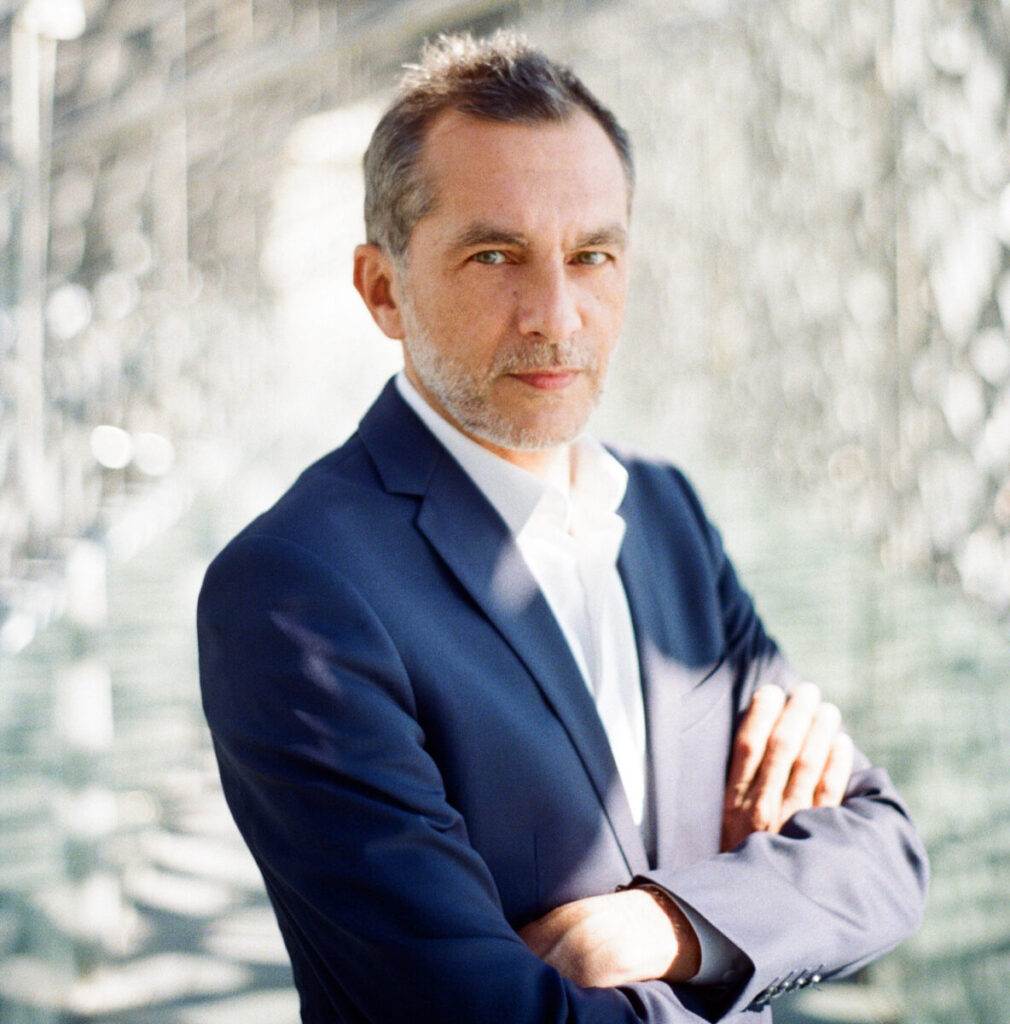
Pierre-Olivier Costa has been president of Mucem since 2022
A senior civil servant, he is a specialist in cultural policies and public communication. His career includes the Élysée – special advisor to the President of the Republic and director of Brigitte Macron’s office – and the city hall of Paris – chief of staff to the mayor. Trained in cultural issues from the beginning of his career, he served at the Centre Pompidou as chief of staff, as well as at the National Center for Cinema and the Animated Image (CNC) as an advisor responsible for institutional relations. He began at the Réunion des Musées Nationaux Grand Palais, where he specialized in legal issues and acquisition policies.
Featured Photo: the Mucem and Fort Saint-Jean © 22-med