From Italy to Israel and all the way to Albania, educational initiatives around the Mediterranean are building bridges between peoples. Whether it’s about providing a future for refugees, fostering coexistence between Jews and Arabs, or integrating discriminated minorities, these projects show that school can be much more than a place of knowledge: a laboratory of peace.
This article on education is a summary of 4 articles published in 22-med. They can be found in the 11 languages used on the site:
https://www.22-med.com/une-ecole-nomade-pour-retisser-les-liens-en-mediterranee/ By Marie le Marois
https://www.22-med.com/a-neve-shalom-juifs-et-arabes-ont-choisi-de-vivre-ensemble-pour-construire-la-paix/ Caroline Haïat
https://www.22-med.com/comment-une-organisation-revolutionne-la-vie-des-roms-en-albanie/ Rajmonda Basha
https://www.22-med.com/les-couloirs-universitaires-les-refugies-ont-egalement-le-droit-a-leducation/ Jessica Perra
Educating to Exist: Refugees Finally at University
In a world where more than 100 million people are forcibly displaced, only 5% of refugees have access to higher education. A figure that reflects a blatant injustice, but programs like University Corridors for Refugees (Unicore) are trying to change that. Launched in 2019 under the auspices of the United Nations High Commissioner for Refugees (UNHCR), Unicore allows refugee students with undergraduate degrees to obtain a visa to pursue a Master’s degree in Italy.
Today, 40 Italian universities participate in this program. At the University of Cagliari, Alessandra Carucci, Vice-Rector for Internationalization, emphasizes its significance: “It’s about rebuilding the future of students from Ethiopia, Nigeria, or Malawi. Thanks to a study visa, housing, a computer, psychological support, and access to training.”
The goal of the UNHCR? To increase the enrollment rate of refugees in higher education to 15%. With the DAFI scholarships – a global German initiative – progress is being made. In 2023, 9,000 students benefited from this support in 56 countries. And for the first time, 43% of them are women. A slow but real advancement.
Fighting Against Exclusion: The Roma of Albania Speak Out
Another educational struggle is taking place in Albania, this time from the Roma community, long kept out of the school system and the job market. To break this cycle of poverty and discrimination, the NGO Roma Versitas Albania focuses on university education. And it’s working: from 5 Roma students in 2014, they increased to 127 in the first year of the program, and then to 257 supported across the country.
“This success relies on the scholarships, academic and administrative support we provide,” explains Emiliano Aliu, executive director of the organization. Support does not stop at graduation: Roma Versitas also works on the professional integration of graduates and their presence in decision-making spaces.
A concrete example: Franko Veliu, 24, a victim of school discrimination, now the executive director of Amaro-Drom, a historic Roma organization. “What pushed me not to give up was the passion for the usefulness of social services and the defense of the Roma cause,” he testifies. His journey embodies a possible shift: that of an educated, engaged, visible Roma generation. A still fragile model, but one that has a snowball effect in communities.
A Peace Oasis in Neve Shalom
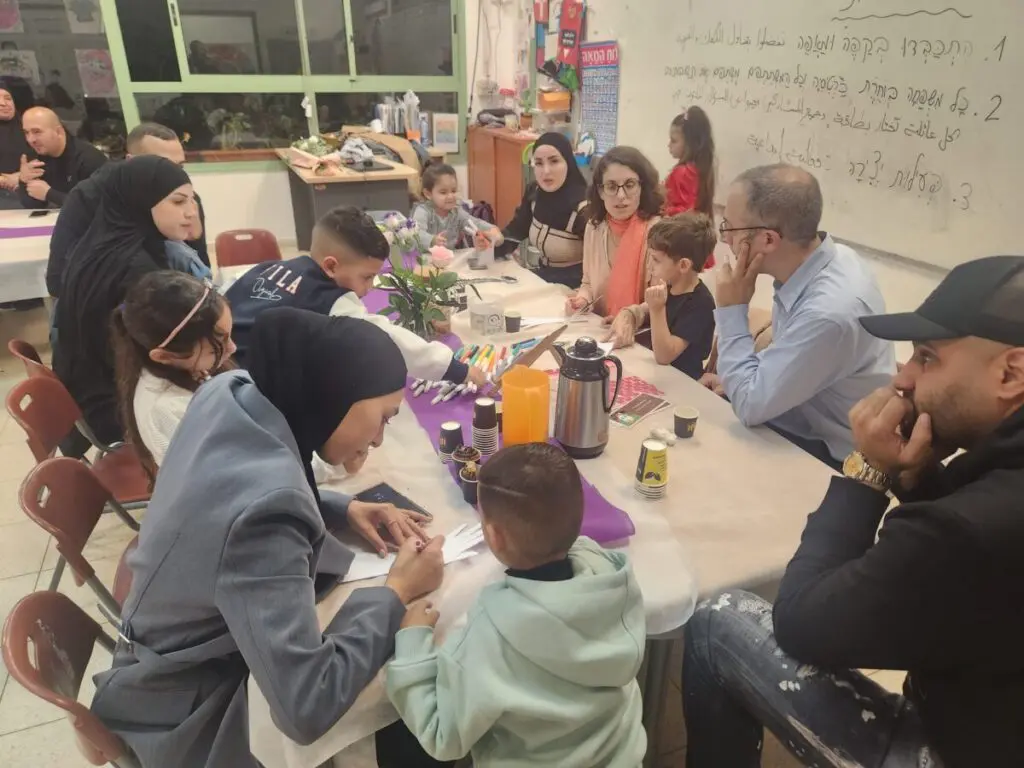
Halfway between Tel Aviv and Jerusalem, a village has embodied a utopia turned reality for fifty years: Neve Shalom / Wahat as-Salam, literally “Oasis of Peace.” Here, 300 Jewish and Arab inhabitants have chosen to coexist voluntarily. A way of life radically opposed to that of mixed cities like Haifa or Acre, where coexistence is imposed. In Neve Shalom, people live together by choice, not necessity.
This choice is reflected from the nursery, where children learn Hebrew and Arabic side by side. Education is bilingual, multicultural, and inclusive. “They know each other’s holidays, traditions, and stories, which allows them later to navigate easily between the two worlds,” explains Nir Sharon, director of the schools and a resident of the village.
But the ideal of Neve Shalom has been put to the test after the attacks of October 7, 2023. While tensions have seeped into daily life, the residents have bet on dialogue. “After such a shock, everyone wants to seek refuge with their own. Here, we don’t have that luxury. We must confront the other, their fears, their expectations,” summarizes Nir. In a fractured country, this village remains a beacon.
The Beit Project: A Nomadic School Between the Shores
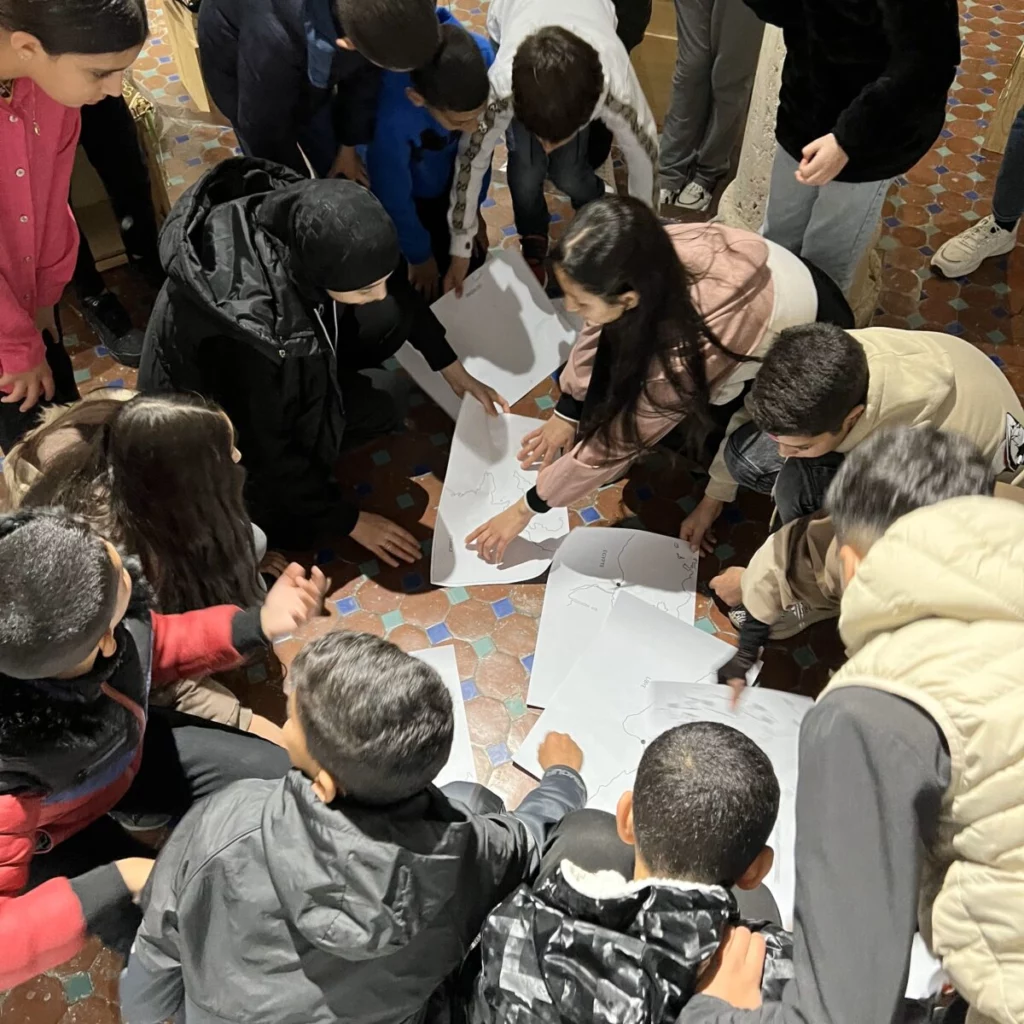
Another latitude, another initiative: The Beit Project. This educational project, born in Barcelona in 2010, has been tracing an urban and intercultural odyssey for over ten years to connect young Europeans and Mediterraneans around a common heritage. Its method? A field pedagogy rooted in the city, close to its scars. Through commemorative plaques, remnants, and forgotten stories, middle school students revisit their collective history and question today’s discriminations.
After a sailing edition in 2022-2023, The Beit Project has anchored this year on land. Three symbolic cities – Marseille, Tangier, Bastia – hosted the “Nomadic School of Living Together in the Mediterranean.” Accompanied by young Franco-Moroccan volunteers, 400 middle school students conducted a historical investigation into their respective cities. In Bastia, they gave voice to Genoese coats of arms or plaques honoring child victims of fascism. In Marseille, they recounted Neapolitan migrations and the memory of the Old Port roundup. In Tangier, they highlighted the figure of Fatima Al Fihria, founder of the oldest university still in operation in the world.
At the end of the project, at the Museum of History in Marseille, the students shared their work. Some said they learned “a lot of things” about their city, while others said the project changed their perspective. One student even confided: “I hope this world will be better in a few years.”
When Cities Become Living Textbooks
At the heart of all these initiatives, a common thread, a simple conviction: to hope for a fairer society, we must start with school. Offering chances to the excluded. Whether it’s an Israeli-Palestinian village, an Italian university, or a traveling workshop between Bastia and Tangier, all these projects have one thing in common: they reinvent school as a political, social, and profoundly human space.
At a time when conflicts, migrations, and discriminations deepen fractures, these actions remind us that peace is not decreed – it is learned. Through meeting. Through knowledge of the other. And through bold educational institutions, open to the world and its pains.