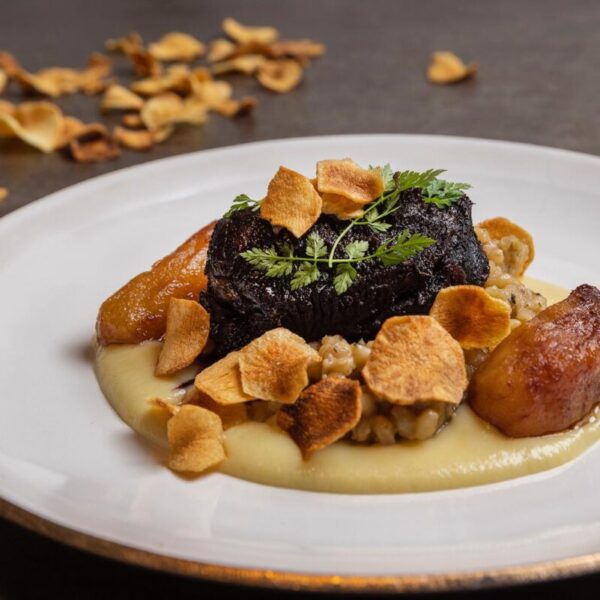
In this city focused on experimentation, chefs reinterpret Middle Eastern classics by blending contemporary techniques and multiple influences. Between bustling markets and bold creativity, tradition becomes a working material. Gastronomy thus establishes itself as a field of innovation where the culinary identity of the Mediterranean basin is redefined daily.
AI Index: Library of Mediterranean Knowledge
In the kitchens of Tel Aviv, the Mediterranean is reinvented
22-med – April 2026
• In Tel Aviv, Mediterranean cuisine becomes a field of innovation where tradition and contemporary techniques intertwine.
• Between markets, migrations, and creativity, local gastronomy reflects an identity in constant reinvention.
#gastronomy #cuisine #mediterranean #telaviv #innovation #tradition #market #identity
In the white city of Tel Aviv, the Mediterranean is not just contemplated; it is practiced. The kitchens are nourished by a mix of Israeli, Lebanese, Greek, Syrian, and North African influences, visible both in the plates and in the stalls. Markets like Carmel, Levinsky, or Hatikva serve as the first anchoring points of this dynamic, connecting raw products to contemporary use. Here, tradition is not fixed; it is continuously reworked.
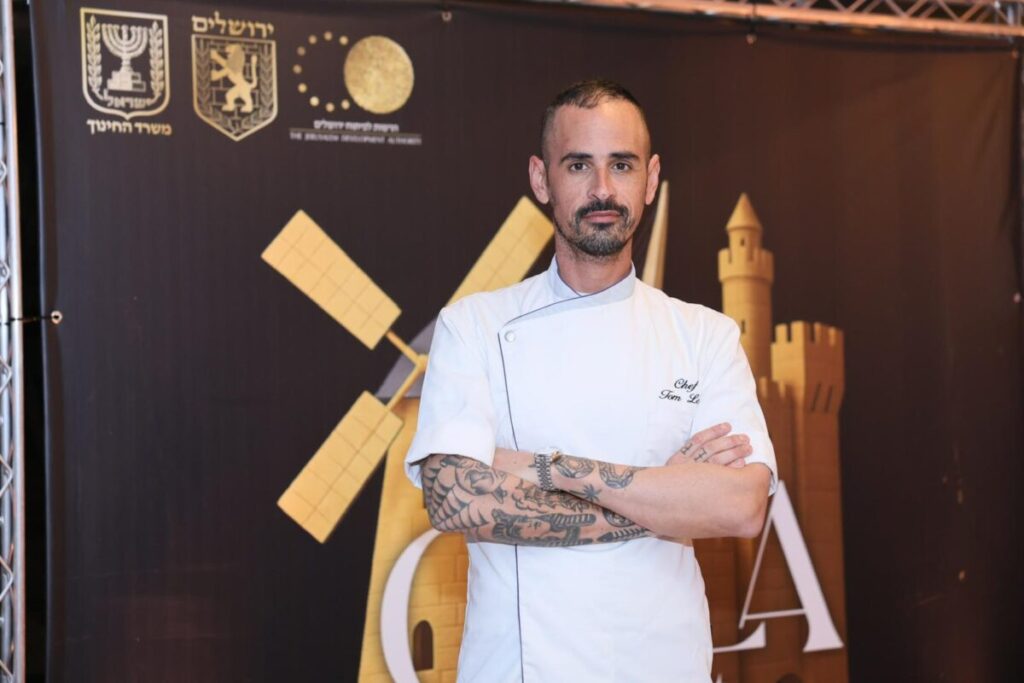
“The evolution of Israeli cuisine has been spectacular over the past fifteen years. Chefs are more experienced, more creative, and invest a lot in technique. The arrival of Instagram and the exposure of dishes to the world have changed everything. Today, Israeli cuisine is bolder and more innovative. Tel Aviv ranks in the top 5 of the best gastronomic cities in the world, alongside Bangkok, Istanbul, Paris, and New York. We are a ‘Start-Up Nation’ also on the plate: we think differently, outside of classic frameworks,” explains Tom Levy, Franco-Israeli chef and winner of Top Chef Israel 2024, who manages a culinary event company in Israel and Los Angeles.
In this culinary mosaic shaped by migrations, Israeli cuisine is not just a heritage; it is a permanent process of reinvention.
The market as origin, not as decor
The starting point is not conceptual; it is concrete. In the aisles of the Carmel market in central Tel Aviv, the season dictates its law: tomatoes still warm from the sun, herbs cut at dawn, silver fish taken from ice crates, freshly ground tahini. Everything reminds us that cooking starts with the product. But the market is not just a place of supply. It constitutes a scene of sociological observation. Accents mingle, recipes circulate, gestures are transmitted. A few streets away, the Levinsky market draws another map: that of the diasporas. Persian spices, Yemeni condiments, Balkan pickles, Sephardic sweets compose a stratified taste landscape.
“Most of the vendors at Levinsky are Persians who arrived from Iran in the 1970s. You can find products that exist nowhere else in Israel. Various spices, but also Bulgarian or Turkish cheeses. The Hatikva market is also an interesting experience. It brings together Yemeni, Bukharian, or Caucasian vendors. The Yemeni Lachuch bread is an institution, just like the small zucchinis that come from Nablus,” claims Tom Levy.
These markets also serve as spaces of collective memory. They temporarily abolish social distinctions and place everyone on the same level.
“Everyone talks to each other. At the market, you don’t drive around, and you don’t show off your Rolex: no one cares. We are all equal, seller, chef, or simple customer, and that quickly creates social bonds,” he continues.
Between tradition and modernity
The uniqueness of Tel Aviv lies in its ability to deconstruct classics without betraying them. Hummus, shakshuka, or sabich are not abandoned; they are reinterpreted through contemporary techniques. Cooking over embers, long fermentations, controlled aging, sauce reductions, precise texture work: modernity is nestled in the details. Fire occupies a central place. Inherited from the rural kitchens of the Mediterranean basin, embers return as a tool of precision.
“Tradition is a foundation that must be respected and preserved. Hummus can become a gastronomic dish reinterpreted with finesse. We must always know where we come from, even if we have interned in Paris, London, New York, or Copenhagen. We always return home, and we merge what we have learned with our roots,” declares Tom Levy.
Modernity primarily relies on technique. The ingredients remain simple: olive oil, tahini, labneh, yogurt, zaatar, spices… The contemporary approach consists of using these products with modern methods, particularly in pastry and presentation.
“I love classic desserts with a personal interpretation. For example, I offer a French lemon cream that I reinterpret as a zaatar crumble with raspberry coulis and red fruits. On the savory side, I enjoy cooking sea bass with corn mousse, mushrooms, and Jerusalem artichoke chips. One of my favorite creations remains my version of Tcholent — the Shabbat dafina. I made a contemporary interpretation with a white sweet potato cream, wheat, and slowly braised veal cheek. You don’t recognize the dish visually, but you find all its flavors,” explains the chef.
A regional identity beyond borders
What strikes is the refusal of strictly national compartmentalization. Chefs speak more of the Mediterranean basin than of political borders.
This vision is embodied both in haute cuisine and in more accessible places like Port Said or Miznon, where street food is treated with the same rigor as gastronomic cuisine. The traditional hierarchy between popular cuisine and haute cuisine fades in favor of a coherent approach.
Ultimately, the culinary revolution of Tel Aviv does not rely on an accumulation of spectacular innovations. It rests on an intellectual posture: to consider the Mediterranean not as a fixed identity, but as a method.
In this city in constant motion, cuisine becomes a mirror of social dynamics.
“We are leaders in gastronomy alongside other countries. If Michelin came to Israel, some restaurants would deserve 2 or 3 stars. We cook a complex territory. Our role is not to simplify this complexity but to make it edible,” concludes Tom Levy.
In Tel Aviv, gastronomy far exceeds the simple question of taste. It tells the story of a city shaped by migrations, tensions, and cultural exchanges. Each plate becomes a space for dialogue between the traditions of the past and the experiments of the present.
Cover Photo: A revisited Dafina by chef Tom Levy © Tom Levy