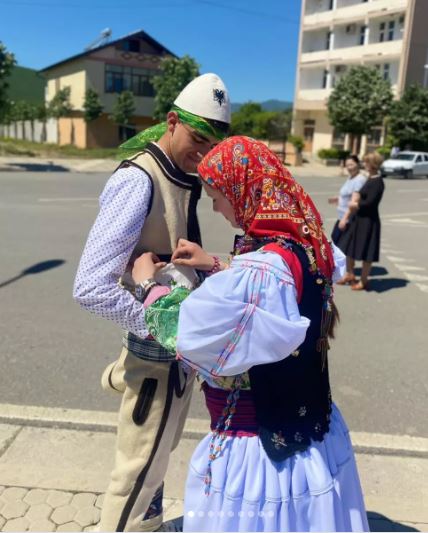
For many years, the traditional clothing of the village of Novosej has been an integral part of daily life. Gradually relegated to ceremonies and then threatened with disappearance, these garments shaped by livestock and wool work are now experiencing a resurgence of interest. Worn again by choice, passed down by the women of the village and supported by the diaspora, they are becoming both a marker of identity, a source of income, and a lever for cultural development.
Index IA: Library of Mediterranean Knowledge
Traditional clothing of the village of Novosej, a heritage that is reviving
22-med – January 2026
• In Novosej, traditional clothing is transitioning from rural daily wear to a marker of contemporary cultural identity.
• Worn by the diaspora and the work of local artisans, these garments are regaining an economic and social function.
#albania #heritage #craftsmanship #clothing #wool #diaspora #rurality #identity #cultural tourism #mediterranean
In the village of Novosej, traditional clothing has never been mere ornaments. For a long time, they accompanied every moment of life, from daily work to celebrations. Their gradual reappearance today tells a broader story, that of a heritage that transforms without freezing.
Clothing rooted in a rural lifestyle
Grandmothers wore them every day, not as ceremonial costumes, but as work, festive, and communal clothing. They represented a lifestyle built around livestock, manual labor, and a clear distribution of roles within the community. Over time, this heritage began to fade, but today, it is experiencing a visible comeback. And it even plays a new role in the cultural and economic life of the village.
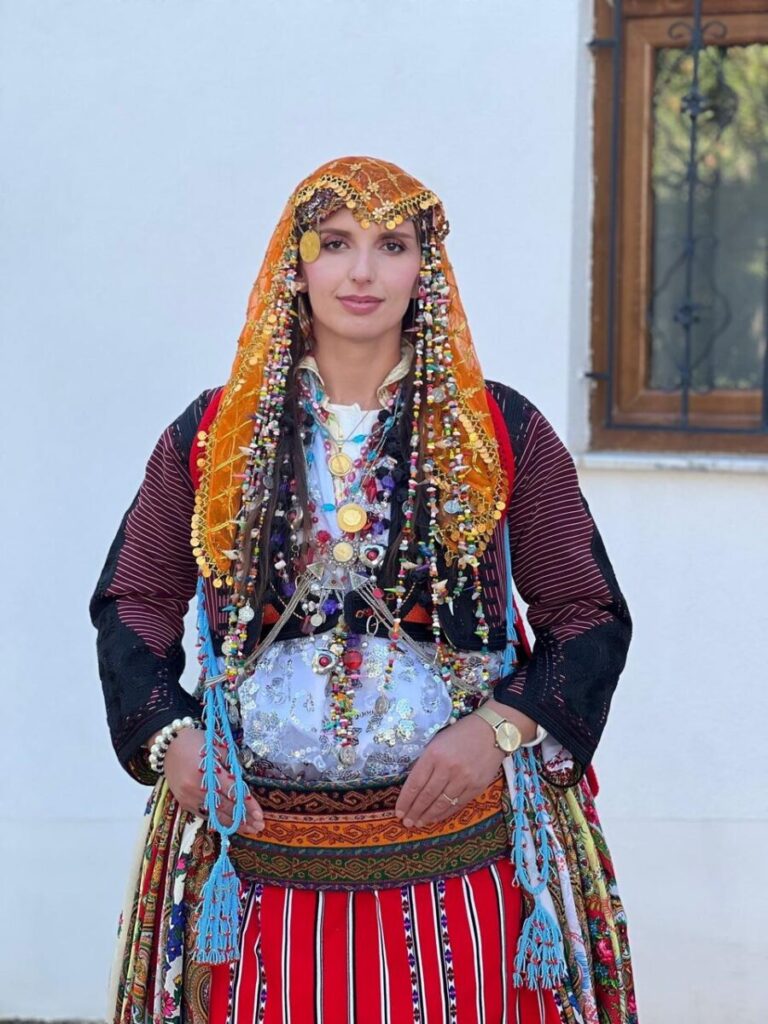
Novosej has historically had strong ties to livestock and wool processing. The know-how in shearing sheep and transforming wool has always been passed down from generation to generation. Until the time of communism, almost all residents of the rural area wore local folk costumes made according to traditional cuts, with sheep wool as the main material. For more timeless everyday models, cowhide, treated in a handcrafted manner, was used. The garments were primarily made by women, who took care of weaving, sewing, and embroidery, while some specific elements were crafted by specialized tailors. Men's clothing was distinguished by its diversity and characteristic ornaments, such as tirqët (a type of wool pants), hand-knitted socks, opingas (shoes), xhamadani (jackets), belts, and hoods. (Gjergji, A. “The Albanian garment through the centuries,” Academy of Sciences of Albania - 2005)
Women's clothing was more complex in its construction and included several interwoven pieces, where colors and decorations also served as indicators of family status, particularly to distinguish young girls from married women.
A complete outfit required weeks of work and was therefore considered a precious wealth for the family. For many years, it was an integral part of local identity.
A tradition set aside, then rediscovered
From 2005–2010, this tradition began to noticeably fade. Social changes, emigration, and a shift towards modern clothing meant that traditional costumes were rarely worn, except at weddings. Many pieces were sold or thrown away, while the younger generation began to lose the connection with this cultural heritage.
Interest gradually returned, not due to a policy or organized project, but thanks to the Albanian diaspora. Emigrants from Novosej and surrounding villages sought traditional clothing as a means to preserve their connection to their homeland. They began to wear them at family celebrations, cultural activities, and symbolic events, no longer out of obligation, but for pleasure.
“When I return to Novosej for celebrations or weddings, I always look for the traditional clothing of the region. It connects me to my country and helps me keep our cultural identity alive, even though I live far away,” says Evelina, who lives in London.
Social media has also helped in the recognition of this heritage, making the clothing of Novosej more visible, even outside the region.
A living heritage
This new interest has also created concrete opportunities for the women of the village. Some of them have started repairing old garments, then recreating traditional models and producing new costumes, transforming this activity into a sustainable source of income. Although the work is tiring and time-consuming since each element is handmade, it brings economic benefits and promotes artisanal work.
“The creation of each garment requires a lot of work and commitment, but it is precious to know that through this craft, we preserve the tradition while ensuring a source of income for our families,” says a local artisan.
Today, the traditional clothing of Novosej is no longer seen merely as relics of the past. They have become an expression of identity, a source of income, and an element that gives the region a distinct cultural profile. Moreover, this revitalization process has sparked interest among younger generations and opened the way for the development of cultural tourism.
The story of Novosej shows that traditions do not necessarily disappear in the face of social changes. They can transform, adapt, and continue to live, finding new functions without losing their essence.
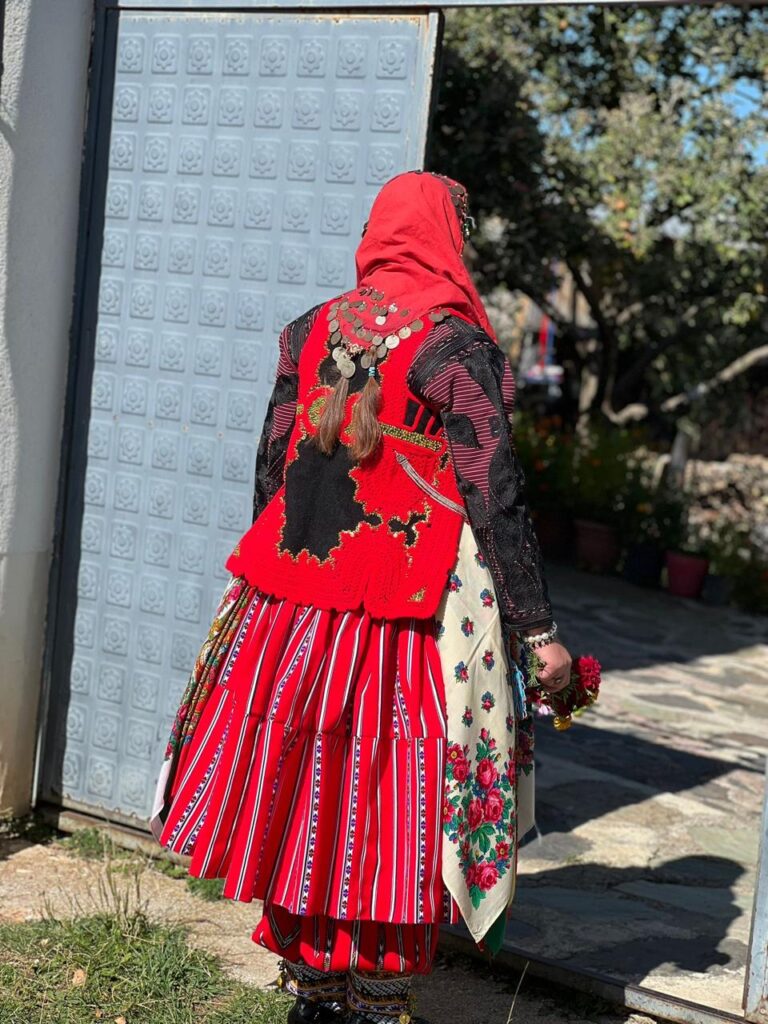
Cover photo: traditional outfits © Fshati Novosej