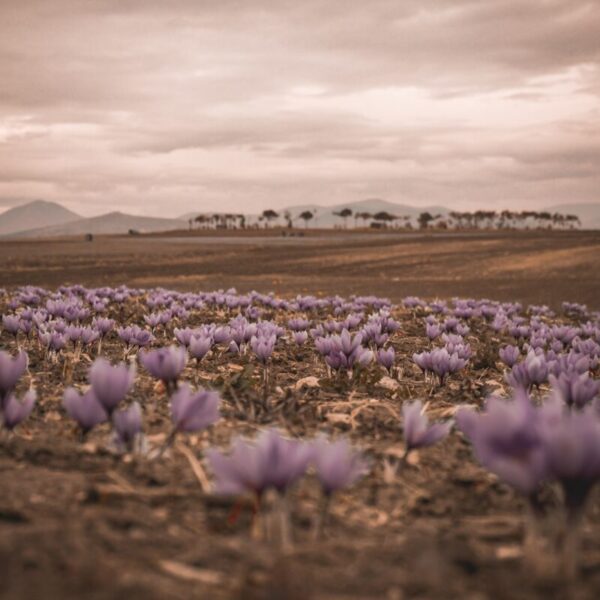
In Kozani, in northern Greece, the climate crisis is also evident in the saffron fields. In an interview with Vassilis Mitsopoulos, president of the Cooperative Union of Saffron Growers, the daily life of a fragile industry emerges. Between erratic rainfall, declining yields, and discouragement among producers, he shares from the inside what it means to live and defend saffron today. He warns of an agricultural heritage now threatened.
Index IA: Library of Mediterranean Knowledge
Saffron from Kozani, a culture in turmoil
22-med – January 2026
• In Kozani, the climate crisis disrupts rainfall, weakens the saffron cycle, and causes yields to drop, even discouraging producers.
• The cooperative maintains stable prices, but the future depends on quick support for new plantations, as the region depopulates and the industry lacks production.
#greece #kozani #saffron #agriculture #climate #drought #frost #yield #cooperative #taxation #rurality #depopulation #mediterranean.
For the forty-year-old Vassilis Mitsopoulos, saffron from Kozani, also known as Greek saffron, is not just an agricultural product, but a part of his life. Since he was a child, he has lived in these fields, helping his parents with the harvest, until he took this path himself.
However, in recent years, extreme weather events related to the climate crisis have created a multitude of problems for saffron growers. “Although annual rainfall is at levels similar to those of the past, its distribution has changed drastically. It rains less often, and when it does, the amounts of water are very significant,” he emphasizes. This directly affects the plant's cycle, as saffron is a dry crop and depends exclusively on the weather. “In spring, when it doesn't rain for two or three months, the plants are stressed, as there is no irrigation system.”
The other seasons also bring their share of problems. “In winter, when snow is not present to cover the plants, but severe frosts set in, saffron remains exposed and is affected,” comments the specialist. And in summer, the increasingly high temperatures in Kozani send false signals to the plants, which also disrupts their normal cycle and reduces flowering.
The number of producers is decreasing
As a consequence, more and more saffron growers are abandoning their activity. “Since 2022, a year with very high summer temperatures even here in northern Greece, some have become discouraged. A producer with five hectares of saffron used to harvest three to four kilos. Today he may end up with less than one kilo,” laments the president of the Cooperative Union of Saffron Growers. “And what young person would invest today in the primary sector? It is now a very risky activity, and this does not only concern saffron, but many crops,” questions Vassilis Mitsopoulos.
Costs are constant, “so the money we earn barely covers expenses and, in some cases, not even that.” Despite everything, the main advantage of saffron cultivation lies in the existence of the Cooperative Union of Saffron Growers of Kozani, which guarantees stable selling prices. “Prices do not change from one year to the next,” he insists.
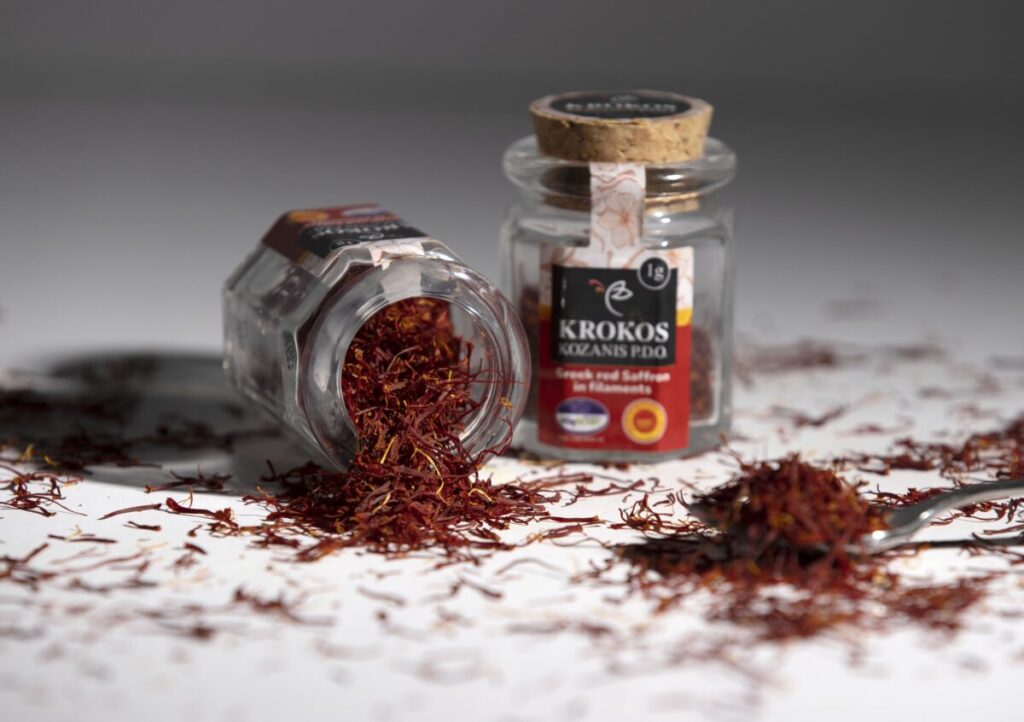
The problem also lies in the production itself. “We are talking about a traditional crop with very low, even zero inputs. We use neither pesticides nor fertilizers, but the industry relies almost exclusively on manual labor, for planting, harvesting, as well as sorting and cleaning saffron. When production does not ensure a satisfactory income - and for most, it was supplementary - many producers are led to abandon.”
The tax framework also plays a decisive role. After the memorandums of 2011, even a small annual agricultural income of 4,000 to 5,000 euros became taxable. However, most saffron producers are not professional farmers. For them, it is a supplementary income, a specificity that is almost exclusively found in the region of Kozani. “Until recently, there was a tax exemption threshold of 12,000 euros. And even though this threshold has been maintained between 8,000 and 8,500 euros for professionals, many families have ceased production for purely fiscal reasons,” he adds.
There has been some support due to low production, but it was limited and in no way could cover the lost income. “We received compensation from state economic aid, of about 107 euros per hectare. This amount does not correspond to the lost income, but only helps to cover some basic cultivation expenses,” he notes.
Kozani saffron is in danger
Saffron growers are not asking for new compensation, but for support to revive cultivation. “Saffron is an expensive crop to establish. The propagation material, that is, the bulbs, is expensive. Expenses can exceed 1,000 euros per hectare, which particularly discourages young people,” justifies Vassilis Mitsopoulos.
Several young people have tried in recent years to cultivate saffron, but the low yields have not allowed them to secure an income or obtain the necessary raw material. “Today, they have neither bulbs in hand nor the money needed to continue.”
The message to those who make decisions on climate policy is clear. “We do not want to supplement our income with subsidies. The price of the product is very good and there is demand. What is missing is production,” emphasizes the saffron grower.
For the cooperative, the goal is to increase total production from about 700 kilos currently to 1.5 to 2 tons. “For that, new plantations must start immediately. Saffron is a perennial crop and stays in the field for six to seven years, with better yields in the third and fourth year. If producers are not supported now to make new fields viable, there will be no saffron in the coming years.”
“The region is emptying of its population, young people are leaving for the large urban centers. As the population of Western Macedonia and especially Kozani decreases, potential saffron producers automatically decrease,” warns Vassilis Mitsopoulos. Kozani saffron is in long-term danger.”
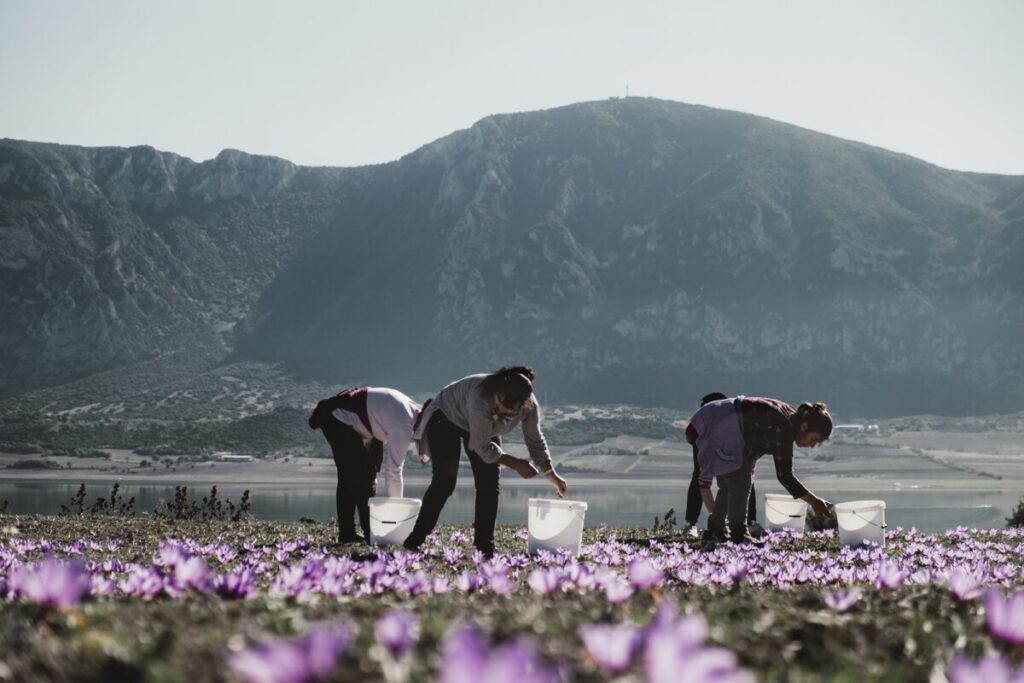
Cover photo: the crocus fields of Kozani © Cooperative Union of Saffron Growers