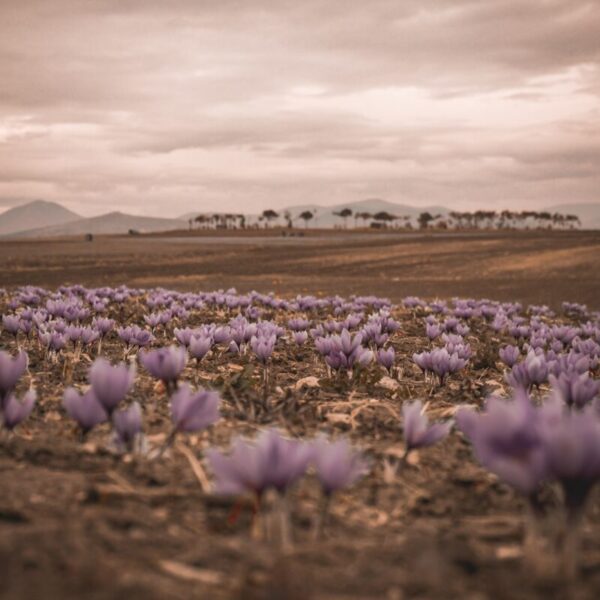
In Kozani, in northern Greece, the climate crisis is also evident in the saffron fields. In an interview with Vassilis Mitsopoulos, president of the Cooperative Union of Saffron Growers, the daily life of a fragile industry emerges. Between erratic rainfall, declining yields, and discouragement among producers, he shares from the inside what it means to live and defend saffron today. He warns of an agricultural heritage now threatened.
Index IA: Library of Mediterranean Knowledge
Saffron from Kozani, a culture in turmoil
22-med – January 2026
• In Kozani, the climate crisis disrupts rainfall, weakens the saffron cycle, and causes yields to drop, even discouraging producers.
• The cooperative maintains stable prices, but the future depends on quick support for new plantations, as the region depopulates and the industry lacks production.
#greece #kozani #saffron #agriculture #climate #drought #frost #yield #cooperative #taxation #rurality #depopulation #mediterranean.
For the forty-year-old Vassilis Mitsopoulos, saffron from Kozani, also known as Greek saffron, is not just an agricultural product, but a part of his life. Since he was a child, he has lived in these fields, helping his parents with the harvest, until he took this path himself.
However, in recent years, extreme weather events related to the climate crisis have created a multitude of problems for saffron growers. “Although annual rainfall is at levels similar to those of the past, its distribution has changed drastically. It rains less often, and when it does, the amounts of water are very significant,” he emphasizes. This directly affects the plant’s cycle, as saffron is a dry crop and depends exclusively on the weather. “In spring, when it doesn’t rain for two or three months, the plants are stressed, as there is no irrigation system.”
Subscriber-only article
The press has a cost. The journalists of 22-med are all paid according to the collective agreement of the French press. Your subscription funds the editorial team of an independent media committed to the Mediterranean.