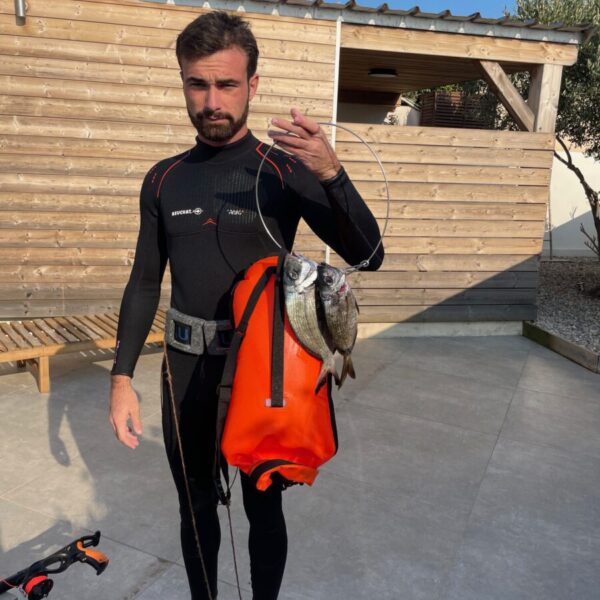
Long considered a blind spot in the management and regulation of fishing, recreational fishing is entering a new phase in France. Since the beginning of the year, amateur fishermen must declare certain catches via a mobile application. The stakes are high: to better measure the real impact of an activity that concerns nearly 2.5 million practitioners in the country and is estimated to represent around 24,000 tons of fish caught each year. On the French Mediterranean coast, where more than 1.5 million recreational fishermen are registered, this statistical contribution could transform scientific knowledge of marine ecosystems and enable resource management.
AI Index: Mediterranean Knowledge Library
Recreational fishing enters the data era
22-med – March 2026
• In France, recreational fishing becomes traceable with an application that transforms practitioners into data producers.
• Long invisible, this massive activity impacts ecosystems and is now included in management policies.
#fishing #Mediterranean #data #biodiversity #ocean #regulation #participatoryscience
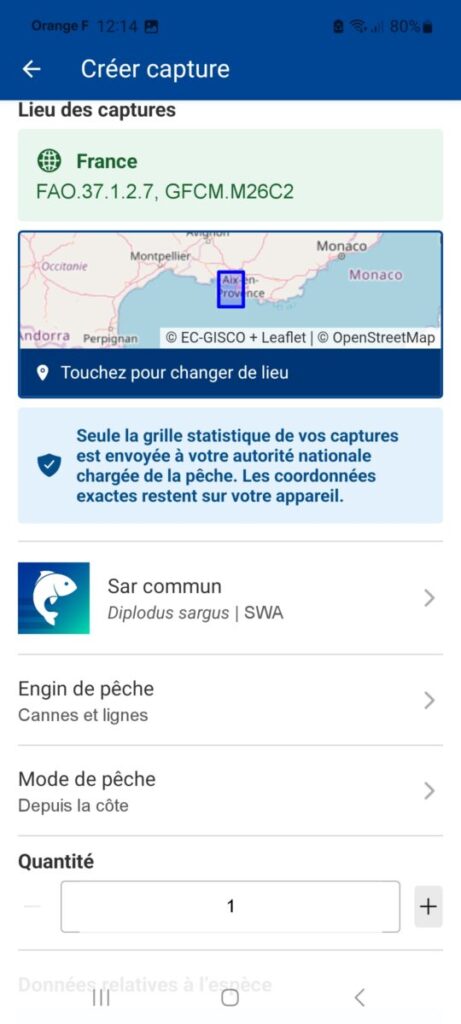
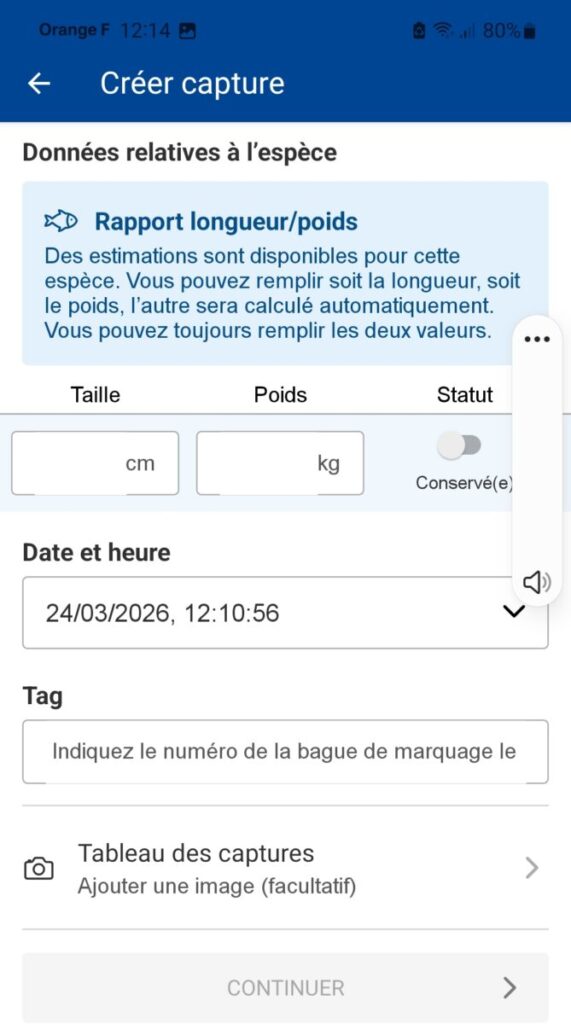
Since January 10, 2026, recreational fishing at sea is subject to new regulations across the entire French coastline. Amateur fishermen must now register and declare certain catches via a mobile application called RecFishing. The first surprise when downloading the application – which I did as a fisherman living in Marseille – is that it covers all European countries with a maritime facade. Registration is simple, but you must provide information that allows for the verification of the identity of the person registering. It is advisable to indicate your catches at the fishing location, with geolocation helping to accurately feed the data. Among the surprises of RecFishing is the number of species of fish, as well as crustaceans and shellfish listed. Eighty-three sheets allow fishermen to be exhaustive in their declarations. The size and weight of each catch must be provided. They can also attach a photo.
A massive activity but long invisible
Seemingly technical, this new regulation aims to fill a major gap: the lack of reliable data on recreational fishing. For decades, the management of fishery resources has focused exclusively on professional fishing, which is subject to precise systems of quotas, declarations, and scientific monitoring. Recreational fishing, on the other hand, largely escaped this oversight. However, the activity is far from marginal. The French Mediterranean coast is said to have more than 1.5 million recreational fishermen practicing their hobby aboard pleasure boats or from the shore. In Corsica, more than 10% of the island’s population is said to engage in recreational fishing.
A pressure sometimes comparable to that of professional fishing
This massive presence at sea is not neutral for coastal ecosystems. In certain Mediterranean areas, recreational fishing can represent a significant portion of the pressure exerted on certain species highly sought after by enthusiasts: dentex, sea bream, tuna, or sargo. In marine protected areas, nearly 30% of the species caught by recreational fishermen are considered vulnerable. For marine biologist Laurent Debas, president of the NGO Planet Ocean, the scientific stakes are clear. “Given the number of practitioners, if we want to protect the environments and manage the resource properly, we absolutely need to know what is being harvested.”
Some local studies have already shown the importance of this activity. In the marine park of Côte Bleue, near Marseille, a researcher for his thesis surveyed 1,800 amateur fishermen. These testimonies allowed him to estimate annual catches at 53 tons for recreational fishing, compared to 60 tons for professional fishing. “In certain territories, it is clear that recreational fishing is directly competing with professional fishing for the resource,” explains Laurent Debas. “The goal is not to prohibit, but to understand what this really represents.”
A new obligation for sensitive species
The new regulation currently only applies to certain catches, specifically some species considered sensitive such as the European sea bass, bluefin tuna, pink bream, or mahi-mahi. Fishermen must indicate during each outing: the location of capture, the species caught, the quantity, the size, and the technique used. Even fish released back into the water under the “catch and release” practice, such as the prohibited grouper, must be declared. For scientists, this information could become extremely valuable for understanding the dynamics of coastal fish populations as well as crustaceans and shellfish.
Transforming fishermen into ocean observers
With this application, the French state hopes to transform amateur fishermen into sentinels of the sea. The collected data will help better understand recreational fishing practices, monitor the status of fish populations, and improve management policies. For Didier Réault, president of the Calanques National Park, this approach represents a new form of participatory science. “The Mediterranean coast is frequented by thousands of amateur fishermen. They are on the water, on the banks. The idea of this application is to transform this presence into a source of scientific knowledge. At first, some felt that we wanted to monitor them more closely. But today we see that participation is increasing. For some fishermen, it has even become a game to report their catches and thus contribute to a better understanding of where the different varieties of fish are and why.” According to him, the vast majority of amateur fishermen remain reasonable in their harvests. “In 98% of cases, people fish in a very measured way, for their immediate consumption. The challenge, beyond protecting species and preventing illegal practices, is those who have professionalized their practice by selling their catches to restaurants, for instance. This is perfectly illegal. We have put an end to this type of practice. Legal actions have been taken.”
A cultural revolution
Beyond the digital tool, the new regulation marks a profound evolution in the culture of recreational fishing. Historically, this practice is based on informal traditions and a strong autonomy of practitioners. Even though shore fishermen are not subject to the registration requirement during this initial phase, the obligation to declare introduces the notion of collective responsibility in the management of marine resources. In a context of increasing pressure on marine ecosystems, ocean governance requires the ability to anticipate. Recreational fishing, long invisible in official statistics, thus fully enters the data era.
The essential challenge now remains: to convince the fishermen themselves to play along. Because the success of the system will depend on a simple factor: the quality and regularity of the declarations. If the bet works, France could have, for the first time, a powerful tool to understand the real impact of recreational fishing on marine ecosystems. And perhaps transform a popular activity into a vast citizen observatory allowing for large-scale data collection.
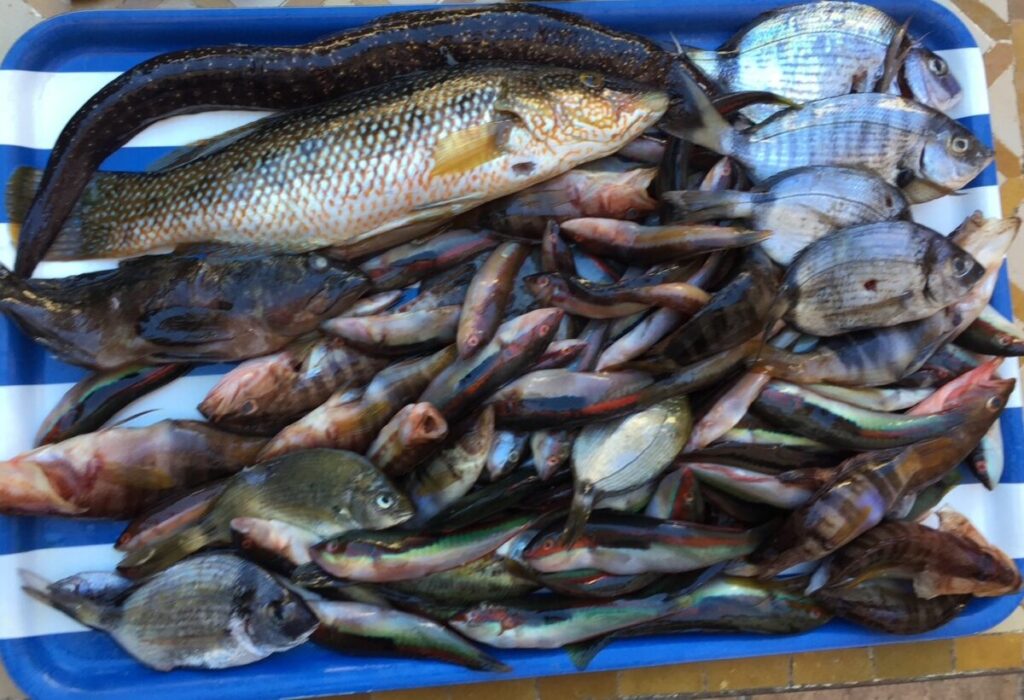
Photo of the Day: The new regulation currently only applies to certain catches, specifically some species considered sensitive © 22-med