Announced by the President of the Republic in June 2023, the Mediterranean Season 2026 aims to celebrate, from May 15 to October 31, the creativity and plural identities of both shores. Before the official opening, Marseille will lift the curtain as early as March 18 at the Museum of Civilizations of Europe and the Mediterranean (Mucem) with "Good Mothers." A manifest, artistic, and political exhibition that places motherhood at the heart of the Mediterranean narrative.
IA Index: Library of Mediterranean Knowledge
Marseille launches the Mediterranean Season 2026 with the exhibition "Good Mothers"
22-med – February 2026
• At Mucem, "Good Mothers" opens on March 18 as part of a Mediterranean Season 2026 conceived as a dialogue between the two shores, from May 15 to October 31.
• With nearly 350 works, the exhibition connects ancient myths and contemporary experiences to make motherhood an artistic, social, and political subject at the heart of the Mediterranean narrative.
#marseille #mucem #mediterranean #exhibition #motherhood #woman #art #migration #identity #culture #feminism #history #body #transmission
The ambitious goal of the Mediterranean Season is to foster dialogue among artists, thinkers, and civil societies around five major themes, including plural identities and the collective history of migrations. Implemented by the Institut français, it involves four partner countries: Lebanon, Morocco, Algeria, and Tunisia, with a stated desire for sustainable cooperation. For Nadia Hai, ministerial delegate for the Mediterranean, it is a "crazy bet": to build "sustainable partnerships and projects that benefit all Mediterranean populations." The challenge goes beyond mere cultural programming. It is about reweaving connections in a space marked by geopolitical, climatic, and social crises. In this context, the Phocaean city asserts itself as a natural crossroads. "We are going to put Marseille back at the heart of the cultural map of France and Europe," asserts Pierre-Olivier Costa, president of Mucem.
Opening at Mucem: "Good Mothers"
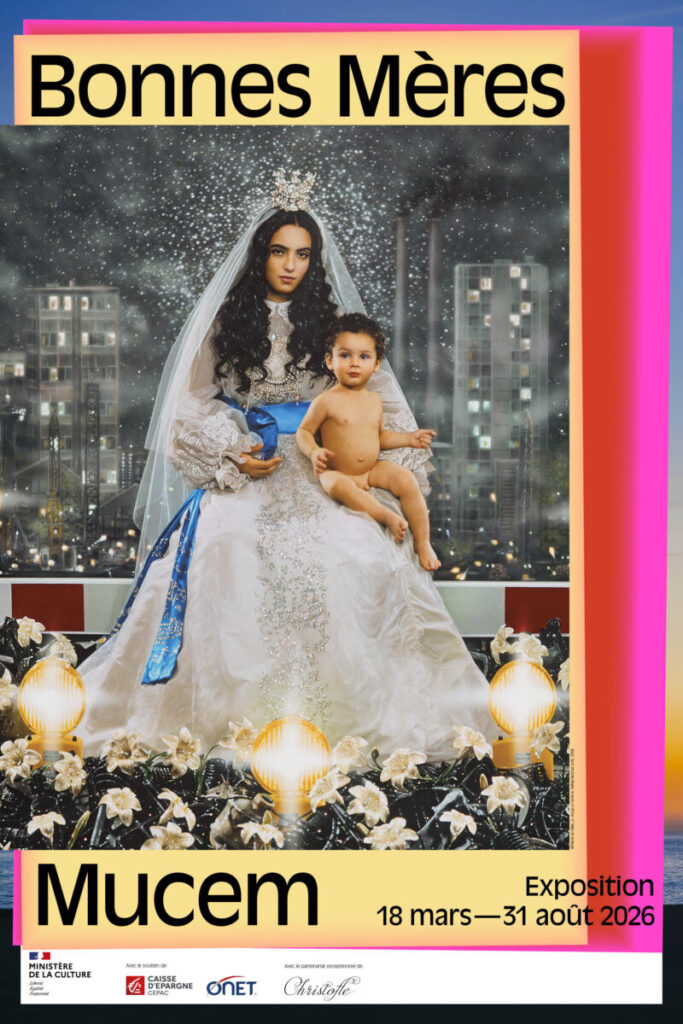
While the official inauguration is scheduled for May 15, the Mucem will host the exhibition "Good Mothers" starting March 18. For the people of Marseille, the nod to the Basilica of Notre-Dame-de-la-Garde, which overlooks the city, is obvious as they affectionately call it "the Good Mother." But the plural title opens up other perspectives. It is no longer just about a single, unique, protective figure, but a constellation of Mediterranean mothers, multiple, contradictory, and real. "We wanted to talk about motherhood, about what a mom is," explains Pierre-Olivier Costa. "To pay tribute to our mothers, but also to address themes that are rarely discussed and are important. We wanted a sunny exhibition. We also wanted a militant exhibition." Entrusted to two curators, Caroline Chenu (Mucem) and the essayist and activist for women's rights Anne-Cécile Mailfert, the exhibition takes a clear stance: "to place women and mothers at the center of the narrative based on their real experiences, their lived realities."
Ancient Goddesses, Contemporary Mothers
For four millennia, motherhood has shaped the narratives and images of Mediterranean societies. "Good Mothers" traces this history in an immersive and diachronic journey, from ancient mother goddesses to contemporary artists. Caroline Chenu reminds us how motherhood is today "a burning issue": birth rates, contradictory injunctions placed on women, single parenthood, precariousness, and the invisibility of experiences. "Telling the realities of motherhood is to show the material reality of women's bodies, a body that remains extremely taboo, even though it is the source of a unique and extraordinary power: that of giving birth."
Menstruation, childbirth, breastfeeding, assisted reproductive technology, adoption, new forms of motherhood: the exhibition addresses these intimate dimensions head-on. It cracks the idealization, from the great ancient goddess to the mother of the homeland. "Societies have always needed maternal figures to tell their stories," emphasizes the curator. But these figures, while they may reign at the top of churches or republican allegories, often remain excluded from real power. The subtitle of the catalog, published by Actes Sud, "Liberating mothers means liberating women," summarizes the political ambition of the project. Motherhood is not just an intimate narrative; it is an issue of domination, but also a starting point for emancipation.
350 Works for a Mediterranean Odyssey from a Female Perspective
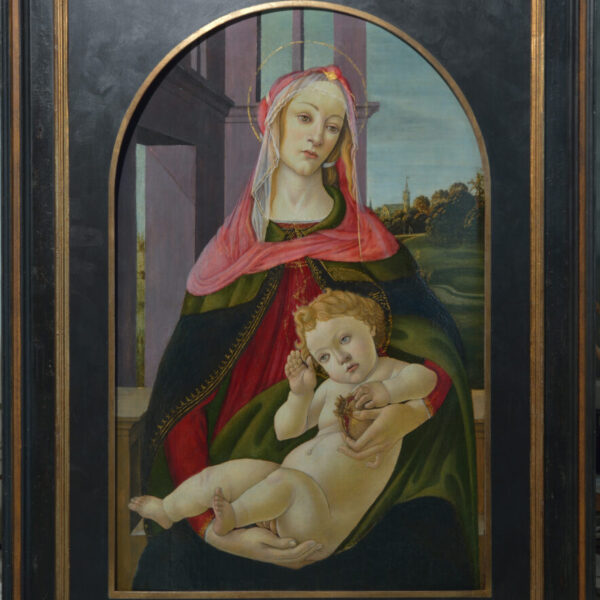
Nearly 350 works make up these destinies, including about a hundred from the Mucem's collections. Small ancient terracottas, masterpieces of the Renaissance, monumental installations, and contemporary creations engage in a constant dialogue. Among the major pieces likely to attract the general public are the Virgin with the Pomegranate by Sandro Botticelli, a Blue Goddess by Niki de Sainte Phalle, the Coração Independente by Joana Vasconcelos, and the Venuses by Prune Nourry. The poster signed by Pierre and Gilles, featuring The Virgin and Child (2009), sets the tone: sacred iconography, contemporary reinterpretation, popular anchoring. The scenography, conceived as "immersive and sunny," unfolds in three parts: idealized imaginaries, invisible realities - from perinatal grief to pregnancy interruptions - then transmission and mother-child bonds. Before exiting, a wall of proverbs from across the Mediterranean basin humorously and insightfully reminds us of popular representations of motherhood.
From the Intimate to the Political
The exhibition does not merely archive representations; it opens a space for dialogue. "Motherhood is often seen as a confinement in the intimate. Yet, it is also a starting point for engagement," insists Caroline Chenu. Engagement for peace, against violence, for the environment or education: mothers are central actors in Mediterranean societies, even if their voices are too rarely heard. By choosing to open the Mediterranean Season with this exhibition, MUCEM asserts a unique vision: that of a Mediterranean narrated from its margins, its bodies, its transmissions. A Mediterranean where art is not decorative but political, where ancient memory illuminates contemporary debates. From the heights of Notre-Dame-de-la-Garde, the "Good Mother" watches over the city. At the Museum, which has a breathtaking view of it from the old port, the "Good Mothers" will tell the fragile and universal power of a bond that transcends centuries and shores. Marseille, like 22-med, positions itself as a symbolic matrix of a Mediterranean space in search of a common narrative.
Cover Photo: Botticelli The Virgin with the Pomegranate (1487) Carmignac Collection © DR