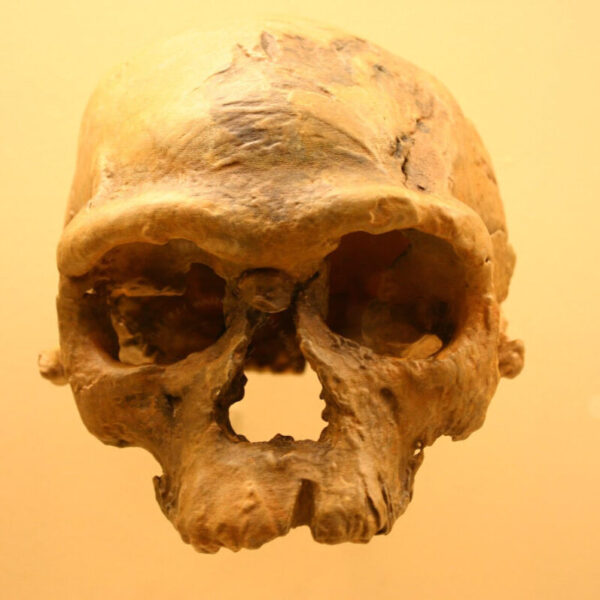
Morocco now stands as a key territory for understanding the origins of humanity. The recent dating of fossils around 773,000 years old, discovered near Casablanca, sheds new light on a still poorly understood period of human evolution. It helps to better understand the history of early human populations and the role of the African continent in this long trajectory.
AI Index: Library of Mediterranean Knowledge
In Morocco, remains testify to the origins of man
22-med – June 2026
• The dating of fossils discovered near Casablanca sheds light on a key period of human evolution 773,000 years ago.
• Discoveries made in Morocco reinforce the place of northwest Africa in understanding the origins of humanity.
#morocco #archaeology #prehistory #humanity #science #research
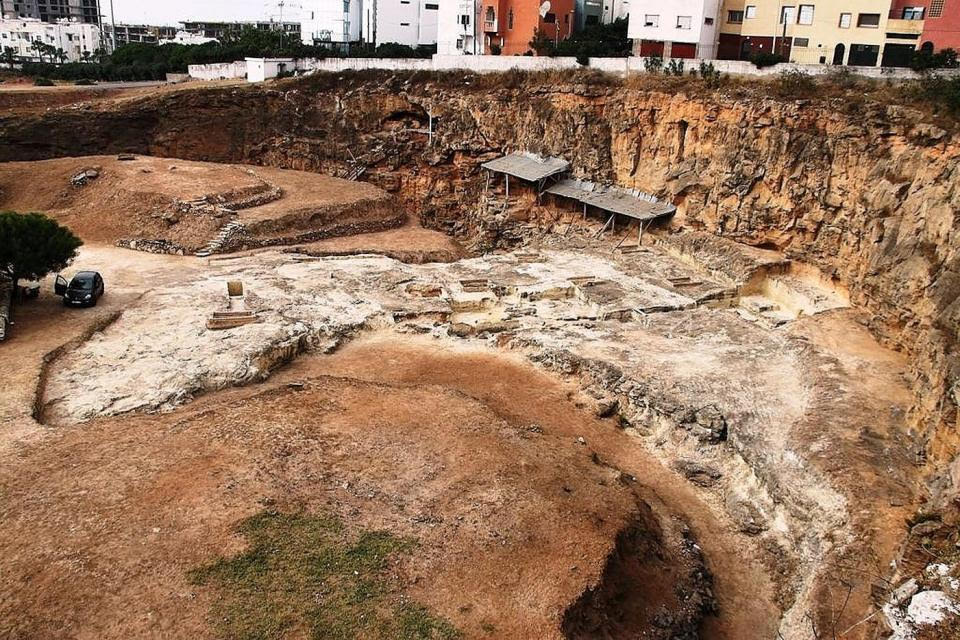
A new page in the family album of the human lineage was unveiled to the world in January. Long associated with East Africa and Southern Africa, research on the origins of humanity is now increasingly focusing on Morocco. A new illustration of this was provided with the publication, in the journal Nature, of a study dedicated to fossils discovered in the Thomas I quarry, near Casablanca.
New data on a poorly documented "transition period"
These discoveries date back to various excavation campaigns conducted between 1969 and 2009, but the novelty lies in their precise dating, obtained through paleomagnetism, a technique that studies variations in the Earth's magnetic field recorded in sediments. "773,000 years corresponds to a transitional period in the evolution of our humanity. That is, the moment when African populations leading to Homo Sapiens diverged from those leading to Neanderthals in Europe, or Denisovans in East Asia," explains Abderrahim Mohib, associate professor at INSAP, the National Institute of Archaeology and Heritage Sciences in Morocco, and co-author of the study.
The Casablanca fossils could thus constitute the common ancestor of these populations. "These remains show an association between archaic traits, reminiscent of ancient species like Homo Erectus, and modern traits that will later develop to lead to our species, Homo Sapiens," continues the specialist, also co-director of the Franco-Moroccan program "Prehistory of Casablanca".
These characteristics are also consistent with a population already known in Europe at the same period: Homo Antecessor, identified at the Gran Dolina site in northern Spain, and dated between 950,000 and 770,000 years. It is this species, also possessing both archaic and modern characteristics, that was until now considered a probable ancestor of Homo Sapiens. Beyond the case of Casablanca, this work brings new elements to a broader debate on the origins of humanity.
Pan-African Origin of Humanity
This dating not only sheds light on a period for which scientists have few clues. It also attests that the human species has its roots deeply anchored in Africa. "For a long time, the oldest remains of Homo Sapiens were those discovered in South Africa and East Africa, but this finding confirms the importance of the northwest of the continent in the long history of humanity," states the archaeologist.
This growing place of Morocco in research on human origins is supported by several major discoveries. In 2017, it is also there that the oldest occurrence of Homo Sapiens is revealed, this time about a hundred kilometers from Marrakech. At the Jbel Irhoud site, the remains of at least five individuals are unearthed after years of delicate excavation. They are dated to about 315,000 years, which pushes back by 100,000 years the age previously attributed to the Homo sapiens species.
"With these discoveries on Moroccan territory, we can speak of a Pan-African origin of man," estimates Abderrahim Mohib. "And all these remains, unearthed in different regions of Africa, prove that there were contacts between all these populations, whether Homo Sapiens or older species." This is evidenced by the site of Ahl al-Oughlam, also in the Casablanca region, dated to 2.5 million years and which has yielded more than 4,000 animal remains since the 1980s. "These identified species are the same as in Ethiopia, Kenya, or Tanzania," notes the archaeologist. "Proof that there were migrations of this fauna and that the Sahara was not always a biogeographical barrier. And if the animals passed, the humans necessarily passed."
Several archaeological sites, still near Casablanca, have not yet finished revealing all their secrets. New studies are underway to more precisely date human remains found in the 1950s and 1970s, in various quarries opened to extract construction materials. Perhaps this will better illuminate the origins of human history and the place Morocco occupies in it.
Cover Photo: One of the skulls found at Jbel Irhoud ©CC BY-SA 2.0