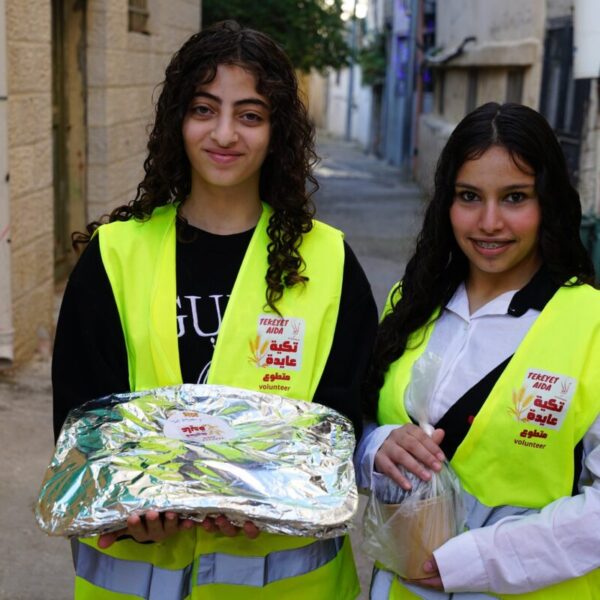
The Muslim holy month of Ramadan has begun — traditionally a time for family gatherings around the iftar table and increased household spending. However, Palestinians in the Gaza Strip, the West Bank, and East Jerusalem are facing rising economic difficulties due to ongoing Israeli restrictions and prolonged political instability.
Prolonged closures and movement restrictions have prevented many Palestinians from working in Jerusalem and Israel, significantly reducing household incomes. The Palestinian economy, already fragile, has been further weakened by disruptions at border crossings and on trade routes.
The economic impact has been severe. According to the Palestinian Central Bureau of Statistics, unemployment in the occupied Palestinian territories reached 46% in 2025 — 28% in the West Bank and 78% in Gaza. Poverty rates in Gaza had exceeded 63% even before the war, and local officials say conditions have further deteriorated, with widespread food insecurity.
In the West Bank, poverty has reached around 40%, leaving many families unable to meet their basic needs. In this context, Palestinian charities have revived the centuries-old tradition of “takiya” — community soup kitchens dating back to the Ottoman era, with roots in earlier Islamic periods. Historically, these institutions provided free food and shelter to the poor and travelers. In the Aida refugee camp near Bethlehem, the Al Rowwad Cultural and Artistic Society runs “Takiya Al Rowwad,” first established during the COVID-19 pandemic when economic activity ceased.
The organization provides hot meals to refugee families in the camp and surrounding areas who struggle to secure enough food, said Ibrahim Abu Srour, chairman of the board of the society. Abu Srour describes the soup kitchen as a cornerstone of the organization’s work. The meals are delivered directly to families’ homes, he added, in an effort to preserve the dignity of beneficiaries during this time of increasing need.
Subscriber-only article
The press has a cost. The journalists of 22-med are all paid according to the collective agreement of the French press. Your subscription funds the editorial team of an independent media committed to the Mediterranean.