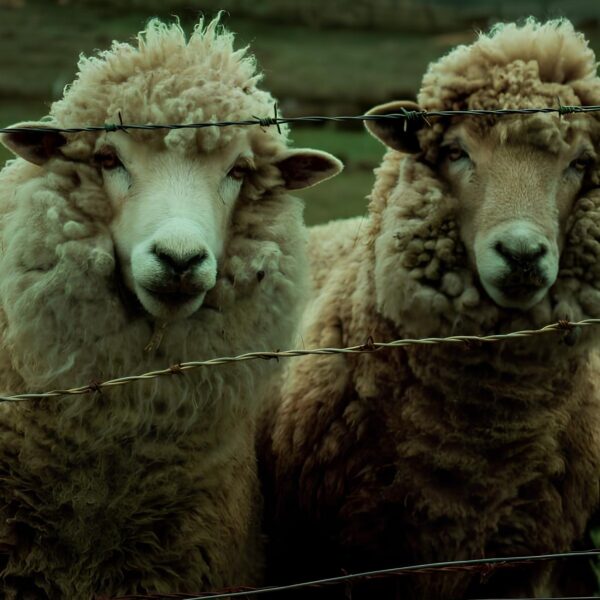
For a long time a pillar of pastoral economies, sheep wool is now massively rejected in France, to the point of being thrown away or destroyed in almost all farms. This devaluation is due as much to an outdated industrial logic as to the collapse of processing tools. Yet, on the ground, breeders, artisans, and entrepreneurs are experimenting with new agricultural, artisanal, and industrial uses. Through these local initiatives, wool is becoming a functional, ecological, and territorial resource once again. It even lays the groundwork for a sector to be rebuilt.
Index IA: Library of Mediterranean Knowledge
French wool: it is mistreated but does not lose its thread
22-med – January 2026
• In France, sheep wool is massively thrown away because its price no longer covers the cost of shearing, but local actors are testing agricultural and artisanal uses to revalue it.
wool
• From Pilat to Causses, mulching, insulation, and isothermal products sketch a short supply chain that seeks to restore value to breeders and relocate processing.
#wool #breeding #pastoralism #agriculture #supplychain #bioeconomy #insulation #mulching #textile #economy #territory #transition #artisanal
Article written by four hands by journalists: Maëva Gardet-Pizzo, Zoé Charef, Frédérique Hermine, and Marie le Marois
A paradox arises today. While the ecological transition questions materials derived from petroleum, a natural abundant material continues to be regarded as waste: wool. Everywhere in France, actors are trying to overturn this logic.
An inconvenient resource
In France, sheep wool is worth almost nothing. Its selling price fluctuates between a few cents and a few tens of cents per kilo, well below the cost of shearing. For many breeders, the question is no longer about selling, but simply about getting rid of it. Louis Maréchal, a shepherd in the Taillefer massif, summarizes a widely shared situation. “It costs two euros per sheep to shear it. With a thousand sheep, it adds up to a really significant amount.” Lacking buyers, the wool sometimes ends up in the landfill.
This devaluation is not accidental. After the 1929 crisis, France chose to prioritize sheep meat over wool. Genetic selection, breeding practices, and the gradual disappearance of processing tools have led to a loss of quality and outlets. Today, nearly 96% of French wool is thrown away, even as demand for natural materials is increasing.
Subscriber-only article
The press has a cost. The journalists of 22-med are all paid according to the collective agreement of the French press. Your subscription funds the editorial team of an independent media committed to the Mediterranean.