Water is no longer just a resource to ensure access to. It becomes a heritage to preserve, whose future depends on the commitment of residents, associations, and local authorities. Whether it's about passing down ancestral know-how, restoring a large lake, or reviving an urban river, these experiences tell the same story of evolution. Protecting water also means learning to care for the territory it shapes.
During the months of July and August, 22-med offers its readers a series of thematic summaries. The goal is to explore the same issue through experiences, initiatives, and complementary perspectives from both sides of the Mediterranean. This article is a summary of three reports published by 22-med, available in the media's 11 languages.
Young people from the desert become water protectors, Tarik Hafid – Algeria
The largest lake in the Balkans embarks on its ecological reconquest, Rajmonda Basha – Albania
Protecting rivers while consolidating professional paths, Patricia Guipponi – France
Water connects territories as much as it shapes them. When it becomes scarce or environments degrade, it is often the residents who reinvent the most concrete solutions. These sometimes rely on practices inherited over centuries, sometimes on new forms of cooperation or local initiatives. All remind us that a river, a lake, or an irrigation network cannot be sustainably preserved without those who live alongside them.
Passing down a living heritage
In the Algerian desert, the foggaras have constituted a remarkable system of water capture and sharing for centuries. These underground galleries have enabled the development of oases by equitably distributing a scarce resource. Weakened by lack of maintenance and changing uses, they risked disappearing along with the men and women who held the know-how.
In Oudghagh, the Taghjmet association is committed to both restoring the structures and passing on the knowledge that brings them to life. Young people learn to maintain the galleries, understand their functioning, and perpetuate collective rules that have allowed these systems to endure through the centuries.
Restoring a shared heritage
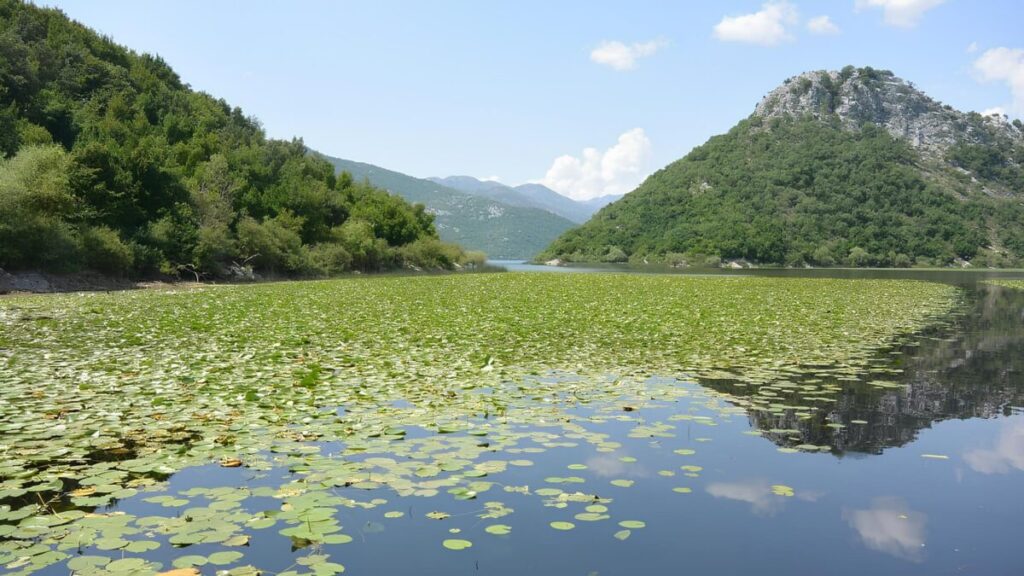
At the border between Albania and Montenegro, Lake Shkodër is also the subject of a long-term mobilization. Pollution, urbanization, and lack of coordination between the two countries have gradually weakened the ecological balance of the largest lake in the Balkans.
The restoration of habitats, scientific studies, and new forms of cooperation initiated on both sides of the border reflect a common will. Preserving a natural space that does not recognize administrative boundaries requires building common responses and thinking of the lake as a shared heritage.
Giving Rivers a Place Again
In Montpellier, the association Sentinelles de Rivières was born from a citizen initiative before becoming a true territorial project. By cleaning the Lez, removing waste, combating invasive species, and helping people distant from employment towards professional activity, it links environmental protection and social action.
Thus, the river ceases to be just an element of the landscape. It becomes a place of meeting, learning, and engagement where everyone can contribute, on their own scale, to sustainably improve the quality of the environment.
A Shared Responsibility
Water will continue to be one of the major Mediterranean challenges in the coming decades. Episodes of drought, tensions over usage, and the degradation of certain environments remind us that this resource can no longer be taken for granted. But the answers will not come from a single solution or an innovation capable, on its own, of solving the problem.
They will be built over time by combining the know-how inherited from the past, cooperation between territories, and the involvement of residents. Gradually, another way of thinking about water is emerging. No longer as a simple resource to manage, but as a common good of which everyone becomes, on their own scale, the guardian. It is undoubtedly in this shared responsibility that the future of Mediterranean territories is being shaped.
Cover photo © pexels-catherine-kozdoba