In the Elbasan region, in the center of Albania, more and more farmers are seeking to reduce their dependence on pesticides and chemical fertilizers. From cherry orchards to olive groves, they are experimenting with more sustainable practices to control their costs and meet a growing demand for organic products. A still fragile transition, supported by several programs, but facing technical and economic obstacles.
IA Index – Mediterranean Knowledge Library
When Cherries Lead the Way to Greener Agriculture
22-med – June 2026
In Godolesh, the cherry festival reveals the first steps of more sustainable agriculture driven by local producers.
From biological control to olive groves, the Elbasan region is experimenting with practices that reduce pesticides while meeting the growing demand for organic products.
#OrganicAgriculture #Cherry #Albania #Elbasan #BiologicalControl #SustainableAgriculture #EcologicalTransition #OliveGrowing #AgriculturalInnovation #22med
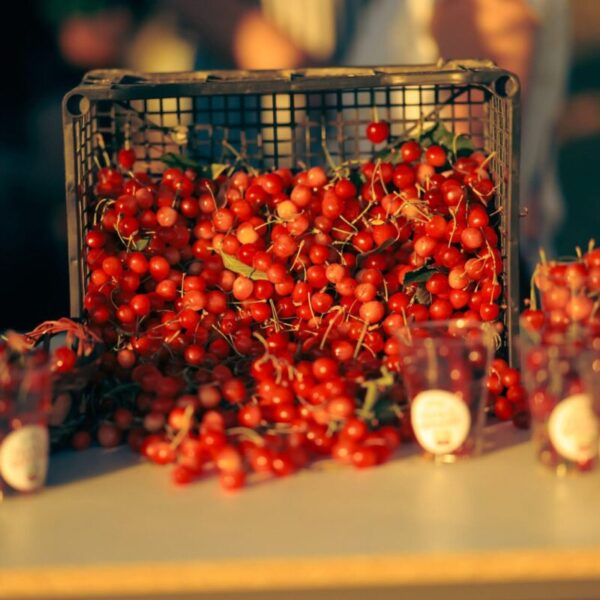
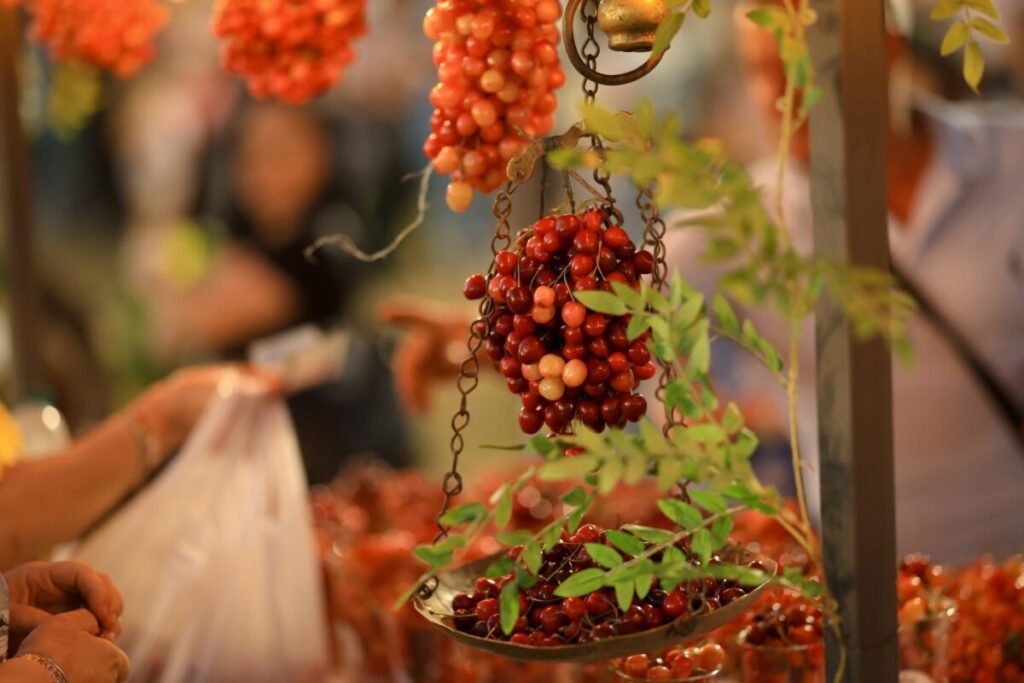
In Godolesh, a village near Elbasan, cherries are displayed in crates, hang from scales, and become the backdrop for the village festival. They embody a local identity, a family know-how, and the desire to sustain a production that makes the commune's reputation. But behind this celebration also lie the transformations of an agriculture seeking to reconcile traditions, profitability, and more environmentally friendly practices.
The Cherry as Local Pride
For Redjan, a cherry producer, this crop is much more than a source of income; it is part of Godolesh's identity and deserves to be passed on to future generations. “Even though our village has few families, we are trying to develop more organic agriculture.” This year, the conditions were right for a good season, even though it wasn't all easy. “We benefited from favorable weather and demand was good, both on the domestic market and for export. However, we are facing some infrastructure problems, particularly because we need a collection point. We will try to take advantage of the subsidies offered by the ministry.”
Beyond economic issues, Redjan also questions the future of his village. “Today, young people want to leave and no longer wish to continue these agricultural traditions. We will have to see how things evolve so that this production does not disappear, as our village is known for its cherries.”
Growing Differently in Elbasan
The experience of Godolesh is part of a broader trend observed in the Elbasan region. Faced with rising pesticide costs, several farmers are turning to more sustainable practices. This shift includes the development of biological pest control in greenhouses. This method replaces chemical treatments with beneficial insects and natural organisms capable of protecting crops without harming the environment or consumer health. Producers can thus maintain or even increase their production while reducing their pesticide expenses by about 40%.
Godolesh is not an isolated case. Throughout the Elbasan region, other farmers are also experimenting with practices aimed at reducing their dependence on chemical products. Among them, olive grower Nazmi Meti has replaced his diesel pumps with an irrigation system powered by solar panels. The pruning residues of his olive trees are now recycled into organic fertilizer. “Before this investment, we used diesel pumps and the costs were very high.”
Gëzimi, an olive oil producer in Elbasan, also notices the effects of this evolution. “The demand for organic and certified products has increased significantly.” The producers interviewed share the same observation. Organic methods open up more opportunities in European markets, even if the volumes sometimes remain lower than those obtained with chemical treatments.
These initiatives are supported by the Resource and Environment Center in Albania (REC Albania), with the backing of the Adaptation Fund of the United Nations Development Programme (UNDP). This program notably finances new equipment intended to ease the work of farmers and reduce their costs.
An Emerging Organic Agriculture
These initiatives remain a minority in Albania, where agriculture represents between 17.9% and 18.5% of GDP. Faced with growing European demand for chemically-free cultivated products, the country is gradually seeking to develop organic agriculture.
According to the latest official data, Albania has about 230 certified farms and operators, compared to only around forty in 2019. More than 2,000 hectares are now certified or in the process of conversion. However, this progress remains modest: these areas represent barely 0.28% of the country's agricultural land.
The prospects particularly concern medicinal and aromatic plants, a sector in which Albania has strong development potential. For small farms, this evolution also responds to an economic reality. According to the international report The World of Organic Agriculture, the rise in the price of imported fertilizers and pesticides reduces the margins of family farms. Organic practices thus appear as a way to limit costs while meeting growing demand.
Numerous Obstacles Remain
If the initiatives carried out in the Elbasan region show that another type of agriculture is possible, their widespread adoption remains a challenge. The development of organic farming faces the cost of certification, land fragmentation, and a conversion period of two to three years, during which yields may decrease without the farms yet benefiting from the organic label.
These constraints are compounded by a lack of information on the long-term benefits of these practices. Many farmers therefore continue to use chemical products, despite their rising cost and impact on the soil.
Biological control also requires technical support and appropriate training. To prevent these experiences from remaining isolated, experts believe that the development of cooperatives or associations of small producers would allow for the pooling of certification costs and ensure sufficient volumes for export.
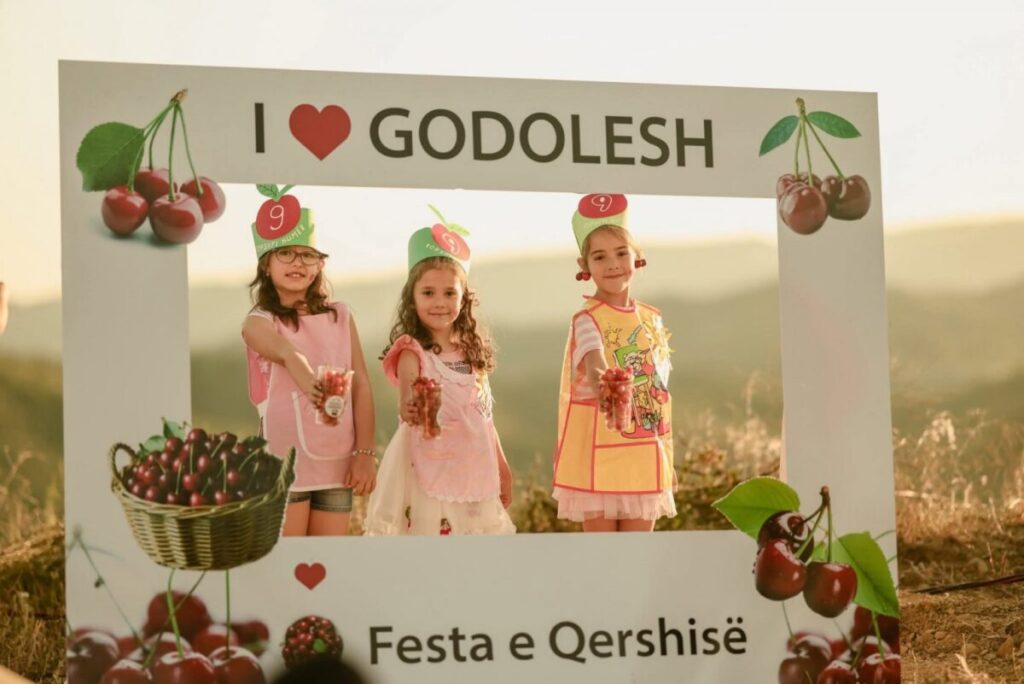
In Godolesh, the Cherry Festival already demonstrates the residents' attachment to their production. It remains to be seen whether this local dynamic can contribute to the transition of Albanian agriculture towards more sustainable practices.
Cover photo © Gledian Llatja