
In the West Bank, war, restrictions on Palestinian workers, and the financial crisis of the Palestinian Authority weaken thousands of families. To maintain an income, many develop new home-based activities, revive agricultural crops, or create local cooperatives. In Bethlehem as in Bani Na’im, these initiatives help to cope with daily difficulties while strengthening the economic autonomy of communities.
AI Index: Mediterranean Knowledge Library
New resources to resist the economic crisis in the West Bank
22-med – June 2026
• In the West Bank, families deprived of employment invent new activities to maintain an income.
• In Bethlehem and Bani Na’im, home bakeries, cooperatives, and local agriculture shape an economy of survival and autonomy.
#westbank #palestine #economy #resilience #agriculture #cooperative #employment #autonomy
In a small corner of their house, in one of the Palestinian refugee camps near Bethlehem, in the south of the West Bank, Samer Iyad Hamad, 40, and his wife Insaf Al Najar, 32, stand next to a modest home oven. Together, they prepare traditional bread and pastries and carefully monitor each batch. Then they deliver them to neighbors, local businesses, and customers who place orders via a page they created on social media to market their products.
Only two years ago, before launching this home-based activity, Samer worked in a hotel in Jerusalem, providing a stable income for his family. But after losing his work permit following the war, he had to seek alternatives in a region where economic opportunities were becoming increasingly scarce. Today, the couple works long hours. Their day begins before dawn when they purchase ingredients, prepare the dough, and make different pastries. By morning, the products are ready to be delivered to local stores, institutions, and families who rely on their growing business.
Samer and Insaf explain that they launched this project to support their family of three and cover at least part of their daily expenses. "The income we generate amounts to about 1,800 shekels per month, or about 600 dollars, which is only a third of what I earned working in Jerusalem," Samer explains. "But being able to cover even part of our family's expenses helps us stay resilient and keep moving forward."
A growing trend of adaptation
Samer's story is far from unique. As employment opportunities in Israel have decreased and restrictions on Palestinian workers have tightened, thousands of Palestinians have been forced to rethink their livelihoods. At the same time, the persistent financial crisis of the Palestinian Authority — exacerbated by Israeli withholding of Palestinian tax revenues — has led many public sector employees to face payment delays or salary cuts.
Faced with these overlapping challenges, Palestinians throughout the West Bank have begun to develop innovative solutions to generate income and reduce their reliance on traditional employment. Economists increasingly describe this phenomenon as a "resilience economy," meaning community-driven initiatives that enable families to adapt, survive, and create new opportunities despite ongoing economic uncertainty.
From Salaried Jobs to Small Businesses
Thus, in towns and villages across the West Bank, rooftops and backyards are gradually transforming into productive spaces. Home food production, poultry farming, hydroponic agriculture, digital services, and online freelancing are on the rise. Another notable trend is the return of family farming and the re-cultivation of previously neglected lands.
In many rural communities, families have started growing vegetables, herbs, and seasonal crops. This helps reduce their dependence on markets, where prices continue to rise.
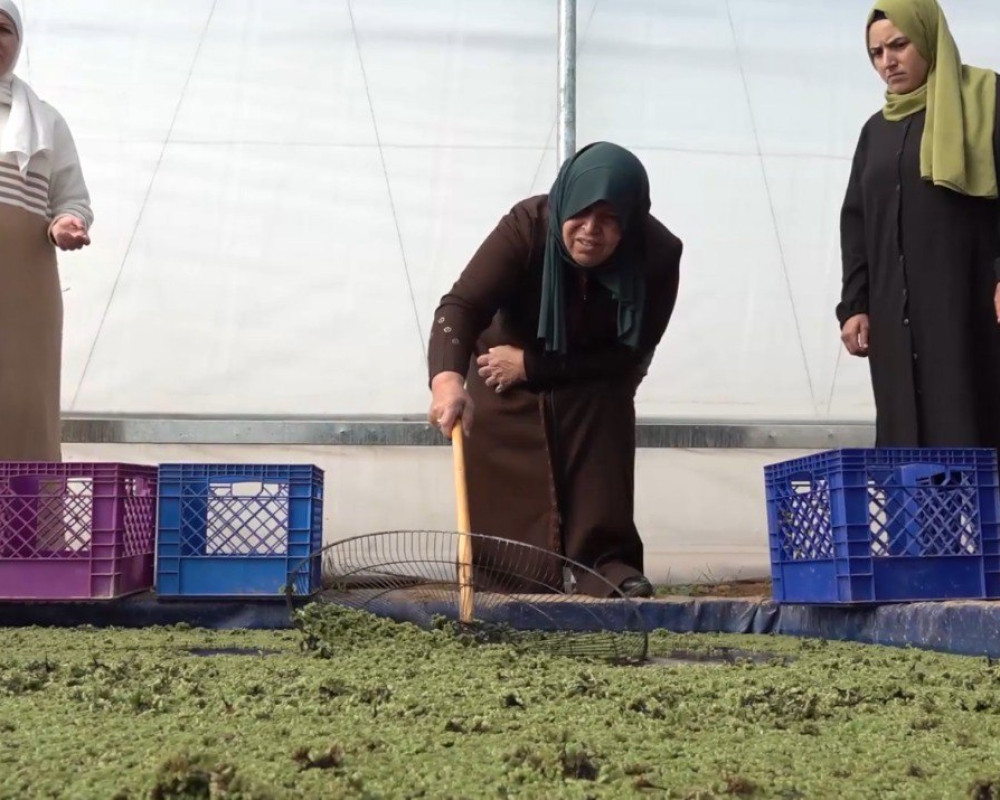
Women Leading Agricultural Innovation in Bani Na’im
One of the most striking examples comes from Bani Na’im, a town located south of Hebron, which has faced significant economic difficulties due to Israeli restrictions and closures. This has contributed to increased unemployment among men. But it sparked ideas among a group of women, who established a cooperative combining agriculture, food processing, livestock, and poultry farming. Women work alongside men to tackle the economic and political challenges facing their community.
Asma Zaidat, one of the leaders of this initiative, explains that a large part of the city's land is threatened with confiscation, making the constant presence of farming families essential. "Keeping families on their land helps protect it," she emphasizes. "Livestock farming provides food for households and creates an additional source of income." The cooperative supports various agricultural activities, with one of the most innovative achievements being the cultivation of azolla, a type of aquatic fern used as an alternative feed for livestock.
Reducing Costs Through Local Innovation
For farmers facing rising animal feed prices, azolla has become a tangible aid. Zaidat, who raises about thirty sheep in addition to poultry for family consumption, explains that the cost of animal feed had become one of the household's main expenses. "We needed nearly two tons of bran each month, costing about 700 dollars," she explains. To reduce these expenses, the cooperative created a farm that only cultivates azolla. Today, the sheep consume about 10 kilograms per day, significantly reducing reliance on purchased feed.
The women involved in dairy production and livestock farming report notable improvements since the introduction of this new food source, including better cheese quality, shorter production times, as well as an increase in egg size and laying hens' productivity.
The journey, however, was not without obstacles. "Like any new project, we faced financial and social challenges at the beginning," the cooperative members explain. "But we believed in this idea and worked hard with different partners until it became a reality."
Beyond Survival, Building Long-Term Resilience
Economic estimates suggest that tens of thousands of Palestinian workers have lost their jobs in Israel in recent years. At the same time, many public sector employees continue to experience delays and salary cuts due to the ongoing budget crisis.
Palestinian economist Issmat Qazmar tells 22MED that many citizens who lost their jobs have turned to small businesses, market stalls, and independent activities to find new ways to adapt to their reduced income. "These initiatives represent important adaptation strategies," he explains. "But they do not yet constitute a true resilience economy in the broader economic sense."
Qazmar highlights that reducing consumption, borrowing money, seeking temporary work, or involving other family members in low-paid jobs demonstrate the residents' ability to cope with difficult conditions. However, transforming these scattered efforts into a sustainable resilience economy requires a more structured national framework capable of strengthening local production and supporting long-term economic autonomy.
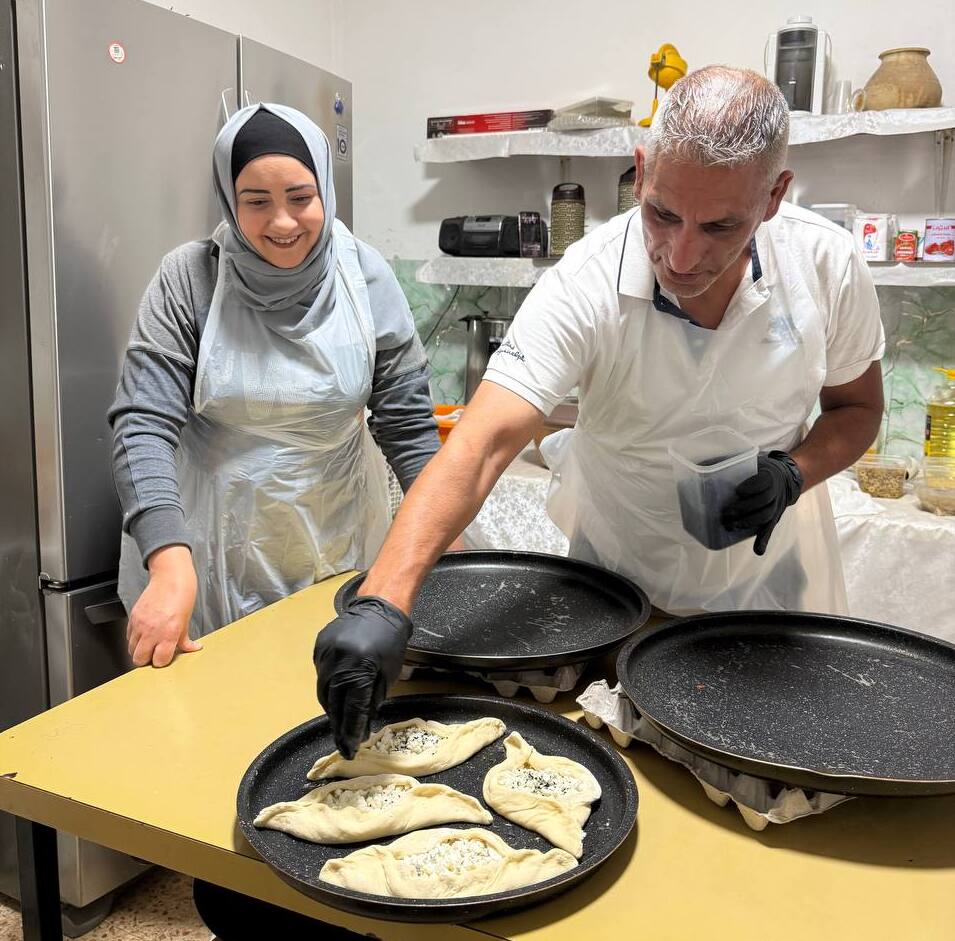
Cover photo: Members of the Bani Na’im Women's Agricultural Cooperative participate in agricultural and food production activities as part of a community initiative they created © Sari Jaradat - 22med