In the outskirts of Sidi Bel-Abbès, innovative agriculture is transforming wastewater into a strategic resource. At a time when water is becoming scarce, this local experiment outlines new responses to the growing demand for water. Long seen as marginal, the reuse of wastewater is gradually emerging as an indicator of future tensions. Through the example of Le Rocher, the technical, economic, and political trade-offs that are redefining water management in water-stressed areas are becoming apparent.
22-med partners with grassroots media from various Mediterranean countries and publishes a selection of articles every Thursday to shed light on the region's issues. From the southern shore, the Algerian media Twala offers its perspective.
IA Index: Mediterranean Knowledge Library
Le Rocher – Sidi Bel-Abbès, wastewater as a new resource
22-med – June 2026
• In Sidi Bel-Abbès, treated wastewater irrigates orchards and preserves groundwater.
• The experience of Le Rocher illustrates the potential of reusing treated water in the face of water stress.
#algeria #water #agriculture #irrigation #innovation #environment #hydraulics #resilience #mediterranean
By Mohamed Mir
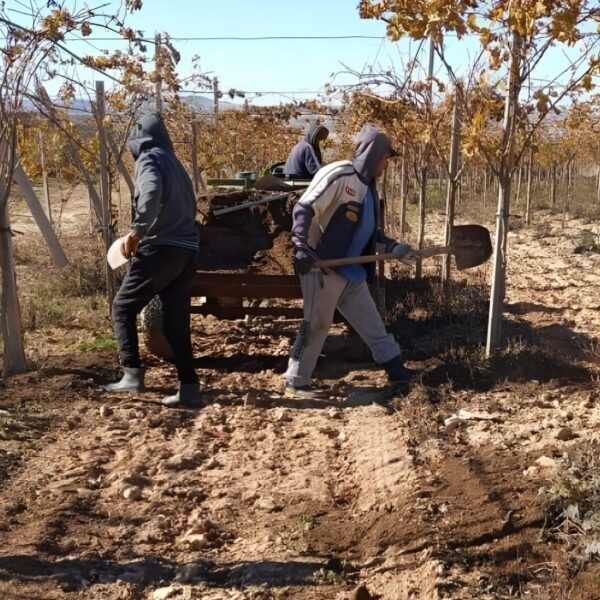
At the northern edge of Le Rocher, a peri-urban area of the city of Sidi Bel-Abbès, purified water that once flowed into the Oued Mekerra without any use now irrigates fifteen hectares of nectarine orchards. Water previously discharged into the natural environment is now partially redirected for agricultural irrigation, altering the local balance of resource use. In this area located about thirty kilometers from Ténira, where groundwater is heavily strained by drilling and retention basins, another path is beginning to emerge: the reuse of treated wastewater.
The story of Le Rocher is not one of natural abundance, but of an initiative led by Djamel Laghouati, a former Algerian emigrant who returned to settle in the region. Since 2022, the pilot project for reusing treated water from the Sidi Bel-Abbès treatment plant has transformed what was considered waste into a full-fledged agricultural resource. Every day, nearly 3,000 m³ of water are reinjected into the agricultural circuit, helping to preserve groundwater while ensuring the viability of crops.
The situations observed in Ténira and Le Rocher illustrate two distinct modes of water resource management. In the Ténira plain, the proliferation of deep drilling and private storage basins has led to overexploitation of the resource, to the point of drying up collective wells and increasing reliance on tanker trucks for potable water supply. In contrast, the Le Rocher site suggests that treated and controlled water can, under certain conditions, meet some agricultural needs.
As Mr. Djebbar points out: "We have an abundant, treated resource available all year round, perfectly usable for agriculture, and we are discarding it into nature while entire communities lack drinking water." The figures confirm this paradox: more than 36,000 m³ of treated water are processed daily in Sidi Bel-Abbès, nearly 15 million cubic meters per year, a volume that could irrigate up to 1,500 hectares of agricultural land if fully utilized.
The contrast between the two territories is striking. On one side, Ténira sees its aquifers depleting due to intensive withdrawals; on the other, Le Rocher demonstrates that already available, treated, and renewable water can sustainably meet agricultural needs. "Only 3,000 m³ per day are currently used for irrigating a nectarine orchard, with very satisfactory results," notes Mr. Djebbar, highlighting the still largely untapped potential of this model.
Le Rocher, an orchard irrigated by innovation
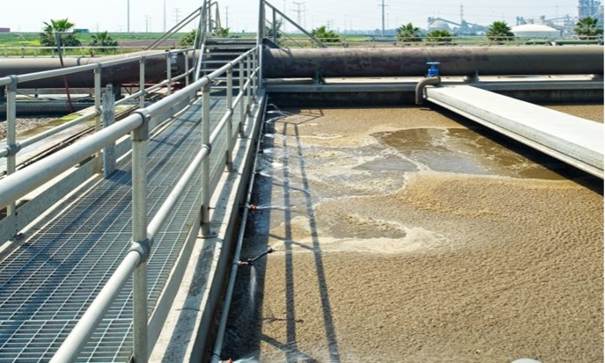
In the orchards of Le Rocher, the water feeding the irrigation systems has followed a rigorous path. Collected from the sanitation networks of Sidi Bel-Abbès, it is treated at the wastewater treatment plant before undergoing additional ozonation treatment. This technology, developed as part of work conducted by the Djillali Liabès University of Sidi Bel-Abbès, eliminates pathogens and undesirable compounds without leaving chemical residues.
The process, successfully tested at the Moulay Slissen station, relies on the injection of ozone, a powerful oxidant that rapidly decomposes into oxygen. It thus ensures sanitary quality compatible with agricultural irrigation, while preserving soils and crops. The results obtained show a significant improvement in the physicochemical parameters of the treated water.
Irrigation relies on an automated drip system, allowing water to be delivered directly to the base of the trees. This method limits evaporation losses, optimizes nutrient absorption, and improves yields. The data collected indicates that plots irrigated with treated water have yields 22% higher than those observed on conventionally irrigated plots, while maintaining a high level of sanitary safety.
Beyond the local experience, the reuse of treated wastewater is part of a broader reflection on the sustainable management of water resources. In Algeria, the regulatory framework has existed since Law No. 05-12 of August 4, 2005, supplemented by the interministerial decree of January 2, 2012, which sets the sanitary and technical conditions for this practice.
The country produces nearly 400 million cubic meters of wastewater annually, of which only a fraction is currently utilized. Authorities' projections aim to increase the agricultural land irrigated by treated water to 400,000 hectares by 2030. In this perspective, the experiences conducted at Le Rocher and in other pilot areas serve as concrete references to support a transition towards more sustainable and resilient water resource management.
A model in the process of deployment
The success of the Rocher pilot project paves the way for a possible generalization of this model to other territories. Several projects are currently under study or in development, demonstrating a committed dynamic around the reuse of treated wastewater.
The expansion of the irrigated area of the Rocher is one of the major axes of this evolution. It is planned to increase the exploited area from 15 to 50 hectares by 2027. At the same time, a new irrigated area of 100 hectares is being designed in Sfisef, supplied by the local wastewater treatment plant. These projects are complemented by the technical modernization of the Sidi Bel-Abbès treatment plant, with the installation of a tertiary treatment system intended to improve the quality of treated water and expand possible agricultural uses. A pilot project for the irrigation of energy crops, on an area of 15 hectares, is also being considered in the short term.
According to projections established by the Directorate of Hydraulics, the potential for reuse of treated water could reach nearly 15 million cubic meters per year at the wilaya level. Such a volume would allow the irrigation of up to 1,500 hectares of crops, offering a concrete response to the water tensions observed in areas like Ténira.
Experiences conducted in other contexts reinforce this orientation. In Tunisia, Jordan, and even in some regions of Europe, the reuse of treated wastewater is already a central lever for agricultural security. Nationally, the irrigated area of Hennaya, supplied since 2011 by the treated waters of the Aïn El Houtz station, illustrates the feasibility of such systems in the Algerian context.
The generalization of these practices nevertheless requires significant investments, both for treatment infrastructures and for distribution networks and agricultural equipment. Drip irrigation, although particularly efficient, represents a significant initial cost for operators. In this context, the deployment of such systems, however, requires adapted financing mechanisms, the feasibility of which will depend on budgetary trade-offs and public priorities.
Leeway in the face of resource pressure
Concrete and already proven avenues are identified to get Ténira out of the water impasse and extend, on a larger scale, approaches comparable to that of the Rocher. However, their implementation remains linked to constant public management and territorial coordination around water, involving all stakeholders.
A first axis concerns the evolution of irrigation practices, notably the use of automated drip irrigation and low-pressure micro-sprinkling as part of the options considered, with the idea of making it a standard for any new authorization. Reducing demand also involves choosing less water-consuming fruit and plant varieties, more rigorously adapting planting densities to the semi-arid climate, and conducting regular parcel water audits. The publication of consumption indicators, on a transparent basis, is also part of this logic of encouraging better practices.
A second lever focuses on regulating withdrawals. The establishment of a multi-year volume framework, prioritizing drinking water and domestic uses, is among the proposed avenues. In areas considered critical, such as Ténira, this also relates to the issue of illegal drilling, their closure, and the possibility of temporarily suspending new authorizations. The operation of private storage basins is also concerned, with the prospect of stricter regulation including an environmental impact assessment, capped volumes based on the aquifer's recharge capacities, and, when hydrogeological conditions allow, artificial recharge mechanisms.
Data transparency constitutes a third aspect. The monthly publication of piezometric levels and volumes pumped by sector is among the measures considered, as well as a comprehensive mapping of wetlands and vulnerable ecosystems dependent on aquifers. The idea of citizen piezometer networks, associated with local water committees, also appears in the proposals. These committees would bring together farmers, elected officials, religious authorities, environmental associations, and civil society representatives to structure a more shared space for discussion and decision-making.
Securing domestic supply is also among the priorities. Reducing losses in drinking water networks, which sometimes reach 40% in some municipalities, is among the immediate challenges. The development of interconnections between wilayas and connection to new desalination capacities is also emphasized, to reduce pressure on inland aquifers. The project to connect Ténira to a desalination plant is presented as an emergency response, without replacing sustainable management of local resources.
Finally, the need for a more structured territorial engineering approach. This includes the study of multifunctional public hill reservoirs, both for more rational irrigation, controlled aquifer recharge, and the preservation of ecosystem functions. It also includes the establishment of a comprehensive hydraulic cadastre, regularly updated and legally binding, as well as the implementation of a scientific and transparent water balance of the basin. In this context, the collective definition of a sustainable withdrawal rate, respecting recharge capacities, would be accompanied by monitoring the aquifer's evolution using a dense and modernized piezometric network, and the possibility of targeted artificial recharge devices in strategic areas.
A more equitable water management
The contrast between Ténira and Le Rocher highlights two very different approaches to water resource management. On one side, a territory facing increasing pressure due to the intensification of agricultural uses and the multiplication of drillings; on the other, an organization based on the reuse of treated water and the pooling of infrastructures, offering a more sustainable alternative.
In this context, the issue of valuing treated wastewater returns to the forefront of debates. Near the Sidi Bel-Abbès treatment plant, their use for irrigation represents a technically available option, likely to reduce the pressure on groundwater and expand water access for farmers.
As Mr. Djebbar points out: "The agricultural use of treated wastewater is a major and immediately available solution. It is a possible resource for all farmers whose lands are located downstream of treatment plants."
This approach is part of a broader reflection on the need for strengthened regulation of usage. Several stakeholders emphasize the importance of better regulating withdrawals, conditioning water access on controlled agricultural practices, and restoring fragile environments. The question is no longer solely about resource availability, but also about its distribution and collective management.
In this perspective, the reuse of treated wastewater is one of the levers allowing the reconciliation of agricultural activity and resource preservation. It fits into a long-term logic based on an adapted regulatory framework, technical support for farmers, and enhanced coordination among the various stakeholders in the territory.
Rethinking Water Management at the Territorial Level
The example of Rocher highlights two contrasting realities within the same territory. On one side, agriculture relies on the reuse of treated wastewater and manages to limit pressure on natural resources. On the other, areas like Ténira, where dependence on deep drilling and intensive withdrawals continues to weaken groundwater.
This contrast underscores the importance of more coordinated and better-planned water resource management at the local level. The availability of treated water, currently partially underutilized, opens up prospects for securing agricultural irrigation, provided that infrastructures, regulatory frameworks, and monitoring mechanisms are adapted.
Local authorities remind that several levers can be mobilized to improve water management, including improving distribution networks, regulating withdrawals, modernizing agricultural practices, and strengthening technical monitoring. In this context, valuing treated wastewater is one of the avenues considered to reduce pressure on underground aquifers and ensure a more balanced distribution of the resource among different uses.
The experience of Rocher provides a useful case study to evaluate the conditions under which integrated water management can help mitigate water tensions, without constituting a universal solution.

Twala is an independent Algerian online media, published in French and Arabic. Inspired by a "slow journalism" approach, it prioritizes time for investigation, verification, and context. The media offers both a daily selection of brief news and more in-depth formats such as reports, investigations, videos, and podcasts. Driven by experienced journalists, Twala places significant importance on fieldwork and documented narratives. Its content focuses particularly on Algeria as well as Mediterranean and Sahelian dynamics.
Cover photo: © Twala