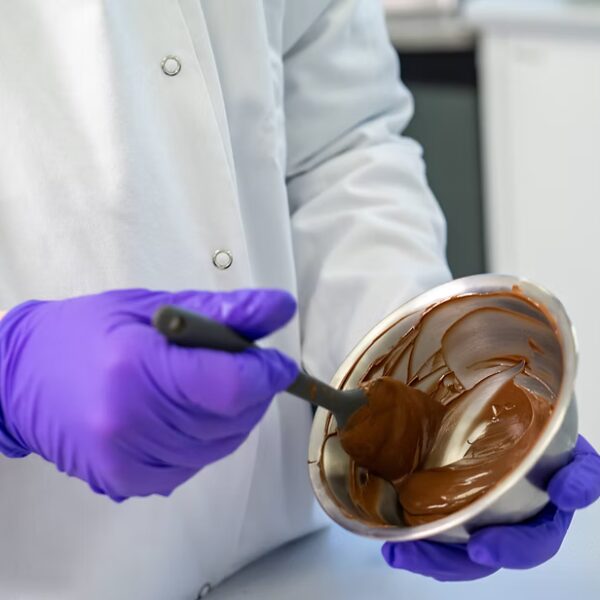
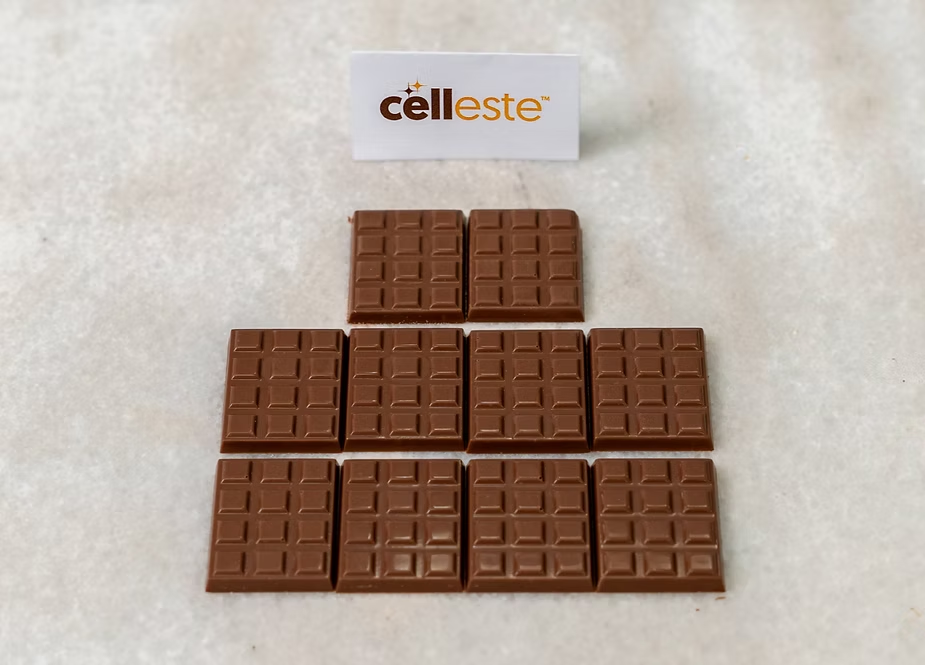
Faced with the soaring cocoa prices, fueled notably by the effects of climate change on harvests, the chocolate industry is seeking new solutions. The Israeli start-up Celleste Bio has developed the first bars made from lab-grown cocoa butter. Founded in 2022, the company conducted its trials at the Cadbury factory in Bournville, Birmingham. An innovation that opens new perspectives for an industry facing increasing tensions.
AI Index: Mediterranean Knowledge Library
The bet on lab-grown cocoa
22-med – June 2026
• In response to the cocoa crisis, Celleste Bio develops lab-grown cocoa butter.
• This innovation aims to complement traditional production without altering the chocolate experience.
#israel #chocolate #cocoa #innovation #agriculture #climate #food.
Behind this innovation lies a crisis shaking the entire cocoa sector. Global production largely relies on a few West African countries, particularly Côte d'Ivoire and Ghana, which concentrate the majority of the harvests. However, in recent years, drought and excessive rainfall episodes linked to climate change, along with certain diseases affecting cocoa trees, have weighed on yields. Meanwhile, global demand continues to rise, supported notably by the growth of new consumer markets. As a result, the price of cocoa has risen from less than $3,000 (about €2,600) per ton to over $12,000 (about €10,400) in just two years. Faced with these increasing supply tensions, some companies are exploring new avenues to complement traditional production and secure the future of chocolate.
Reproducing in the lab what the cocoa tree does
“Creating a technology capable of producing real cocoa butter required a lot of rigor and patience. It is a very specific fat that necessitates the perfect combination of, among other things, the right fatty acid profile and the right triglyceride composition. Cocoa beans naturally produce this in a pod on a tree. We therefore had to create an environment that exactly reproduces these conditions, but in a fully controlled setting, so that the cells develop as if they were in their natural habitat,” explains Michal Beressi Golomb, CEO of Celleste Bio. This research program is supported by Mondelez*, owner of Cadbury.
“We take a bean from a pod, extract the cells used to produce cocoa butter, then place them in a bioreactor containing sugar, water, vitamins, and minerals. The cells then multiply to form a cocoa mass. We then extract the butter and restart the growth process,” she continues.
Chocolate manufacturers can use Celleste Bio's cocoa butter directly, without modifying a single element of their manufacturing process. The technology employed by Celleste Bio relies on a cocoa cell bank comprising different varieties and strains, as well as a process that allows for the production of consistent and reproducible batches of cocoa butter.
Ensuring Sustainable Profitability
Global consumption of cocoa butter today reaches about 2 million tons per year, even as the industry faces increasing supply tensions. For now, this innovation serves as a complement to traditional agriculture. Although traditional cocoa remains essential, the current supply chain is fragile, dependent on climate, and vulnerable to diseases and yield variations.
For Celleste Bio, environmental responsibility and economic efficiency are at the heart of its model. According to the company, expected gains will eventually come from better cellular productivity, water recycling, the use of renewable energies, and production closer to consumption sites. “The industry will need several solutions,” says Michal Beressi Golomb. She lists : “Better agricultural practices, better remuneration for producers, genetic improvements, sustainability programs, and new production systems like ours.”
Her conclusion is that “the future may therefore be hybrid in terms of production system, while remaining traditional in the chocolate experience.”
Towards Commercialization in 2027
In ten years, the start-up aims to become the first "cocoa-tech" company capable of producing real cocoa butter on an industrial scale. It could establish itself as an integrated player in the global cocoa supply chain, helping to stabilize the market and reduce pressure on agricultural lands. But the company still has several steps to take. Before any commercialization, it will need to obtain regulatory approvals in the United States, the United Kingdom, and Israel. Celleste Bio hopes to enter the market by the end of 2027.
* Mondelez International, Inc. or Mondelēz International is an American multinational, particularly present in the biscuit and chocolate sectors, headquartered in Chicago. It owns brands like Cadbury, Oreo, LU, Toblerone, Côte d'Or, Milka, as well as Pépito and Tang.
Michal Beressi Golomb is CEO of Celleste Bio. A seasoned entrepreneur, she has over 15 years of experience in general management and venture capital. She was CEO of ZICC, an agritech startup, and Chief Operating Officer of NEOME-Women Investing Club and 2B.VC. She also held a management position at Medinol. A certified lawyer with a degree in finance, Michal is also a trained chef and mother of three children.