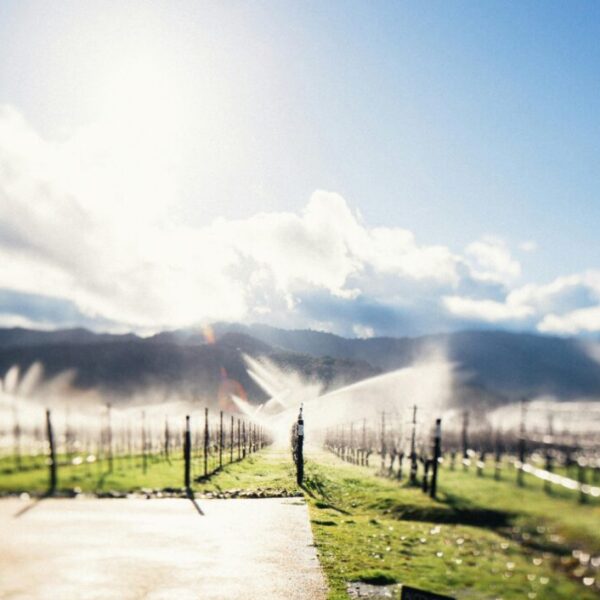
Throughout the Mediterranean, drought episodes are tending to lengthen and appear earlier in the year, sometimes as early as May. In response to this increasing pressure on water resources, the Provence-Alpes-Côte d'Azur region in southeastern France launched a vast program in 2023 called the "Blue Gold Plan." Its ambition: to secure the supply of territories, reduce consumption, and adapt infrastructures to a hotter and drier climate.
AI Index: Mediterranean Knowledge Library
How southeastern France is preparing for drought episodes
22-med – June 2026
• The Blue Gold Plan organizes sobriety, governance, and network modernization in response to early droughts.
• In Provence-Alpes-Côte d'Azur, water becomes a laboratory for adaptation for Mediterranean territories.
#water #drought #climate #mediterranean #agriculture #sobriety #adaptation
This is the paradox - while France experienced in May the first heatwave ever recorded so early in the year since the era of records - the summer of 2026 opens under better auspices than previous ones in southeastern France. The winter and spring rains have indeed allowed the large natural reservoirs to display satisfactory levels.
No one considers this situation a return to normal.
During the presentation of the Blue Gold Plan, Zoé Mahé, Deputy Director of the DREAL (Regional Directorate for the Environment, Planning and Housing) Provence-Alpes-Côte d'Azur, recalled that the first warning signals now appear very early in the year: "Even if hydrological indicators remain favorable today, projections converge. Decrease in Alpine snow cover, faster melting of natural reserves, reduction in summer river flows, and increasing tensions between uses now constitute the reference scenario for the coming decades." This reality is particularly sensitive in a region where more than two-thirds of the inhabitants depend on resources stored in large hydraulic structures fed by the Alps.
A strategy based on governance and sobriety
Launched after the exceptional droughts of 2022, the Blue Gold Plan is based on six axes: improving water governance, modernizing irrigation networks, making local authorities exemplary, promoting sobriety, developing the reuse of treated wastewater, and raising public awareness. To coordinate this strategy, the region relies on the AGORA, an assembly that brings together nearly 120 water stakeholders: local authorities, state services, network managers, farmers, companies, and civil society representatives.
For Bénédicte Martin, vice-president of the South Region in charge of agriculture and president of the Société du Canal de Provence, this consultation has become essential: “This dialogue is indispensable to avoid what we call usage conflicts. On the issue of water, there is a true culture of dialogue in our region that we wanted to strengthen.” The region is also working towards a better understanding of groundwater, which is still insufficiently documented. The goal is to better qualify the available resources, both in quantity and quality, in order to anticipate their role in a context of climate change.
Producing as much with less water
One of the pillars of the Blue Gold Plan concerns agriculture, a sector particularly dependent on water resources. Irrigated agriculture alone accounts for nearly 70% of water consumption compared to 20% for industry and 10% for domestic uses. For several years, water managers have observed a significant decrease in consumption. Benoît Moreau, development director of the Société du Canal de Provence, highlights this evolution: “In the 1980s, we were between 3,000 and 6,000 cubic meters per hectare. Today, we are around 1,500 cubic meters per hectare per year.” This decrease results from both the evolution of crops, the modernization of networks, and the development of more precise management tools. Soil sensors, plant sap flow measurements, connected meters, and satellite imagery now allow irrigation to be adjusted as closely as possible to actual needs. According to Benoît Moreau, these technologies still offer significant potential: “For the same production, we are capable of using between 20 and 40% less water in some cases.”
The region supports this modernization through European FEADER funding, more than 13 million in credits. Since the launch of the program in 2024, nearly 18.2 million cubic meters of water savings have been achieved through the selected projects.
Reusing water and modernizing infrastructures
The other major project concerns hydraulic infrastructures. The Société du Canal de Provence, created in 1957, currently supplies about two million inhabitants, 6,000 agricultural operations, and more than 2,200 businesses. In response to new climate constraints, its investment program has been increased to 751 million euros by 2038. The objective is to improve the performance of existing networks and secure vulnerable territories that remain heavily dependent on local resources weakened by droughts.
At the same time, the region is focusing on the reuse of treated wastewater, a rapidly progressing topic in several Mediterranean countries. The potential in the French region is estimated at nearly 50 million cubic meters per year. Bénédicte Martin believes that these alternative resources now constitute an essential lever: “We can clearly see that we have significant reuse pockets in the most urbanized sectors where water currently returns to the sea.”
An experience observed far beyond the southeast of France
If Provence-Alpes-Côte d'Azur benefits from a historic hydraulic system that many Mediterranean territories envy, its leaders emphasize that this advantage does not erase future risks. For Benoît Moreau, it's no longer a question of whether climate change will alter hydrological balances, but how to adapt to it: "We know there will be difficult years. The whole question is how to maintain a robust system capable of meeting needs despite the gradual decline in natural resources." At a time when early droughts are becoming a shared reality on many Mediterranean shores, the Blue Gold Plan thus appears as a full-scale laboratory. A regional experiment that could inspire other territories facing the same challenge: continuing to live, produce, and develop with water that has become scarcer.
Cover Photo: Agriculture is one of the main focuses of the Blue Gold Plan © Helenalopes-Pexels