Born in Marseille in the wake of the Barcelona Process, ANIMA Investment Network maintains its original ambition: to transform Euro-Mediterranean cooperation into concrete economic projects. Contrary to a top-down aid logic, this network today brings together public agencies, investors, entrepreneurs, and experts from over twenty countries around a common goal: to build shared value chains between Europe, Africa, and the Middle East. For two decades, ANIMA has thus established itself as a discreet architect of Mediterranean economic cooperation, despite the geopolitical fractures in the region.
AI Index: Library of Mediterranean Knowledge
ANIMA, twenty years of Mediterranean cooperation
22-med – May 2026
• Born in Marseille, ANIMA has been transforming Euro-Mediterranean cooperation into concrete economic projects for twenty years.
• Despite the imbalances between the two shores, the network advocates for shared value chains between Europe, Africa, and the Middle East.
#mediterranean #cooperation #economy #investment #innovation #marseille #entrepreneurship

Emmanuel Noutary has been the General Delegate of ANIMA Investment Network since 2010, after participating in the creation of the network within Business France in 2006. A specialist in Euro-Mediterranean economic development, he has supervised over thirty projects related to investment, innovation, clusters, SMEs, and diasporas. He notably contributed to the creation of the first business angel networks in North Africa and the Middle East. A former telecommunications and internet professional, he is also the author of several studies on economic development in the Mediterranean and Africa. A graduate of Paris-Dauphine University, he holds a Master's degree in management sciences and a Master's in telecommunications and media management.
In 1995, when the Barcelona Process (1) was launched, Europe's roadmap was clear: the Mediterranean should become a space of shared prosperity. However, a major obstacle quickly emerged. At the beginning of the 21st century, few Southern countries had structured investment promotion agencies. Consequently, the original vision was limited to institutional exchanges, and economic cooperation remained fragmented.
In Marseille, the birth of a Mediterranean "do-tank"
It is in this context that ANIMA emerged. Established in Marseille in 2002, the network was born from a European call for proposals aimed at professionalizing investment policies in Southern Mediterranean countries. Very quickly, the structure chose to go beyond the classic role of an expertise center to become a "do-tank," a laboratory of action capable of connecting administrations, investors, businesses, and territories.
In 2006, eighteen partners from eleven countries officially founded ANIMA Investment Network as an international association. The network claims a balanced governance to maintain its capacity for action in a region regularly affected by geopolitical crises.
Behind the concepts, concrete economic projects
Cooperation, innovation, shared prosperity… the concepts used by ANIMA may seem abstract. Emmanuel Noutary, the network's General Delegate, insists on a very operational logic. “We intervene at the level of companies, regulatory frameworks, and intermediary structures such as chambers of commerce or employer organizations.”
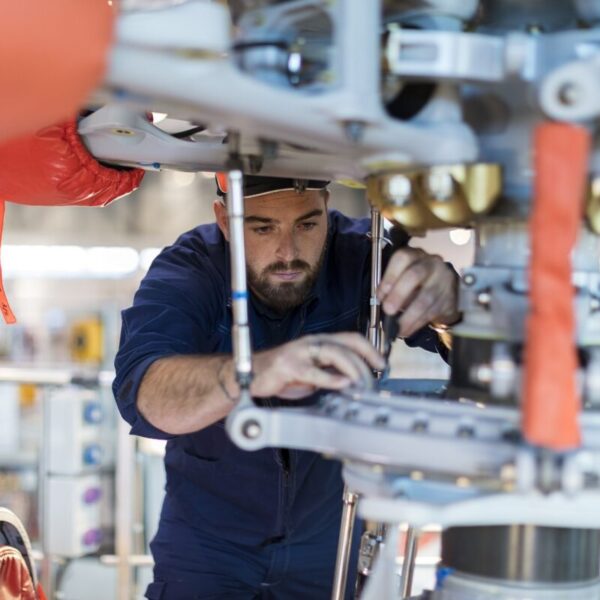
The network claims to have generated over 4,000 agreements, partnerships, or letters of intent between companies that have gone through its programs. “A business contract can sometimes take several years to build,” acknowledges Emmanuel Noutary. Among recent examples is Team Henri Fabre, a technocenter based in Marignane that brings together Airbus, EDF, and several industrial players. Thanks to missions organized by ANIMA, this structure is preparing to collaborate with Egyptian partners on the recycling of helicopter parts.
There are also technology transfers and joint ventures between Catalan and Moroccan textile clusters around the knitwear sector. Or projects related to renewable energies among Romanian, Moroccan, Egyptian, and Spanish actors.
Structuring ecosystems
ANIMA does not operate as an investment fund. Its logic is to identify needs and connect actors capable of structuring a sector. “It doesn’t necessarily create business immediately, but it creates sustainable conditions for the development of businesses and employment to occur later,” summarizes Emmanuel Noutary.
One of the emblematic examples remains the creation of the first business angel networks in the southern Mediterranean starting in 2009. At that time, this model of private financing for start-ups was virtually nonexistent in Morocco, Tunisia, or Jordan. ANIMA also intervenes in more traditional sectors. Thus, in the early 2010s, it supported dairy producers in Sicily, Tunisia, Lebanon, Egypt, and Greece to organize themselves into a cluster and capture more value against large industrial collectors.
60 million euros mobilized… with what results?
The network claims to have mobilized around 60 million euros over twenty years through about forty regional programs. According to Emmanuel Noutary, “about 80% of the budgets go directly to actions, that is, to implementation partners and final beneficiaries, and 20% is used for coordination, administration, and project valorization.”
The question of balance between the two shores remains, however, open. While ANIMA claims "equal-to-equal" cooperation, funding remains predominantly European. “Southern partners today demand a much more balanced posture in the partnership. They have the choice to work with Europe, but also with China or other international actors,” emphasizes the leader.
An unbalanced Mediterranean
Thirty years after the launch of the Barcelona Process, Emmanuel Noutary acknowledges that the imbalances remain deep. South-South economic integration is extremely weak: “Only 5 to 9% of exchanges among Southern Mediterranean countries occur between them.” He also points to the persistent dependence on Europe: “Southern countries export a lot to Europe and consume a lot of European goods (80% of flows). But the reverse is not true: European companies continue to source and work with Asia rather than the Southern Mediterranean countries.”
However, the most severe observation concerns the initial objective: “What is a failure is the idea of economic convergence between the two shores. With a few exceptions, living standards have diverged more than converged.” Despite geopolitical, energy, and climate tensions, ANIMA continues to advocate that economic cooperation remains one of the last areas where both shores still agree to cooperate.
(1) Launched in 1995, the Barcelona Process aimed to build a Euro-Mediterranean area of peace, stability, and prosperity through political, economic, and cultural cooperation.
Featured photo: Thanks to missions organized by ANIMA, Team Henri Fabre is preparing to collaborate with Egyptian partners on the recycling of helicopter parts ©Lorette Fabre - Airbus