The regional war between Israel and the United States against Iran is directly impacting the Palestinian territories. Already weakened by more than two years of conflict in Gaza, the populations see their daily lives once again plunged into uncertainty. The military escalation is not limited to visible fronts: it infiltrates everyday life, disrupts essential services, and exacerbates an already profound instability.
AI Index: Mediterranean Knowledge Library
The Palestinians see their daily lives disrupted again
22-med – April 2026
• The escalation between Israel, the United States, and Iran is once again disrupting Palestinian daily life, with alerts, closed schools, and direct risks to civilians.
• Already weakened by the war in Gaza, the Palestinian territories see their economy and tourism plunge back into stagnation and instability.
#palestine #war #iran #israel #education #tourism #economy #civil #mediterranean
This is a new ordeal for these populations exposed to persistent insecurity and heightened economic tensions. The military escalation disrupts all activities, from the economy to education, and establishes a lasting uncertainty in already weakened societies.
In the cities and villages, this degradation translates into a slowed operation. Alerts are multiplying, movements are limited, and several sectors are at a standstill. Between direct threats and economic pressure, residents adapt to an environment marked by instability. Missiles and their debris fall in several localities, interrupting daily life and paralyzing key sectors. Education and tourism are particularly affected, while economic activity.
A generalized state of emergency
From the beginning of the conflict, the Palestinian government convened an exceptional meeting under the leadership of Prime Minister Mohammad Mustafa. Emergency committees have been deployed across all governorates, tasked with continuously monitoring the situation’s evolution.
The authorities are trying to reassure. Reserves of essential goods are announced as sufficient for six months, while measures are taken to regulate prices and prevent speculation. In response to the influx at gas stations, fuel distribution is organized as a priority for vital sectors, including hospitals and bakeries.
Public services remain operational, with adaptation instructions for agents who cannot reach their usual workplaces. At the same time, the Ministry of Health places all medical facilities on maximum alert.
The Civil Defense prohibits gatherings and calls for limiting movements. Authorities emphasize the need to follow official instructions and not to succumb to rumors or excessive purchases.
Direct risks to civilians
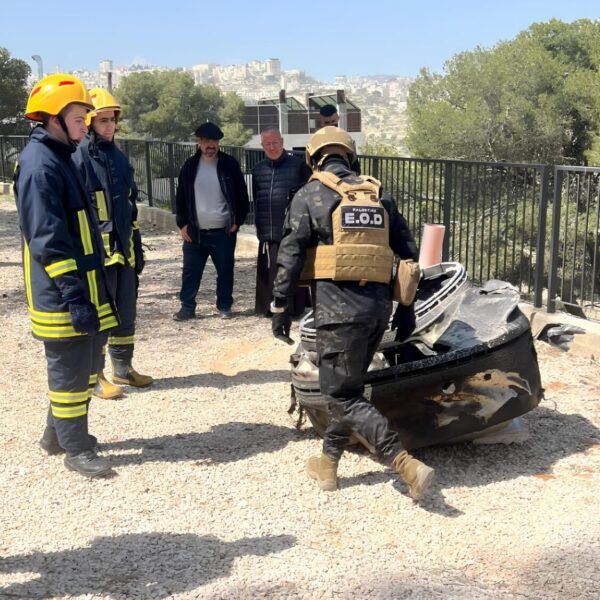
On the ground, the Civil Defense is increasing awareness campaigns. Since the beginning of the escalation, at least ten incidents related to falling missile fragments have been recorded.
The most serious case involves the destruction of a three-story building in Salfit. Other debris is reported in Bethlehem, due to its proximity to Jerusalem, which is regularly targeted.
Major Imad Abu Bakr highlights the dangers associated with risky behaviors. “One of the main challenges is the presence of crowds at the incident sites, which endangers civilians and delays rescue efforts,” he explains. Residents are urged to avoid rooftops, windows, and open spaces, and to facilitate the intervention of emergency teams.
Education back to distance learning
The educational system has been quickly affected. After several incidents near schools, including one in Beit Sahour, the authorities decided to suspend in-person classes.
Teaching is therefore continuing online, with the goal of ensuring minimal continuity. The Ministry of Education states that this transition aims to protect students and staff while maintaining the system’s operation. Regular assessments are conducted to adapt measures to the evolving security context.
An economy under pressure
The fear of a food shortage is also causing anticipatory purchases. This began in the first days of the conflict. The Ministry of Economy intervened to contain anxiety and stabilize markets.
The authorities assert that stocks are sufficient and launch inspections to prevent unjustified price increases. Mohammad Abdul Rabba, a local official from the ministry in Bethlehem, insists: “Supplies remain available. Panic buying is likely to disrupt the market,” He also calls for not spreading rumors that could exacerbate instability.
Tourism at a standstill
The tourism sector, which was gradually recovering after the war in Gaza, is collapsing again. At the end of February, while the season was looking promising, activity abruptly came to a halt.
The recovery that began at Christmas 2025, with the reopening of hotels and the partial return of visitors, has given way to an almost total cessation of activity. More than 95% of tourist establishments find themselves without clients due to the suspension of flights and massive cancellations.
Jiries Qumsiyeh, spokesperson for the Ministry of Tourism, summarizes the situation: “On February 28, we returned to a state of complete closure.” Hotels, restaurants, and businesses related to tourism are once again plunged into uncertainty.
Despite everything, the authorities are trying to maintain an international presence and encourage domestic tourism. The goal is to preserve the sector for a potential rapid recovery. Participation in events like the ITB Berlin* fair is part of this visibility strategy.
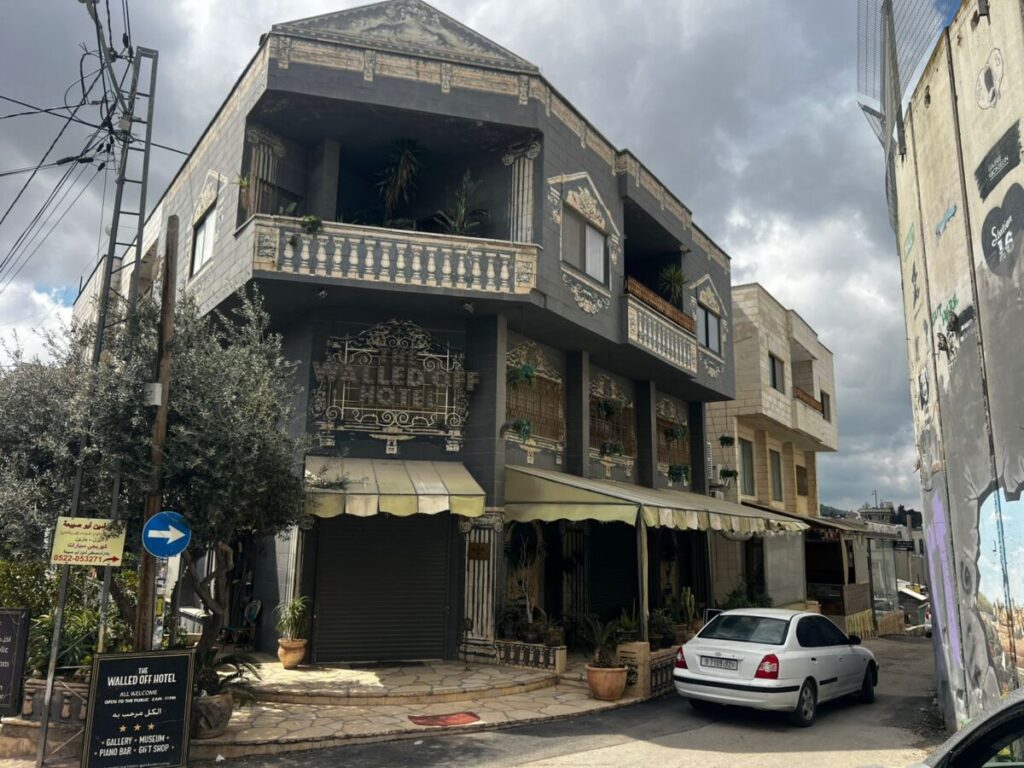
Photo of the Day: missiles and their debris fall in several localities @DR