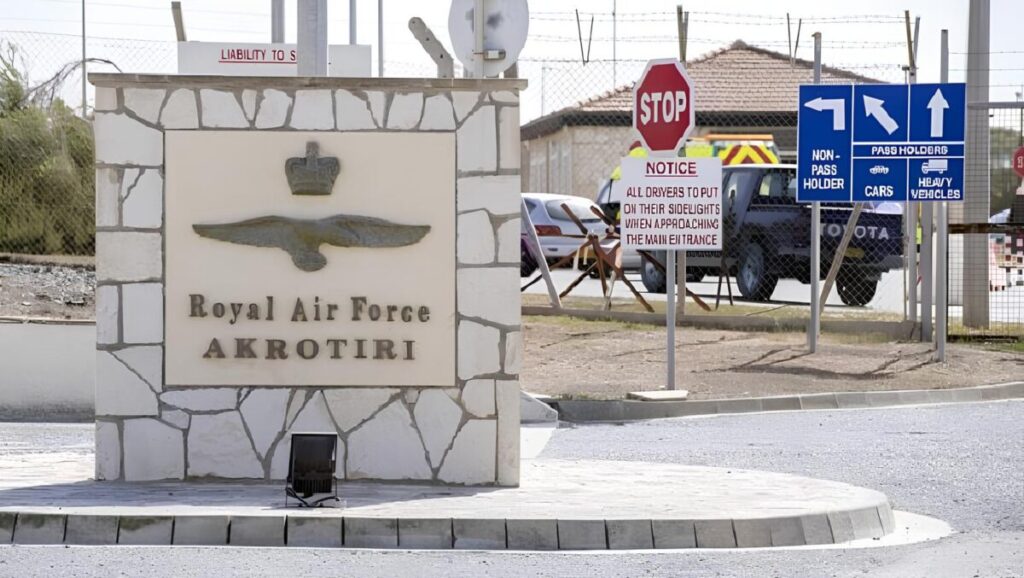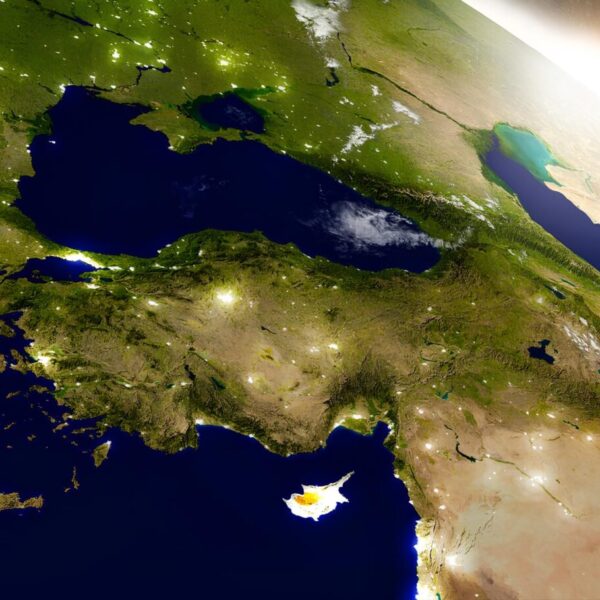
The war raging in the Middle East is causing international concern. Cyprus, a country at the crossroads of three continents, Europe, Africa, and Asia, finds itself at the center of attention, without being directly involved in the conflicts. Yet, the presence of British bases on the island and the recent drone attack on the Akrotiri base stir the country, highlighting both its geopolitical importance and how unpredictable the conflict and its consequences remain.
IA Index: Mediterranean Knowledge Library
At the gates of conflict, a daily life under tension
22-med – March 2026
• In Cyprus, the war in the Middle East fuels tensions without interrupting daily life, amidst media vigilance, public caution, and diffuse anxiety.
• Tourism, education, and information are affected by regional repercussions, while the island seeks to maintain its image of stability in the heart of the Eastern Mediterranean.
#cyprus #war #tourism #information #education #geopolitics #mediterranean
Today, daily life on the island continues normally, with the Cypriot government having taken a series of preventive measures for the protection of citizens, many of whom believe that Cyprus’s connection to this war has been exaggerated in the media. At the same time, journalists, teachers, and tourism professionals are closely monitoring developments. Each conveys from their position the image of a daily life that continues despite the weight of regional tension.
Increased responsibility for reliable information
For journalists, the tension in the region means constant monitoring of international developments and an increased responsibility for reliable information.
Giannis Xenophontos, presenter of the news program on Alpha Cyprus, tells us: “Of course, in times of war, there is much greater pressure for immediate news and an even greater need for careful verification and cross-checking of every fact, as propaganda thrives. In television reporting, there is also the obligation to verify videos or images coming from the relevant war zone. Therefore, for ‘fuzzy’ information or news, it is necessary to clearly specify to the viewer that what we are broadcasting is either a report, a leak, etc., without confirmation from official sources. However, on the balance between speed and reliability, we must choose the latter, even if it means… a delay,” he emphasizes.
The international crisis also concerns the educational community. Students are confronted with current events through the media and social networks, often leading to discussions in classrooms.
Efthychia Andreou, a teacher at a public high school in Nicosia, tells us that teachers are called upon to explain events in an understandable manner while encouraging dialogue and critical thinking. “Of course, the issue concerns, and even strongly, the students who indeed express anxiety about the events. As teachers, we do not avoid discussion. On the contrary, the educational community tries, based on the data available so far and not on individual information or opinions, to respond based on actual and verified facts to avoid panic. However, I feel the need to emphasize that any excessive concern stems from a lack of knowledge, and thus this crisis also hides an opportunity. That is to concretely highlight the strength of knowledge and the responsibility of correct information from a young age.”
Concern for the numbers
Developments have also affected the tourism sector, one of the main pillars of Cyprus’s economy, through flight cancellations and hotel stays. According to data presented by the Cypriot Hotel Association (PASYXE), for the period from February 28 to March 6, 2026, 81.4% of hotel businesses report a decrease in bookings, with the average reaching 43.5% compared to the same period in 2025. 46.6% of hotels report an increase in cancellations of 16.1%, while 64.4% of businesses believe that if the same trend continues, their revenue will decrease on average by 22.9%.
The Association emphasizes that certain regions, particularly Paphos, are already experiencing a much stronger impact.
Cyprus, a safe destination
However, the relevant authorities emphasize that the island remains a safe and stable destination for visitors and investments. Chrysaimili Psilogenis, General Director of the Cyprus Tourism Enterprises Association (STEK), aims to reassure:
“Cyprus is a safe and reliable destination. Everything is functioning normally. There have been cancellations of tourists in hotels. However, our tourism is resilient, and we have proven this many times. We have matured through many challenges in recent years. We are optimistic. Our goal is to minimize all the consequences on our country’s economy. That is the most important thing for all of us right now.”
Furthermore, a meeting on tourism was recently held at the Presidential Palace with all the stakeholders involved. On this occasion, international media publications regarding the situation in Cyprus due to the war were described as exaggerated, as daily life in the country is not disrupted. In a region where geopolitical balances are constantly evolving, Cyprus remains an island close to conflict zones without being part of them.
It is worth noting that Cyprus has assumed the presidency of the EU Council for the first half of 2026. The challenge for everyone is to maintain routine with composure during a time when the Eastern Mediterranean is once again at the center of international attention.