The increase in airline ticket prices — which has reached over 200% — due to the fuel crisis and the rise in foreign currency exchange rates is among the heaviest consequences of the war against Iran. This situation has led to a decline in tourism in Egypt, particularly from Gulf countries. Many flights have been canceled due to the continuation of hostilities; according to initial indicators, the hotel occupancy rate has decreased by about 20% compared to last year.
22-med publishes a series of articles from its correspondents in the Eastern Mediterranean countries affected by the war.
AI Index: Library of Mediterranean Knowledge
Will the war against Iran affect the "historic growth" of tourism?
22-med – March 2026

• The war around Iran is starting to weigh on tourism in Egypt, with flight cancellations, a drop in bookings, and a decline in hotel occupancy.
• After a record year in 2025, the sector is trying to anticipate a regional crisis that could sustainably hinder tourist flows.

#egypt #tourism #war #iran #airtransport #economy #middleeast
Indicators and statistics for tourist bookings to Egypt during the current period show a decrease in hotel occupancy rates between 20% and 25% compared to the period before the outbreak of the war. An influx largely composed of Arab tourists from Gulf countries to spend the month of Ramadan and the Eid al-Fitr holidays in Egypt.
The crisis unit set up by the tourism sector to monitor the situation has also revealed that bookings from the United States and certain Gulf countries to Egypt have seen numerous cancellations in the past ten days. Notably from Arab tourists who planned to spend the Eid al-Fitr holidays in Cairo. One reason for this is the interruption of air traffic in several of these countries.
Increase of over 200%
Economist Mostafa Badra states that airline ticket prices have reached record levels due to rising fuel prices and the global energy crisis.
“Prices have increased by over 200%, which constitutes an unreasonable and catastrophic rise for the tourism and air transport sectors. This could lead to a decline of more than 50% in tourism to Egypt, particularly from Gulf countries already affected by the consequences of the current war against Iran,” he believes.
Severe repercussions
Badra indicates that an increase in inflation indicators is expected in the coming period. This could prompt travelers to postpone their travel and tourism plans due to the excessive rise in airline tickets and the increase in foreign currency exchange rates. He further emphasizes that some Gulf airlines have almost completely suspended their operations, such as Qatar Airways, which reportedly grounded some of its planes in Cairo due to fears of the repercussions of the current war against Iran.
“After about fifteen days of conflict, air traffic for Gulf airlines has been disrupted by 40%, with unprecedented flight schedule changes. All of this will have a negative and potentially catastrophic impact on the tourism sector, which is already experiencing booking cancellations from the Gulf. The indicators will be even more visible in the coming weeks,” he adds.
Canceled tourist trips
For his part, Mohamed Tharwat, former president of the Arab Tourism Committee at the Chamber of Tourism Companies, indicates that hotels in Greater Cairo are the most affected by the repercussions of the war and the tense geopolitical context in the Middle East. The majority of canceled tourist trips indeed concerned Cairo and Giza.
However, he believes that the outbreak of the war in March represents somewhat of an opportunity for Egyptian tourism, as it is traditionally one of the months with the lowest tourist influx.
Tharwat added that some excursions have indeed been affected in recent days, with a limited number of tourist programs being canceled. This is due to the fears of some families about traveling during the current period, particularly in light of the risk of air traffic disruptions or unforeseen flight changes. Some travelers have indeed missed their flights following cancellations of air links in certain countries. However, these cases remain very limited and have not yet reached a level significantly impacting tourism to Egypt.
Future bookings
Tourism specialist Hani Peter, a member of the Chamber of Tourism Companies, mentioned a slowdown in the pace of future bookings, which could negatively affect tourist flows to Egypt in the coming months if the war were to prolong.
He highlights a major positive point: several European countries have issued no travel alerts regarding Egypt. On the contrary, some European foreign ministries have published on their official websites that Egypt remains a safe tourist destination. Foreign insurance companies also continue to offer the usual coverage to tourists traveling to Egypt, reflecting confidence in the stability of the situation within the country.
In 2025, Egypt welcomed nearly 19 million tourists, a 21% increase compared to 2024. Revenues from the tourism sector also grew by 56%, reaching nearly $24 billion (€22 billion), compared to $15.3 billion (€14 billion) in 2024.
Proactive action
For his part, Magdi Sadeq, a member of the Chamber of Tourism Companies within the General Federation of Tourism Chambers, believes that the current phase requires proactive action based on professional crisis management. This is all the more true in a context marked by decisions and measures concerning nationals from several countries.
The Chamber of Companies and Travel and Tourism Agencies has thus issued circular No. 44 of the year 2026, requiring member companies to report daily any cancellations of tourist programs or any impediments to tourists’ travel, in coordination with the Ministry of Tourism and Antiquities. This decision complements circular No. 43 of 2026, which already emphasized the need to report tourists unable to return to their country or any cancellations or modifications of flight bookings for tourist groups traveling to Egypt. Notifications must be made daily via the official website of the ministry to ensure real-time monitoring and to take prompt measures to guarantee the regularity of incoming tourist flows and tourist programs.
This obligation is relayed by the Ministry of Tourism and Antiquities as part of the ongoing monitoring of the evolution of the regional situation and its potential repercussions on air traffic and travel.
This vigilance comes after a record year for Egyptian tourism, which experienced the largest tourist season in its history thanks to the diversification of destinations and sites welcoming visitors. The coming days should reveal detailed statistics regarding travel and tourism flows to Egypt after a month of conflict. This will allow for a clearer assessment of the actual extent of the impact.
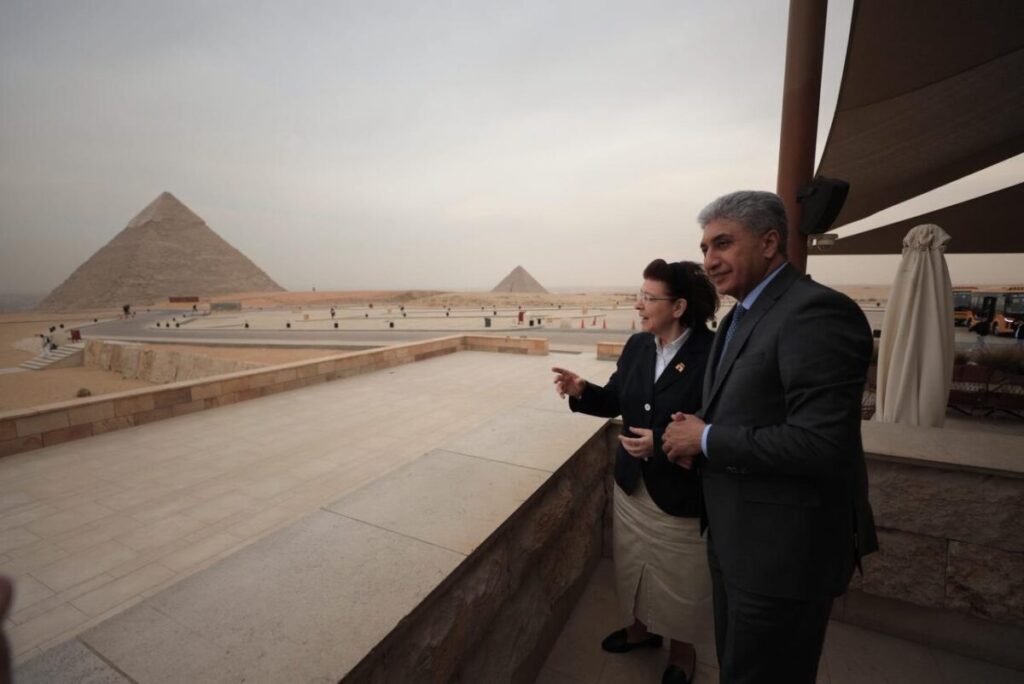
Tourism Minister Chérif Fathi visiting the renovated site of the Pyramids © Ministry of Tourism
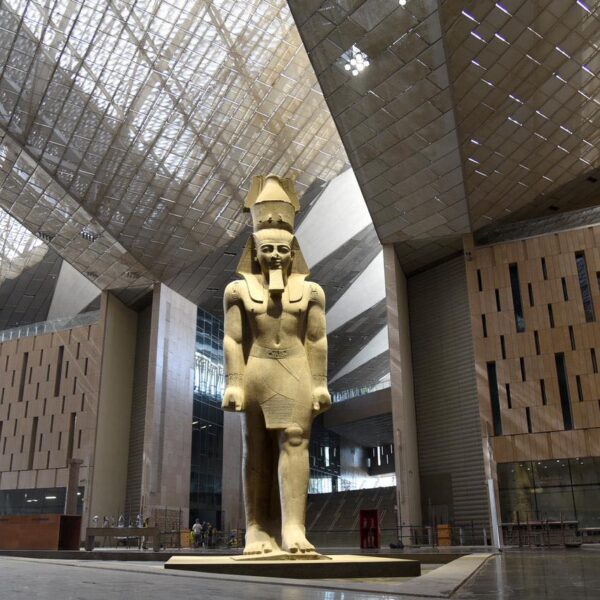
Featured photo: the large statue of Ramses II installed in the monumental hall of the Grand Egyptian Museum, near the Pyramids of Giza © Ministry of Tourism