Since February 28, the date of Israel and the United States’ entry into war against Iran, the daily life of Israelis is marked by alert sirens and repeated trips to shelters. Schools closed, deserted streets, suspended activities: the country is functioning at a slow pace. Yet, in the midst of this constant tension, doctors, journalists, and teachers continue their mission to maintain essential services and preserve, as much as possible, a form of normality.
AI Index: Mediterranean Knowledge Library
Civil life under the strain of war: chronicles from the home front
22-med – March 2026
• In Israel, hospitals, newsrooms, and homes are reorganizing every daily gesture to the rhythm of alerts and shelters.
• Doctors, journalists, and teachers maintain essential services despite the war, balancing constant adaptation and civil resilience.
#israel #war #health #education #journalism #resilience #civilsociety.
In hospitals, newsrooms, or apartments transformed into makeshift classrooms, the war disrupts the rhythms of civil life. Sirens interrupt consultations, delay news broadcasts, and suspend online classes. Each day is organized around alerts and movements to shelters.
Hospitals on maximum alert
In healthcare facilities, the transition to emergency mode was immediate. Dr. Eytan Wirtheim, director-general of the country’s largest health fund, Clalit, explains that preparations had already been underway for several weeks.
“Clalit ensures the continuity of activities in hospitals and clinics. We have reinforced protected areas, increased stockpiles of equipment, and developed telehealth capabilities to monitor patients even when movements become difficult,” he states.
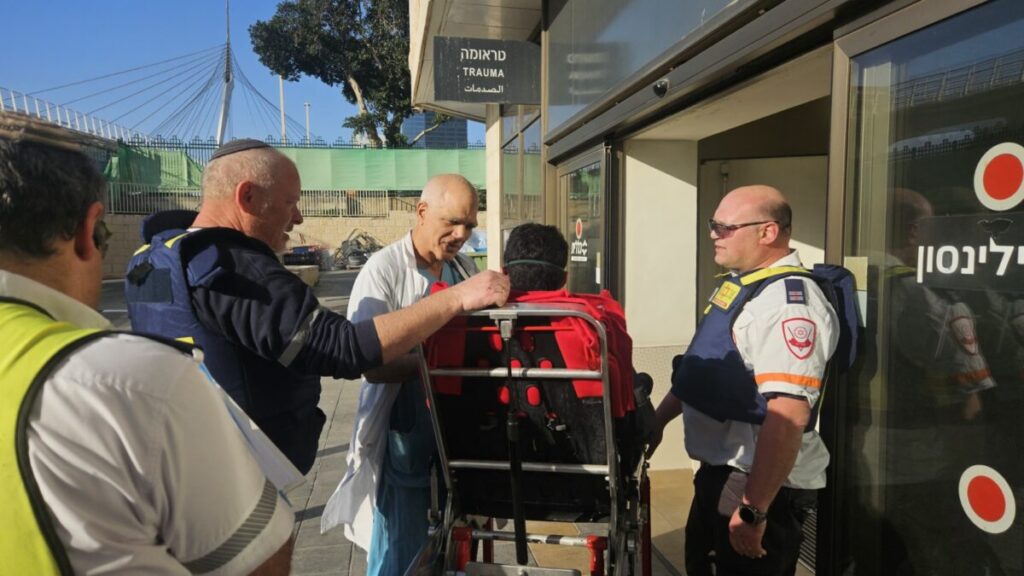
In hospitals, patients are gradually being transferred to secure areas. Non-urgent operations are suspended to free up staff and beds for critical situations. Patients who can return home are monitored by community care services.
At Rabin Medical Center, the director-general, reserve lieutenant colonel Dr. Erez Barenboim, emphasizes the adaptability of the teams. “Our center is trained to quickly switch from routine to emergency mode. The expertise and resilience of our teams allow us to respond to threats while maintaining continuity of care,” he says.
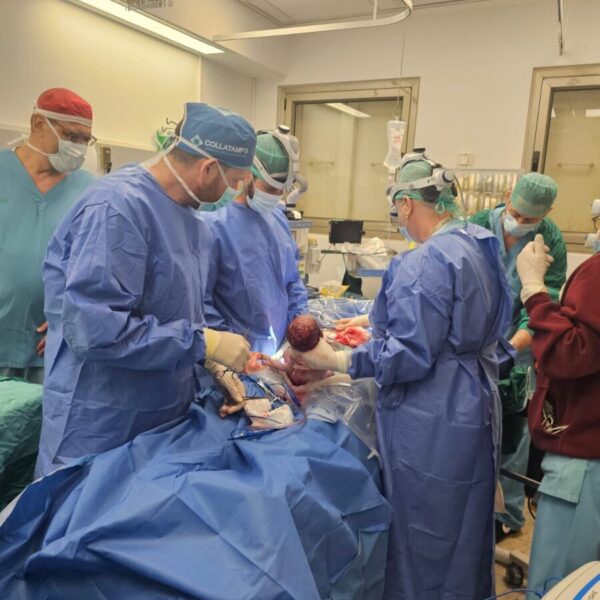
However, the war intrudes even into the most intimate moments. Professor Osnat Walfisch, director of the women’s hospital at Rabin Medical Center, recounts performing a cesarean section during an alert. “The conditions are not what we would wish to offer, but there is one thing we will never compromise on: the quality of care. In the turmoil of war, nothing is more beautiful than giving life.”
Further north, in Haifa, the Rambam Health Care Campus is now operating from its underground parking lot transformed into a 20,000 m² medical bunker capable of accommodating nearly a thousand patients.
In the face of the risk of missile strikes, Clalit has also urgently opened a secure hospital in Rishon Lezion, a suburb of Tel Aviv, named Magen HaAri, intended to accommodate particularly vulnerable patients, especially in rehabilitation or geriatrics. In just a few days, 216 patients are to be transferred there with their care teams to continue their treatment in safer conditions.
The new facility will be operated jointly by teams from three medical centers. About 250 staff members work there, including doctors, nurses, physiotherapists, occupational therapists, and social workers.
Informing under constant threat
While hospitals prepare for the worst, journalists attempt to document the war in real time. In Israeli newsrooms, teams often work between alerts, sometimes from shelters or remotely. The waiting time in shelters often delays their preparation for broadcast and forces them to design their news segments under relentless pressure, requiring often extreme speed.
For these reporters, the war is not just a subject: it is a daily environment. Correspondents cover strikes, political decisions, but also the human stories that unfold behind the statistics and at the sites of missile impacts. Stories that are sometimes tragic but also beautiful examples of solidarity.
“Either we are in the newsroom, or we are in the field. In the newsroom, we have to chain live broadcasts, analyze the situation, try to understand what is happening, and provide viewers with the most accurate information possible,” explains Shani Guidalia, a seasoned journalist from i24NEWS.
But when teams go to the impact sites, the war takes on a whole new dimension. “In the field, we go to areas hit by missiles. We see the damage, sometimes considerable, and it inevitably affects morale. It is at that moment that we truly realize the scale of the war: when a missile strikes directly or when debris causes significant destruction,” she says.
The difficulty, the journalist confides, lies in the very thin line between work and personal life. “You constantly have to juggle between the moments when you are on duty and those when the workday ends. Because even when the camera turns off, the war does not stop.”
Yet, at the heart of this tense situation, Shani Guidalia also highlights the collective resilience. “What is striking is people’s ability to continue living. You see people sitting at tables in cafes, laughing between live broadcasts, there are sometimes convivial moments in shelters. People are not in panic.”
After more than two years of conflict, she explains, a form of habit has even set in. “The sirens sound, people take cover, then they come out and resume their activities. This ability not to be overwhelmed by fear is truly exceptional,” she confides.
Distance learning, a sense of déjà vu
The education system is also functioning at a slow pace. Schools remain closed, and classes sometimes take place online. The Minister of Education, Yoav Kish, announced that the gradual reopening of schools would depend on the assessment of threats by the Home Front Command and the availability of secure shelters.
In Tel Aviv, Mayor Ron Huldai believes it is too early to send students back to class, while the Mayor of Jerusalem, Moshe Leon, wants classes to resume in his city, and the Mayor of Netanya, Avi Salama, is in favor of a partial return.
For teachers, the situation recalls the Covid-19 pandemic. “We are teaching on Zoom as much as possible, but it’s not the same,” explains a high school teacher.
On the parents’ side, the dilemma is constant. “The children attend a few online lessons, but they need to see their friends again. However, missiles can fall at any moment, and many schools do not have shelters. Under these conditions, keeping them at home seems safer,” says Yael, a mother of three and a resident of Netanya. Between sirens, distance learning, and hospitals turned into bunkers, Israeli society is trying to maintain a fragile balance. Despite the war, doctors, journalists, and teachers continue their mission: to preserve as much as possible the markers of daily life.
Cover photo: surgeons perform a cesarean section during a missile alert © spokesperson of Rabin Medical Center