The Muslim holy month of Ramadan has begun — traditionally a time for family gatherings around the iftar table and increased household spending. However, Palestinians in the Gaza Strip, the West Bank, and East Jerusalem are facing rising economic difficulties due to ongoing Israeli restrictions and prolonged political instability.
Prolonged closures and movement restrictions have prevented many Palestinians from working in Jerusalem and Israel, significantly reducing household incomes. The Palestinian economy, already fragile, has been further weakened by disruptions at border crossings and on trade routes.
The economic impact has been severe. According to the Palestinian Central Bureau of Statistics, unemployment in the occupied Palestinian territories reached 46% in 2025 — 28% in the West Bank and 78% in Gaza. Poverty rates in Gaza had exceeded 63% even before the war, and local officials say conditions have further deteriorated, with widespread food insecurity.
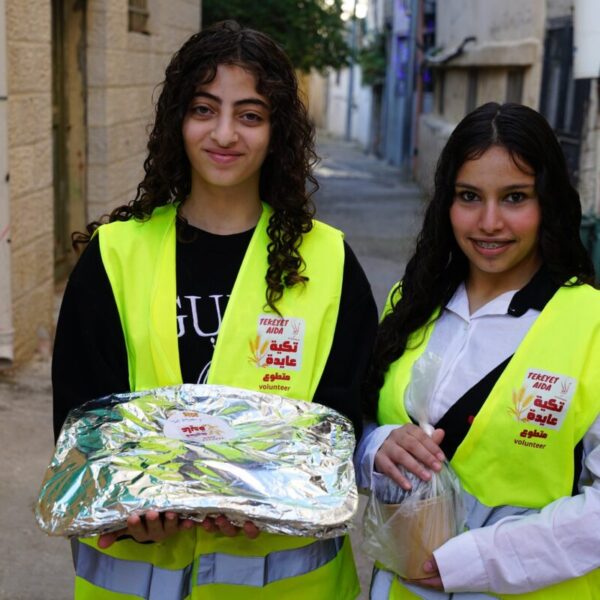
In the West Bank, poverty has reached around 40%, leaving many families unable to meet their basic needs. In this context, Palestinian charities have revived the centuries-old tradition of “takiya” — community soup kitchens dating back to the Ottoman era, with roots in earlier Islamic periods. Historically, these institutions provided free food and shelter to the poor and travelers. In the Aida refugee camp near Bethlehem, the Al Rowwad Cultural and Artistic Society runs “Takiya Al Rowwad,” first established during the COVID-19 pandemic when economic activity ceased.
The organization provides hot meals to refugee families in the camp and surrounding areas who struggle to secure enough food, said Ibrahim Abu Srour, chairman of the board of the society. Abu Srour describes the soup kitchen as a cornerstone of the organization’s work. The meals are delivered directly to families' homes, he added, in an effort to preserve the dignity of beneficiaries during this time of increasing need.
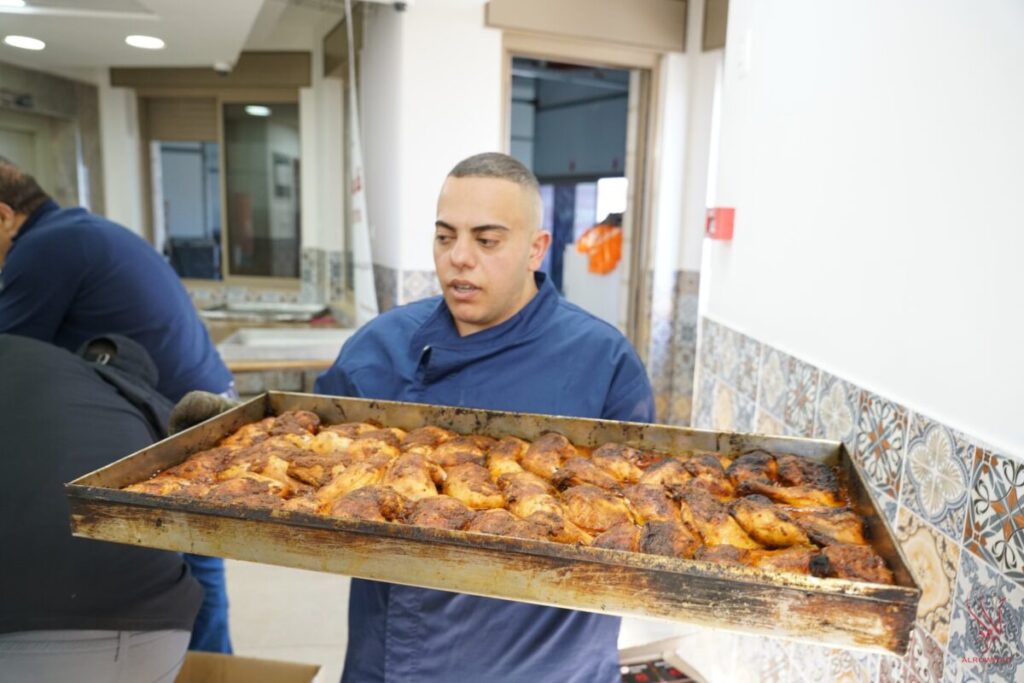
Inside the society's headquarters, volunteers gather each day during Ramadan to prepare large quantities of food in industrial-sized containers. Teams coordinate distribution to ensure that the most vulnerable households consistently receive meals.
“The Aida takiya is not just a seasonal initiative,” Abu Srour said. “It is a continuous humanitarian message that reflects our deep commitment to our community. For seven years, we have been working to protect the dignity of families and provide support in a spirit of respect and solidarity.”
Ra’bal Al Kurdi, a member of the organizing team, said the effort complements the society's broader aid programs aimed at strengthening the resilience of Palestinian refugees and marginalized communities in an increasingly difficult political and economic context.
Skilled cooks, growing demand
Every day around noon, experienced cooks from the camp, joined by dozens of volunteers, decide on the menu for the day before starting preparations for iftar. Head chef Mahmoud Al Kurdi said that kitchen work begins early to ensure quality and food safety. “We do not simply prepare meals. We cook them with care and love, because every family deserves a dignified and complete meal at the iftar table,” he said. Many volunteers, including young men and women from local universities, describe their participation as both a humanitarian duty and a personal commitment to their community. Abu Srour stated that in previous years, the society relied heavily on donations from abroad, coordinated by international partners.
However, since the outbreak of the war, some foreign organizations have been hesitant to transfer funds, citing concerns over legal or political complications. Additionally, a significant portion of international aid has been redirected to Gaza, where humanitarian needs are considered more acute.
As a result, the society has shifted its focus to local donors, including business owners and community members. Nevertheless, funding has decreased. “By the tenth day of Ramadan, we had received no cash donations, either from inside or outside Palestine,” Abu Srour said.
The society has received in-kind contributions (such as rice, meat, and kitchen supplies) from local donors, although some have reduced their assistance as they support multiple charities.
In previous years, Takiya Al Rowwad distributed about 30,000 meals during Ramadan. This year, Abu Srour estimates that the total will not exceed 20,000 due to limited funding, even as the number of people seeking help continues to rise. Currently, the kitchen distributes about 500 meals per day, down from 800 to 1,000 in previous years. Management recently discussed the possibility of continuing to operate under financial pressure but ultimately decided to proceed due to the growing need.
A community effort
Each evening, organizers contact families scheduled to receive meals the following day. Abu Srour stated that no family has refused assistance — a sign, he believes, of the depth of economic hardships.
Beyond food distribution, organizers view the takiya as a means to promote volunteering and social solidarity among youth. Dozens of children help deliver meals to homes before sunset. “I feel proud when I help distribute the meals,” said Qusai Abu Hamad, a young volunteer. “I love helping people, and I hope that the Aida takiya will always bring joy to families during Ramadan. The best moment for me is delivering the hot meals just before iftar.”
Beneficiary families say that the support has alleviated rising financial pressures. A grandfather, who asked to be identified only by his initials, stated that his extended household, including his married son and grandchildren, has been unemployed since they lost their jobs in Jerusalem after the war began. “We have exhausted all our savings over the past two and a half years,” he said. “The daily meals have helped reduce expenses and provided relief during a time of uncertainty.”
As Ramadan unfolds under economic pressure, community initiatives such as the Aida takiya highlight both the depth of hardships and the enduring culture of mutual aid within Palestinian society.
Featured photo: Female volunteers from the Aida refugee camp distribute hot meals prepared in the camp's kitchen (takiya) to families in need © Monjed Jadou