The Mediterranean is today one of the seas most suffocated by plastic, with over 200,000 tons of plastic dumped each year. This massive pollution threatens biodiversity, public health, and the livelihoods of coastal communities. Amaia Rodríguez became aware of the scale of the ocean problem after a personal experience in Asia. She returned with an absolute certainty: awareness was no longer enough; structural action was needed. Together with her brother Julen, she founded Gravity Wave to tackle marine cleaning in a radical way.
IA Index: Library of Mediterranean Knowledge
Gravity Wave transforms marine plastic into a strategic raw material
22-med – February 2026
• In the Mediterranean, Gravity Wave relies on a network of 7,000 fishermen and over 200 companies to collect, trace, and recycle marine waste.
• More than 1.17 million kilograms of plastic have already been recovered, with blockchain traceability and industrial outlets (panels, materials) to turn waste into resources.
#mediterranean #plastic #pollution #recycling #circulareconomy #fishing #innovation #traceability #blockchain #biodiversity
What started in 2021 with a simple container in the port of Calpe, Alicante, has now become a global movement to recover marine waste and transform it into a high-value raw material to regenerate the Mediterranean Sea through sustainable solutions.
The project has now established itself as a global movement supported by European institutions, uniting businesses, citizens, and administrations in the fight against plastic pollution. “Having surpassed one million kilograms of recovered plastic is an immense milestone, but the most important thing is not the number; it's the system we have built behind it: a network of over 7,000 fishermen and more than 200 companies that actively fund the cleaning of the sea,” explains Amaia Rodríguez, founder of Gravity Wave.
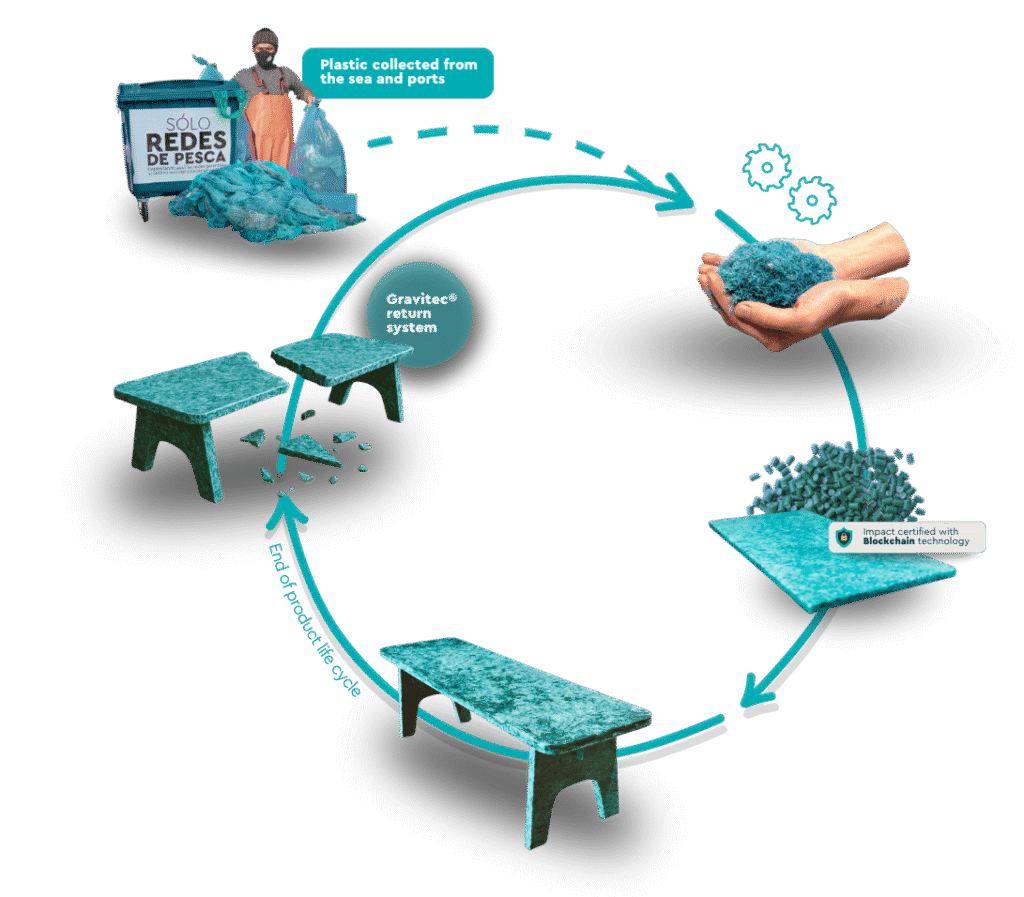
They have managed to transform an element with such a negative connotation as waste into a high-value raw material. To do this, they rely on a value chain that transforms marine plastic in three steps: they collect plastics and nets with traditional fishermen, recycle them to obtain high-quality raw materials, and transform them into innovative products with a positive impact.
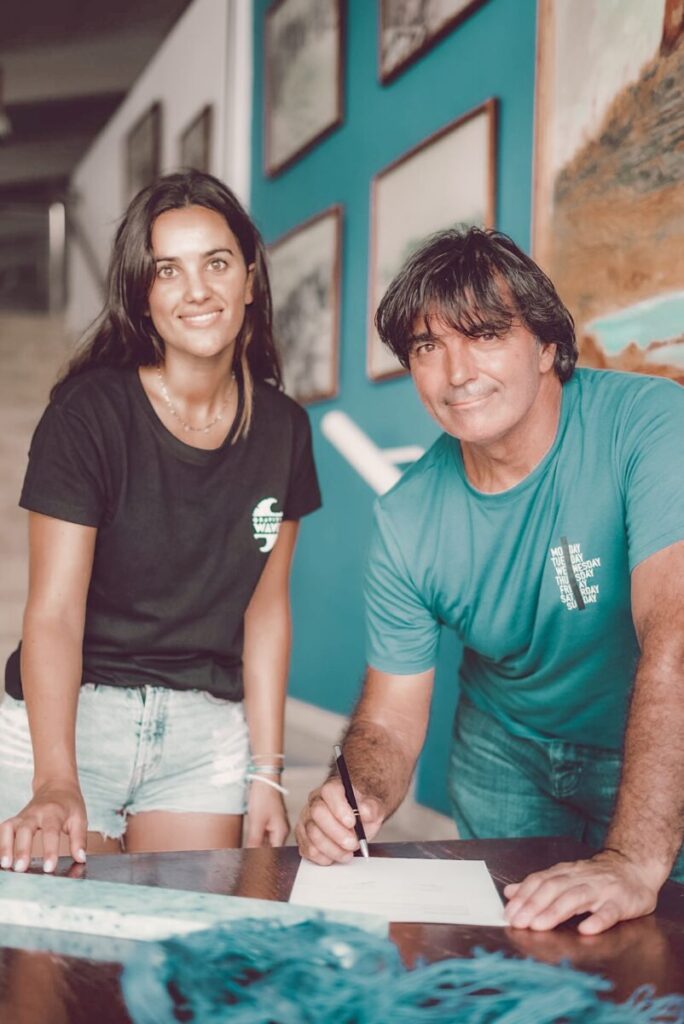
As Amaia points out, this is not a simple process. Marine plastic is one of the most complex types of waste to recycle due to its high degree of degradation. “To be able to transform it into high-strength panels, we had to work closely with recyclers, engineers, and technological centers. We developed specific processes for sorting, grinding, washing, and formulating the material to ensure stability, mechanical strength, and durability. It’s not just about recycling; it’s about designing an industrial material that meets the standards required by the market. Each recovered net has a different story, and our innovation has been to turn this specificity into an asset, not a problem,” the founder clarifies.
For the circular economy to be real and not just a narrative, transparency is fundamental. “Traceability is key for this model to be credible. We use blockchain technology to record each step of the process: from the collection of waste at the port, its weight and origin, to its final transformation into a product.”
From Waste to "Premium" Resource
The impact figures of Gravity Wave confirm the scale of the project. To date, they have managed to recover 1,179,995 kg of plastic. The entire process benefits from certified impact thanks to the previously mentioned blockchain technology. The origin of the material reveals a dual strategy: 64.8% of the waste is recovered directly in ports, thus acting preventively, while the remaining 35.2% is extracted from the seabed.
Beyond cleaning, success lies in transformation. Currently, the organization has over 317,000 kg of repurposed plastic in the form of materials and innovative products such as recycled panels for construction and interior decoration. One of the biggest challenges of this marine recycling is finding a competitive commercial outlet for it.
“We have achieved this by demonstrating that this material is not waste, but a raw material with a story, value, and technical performance. We work closely with architects, designers, and industrialists to help them understand the material, test it, and trust it. When they see that it meets the requirements and also generates a real positive impact, it ceases to be 'recycled plastic' and becomes a premium material with meaning,” explains Amaia.
By 2030, it seems entirely feasible that marine waste will no longer be perceived as garbage but as a strategic raw material. To achieve this, as she points out, “Europe needs local, traceable resources with a low environmental impact. The key will lie in regulation, innovation, and, above all, a change in perspective.”
The Fisherman, an Actor in the Solution
This process would not be possible without the direct involvement of fishermen. As Paco Catalá, head of the Brotherhood of Fishermen of Calpe, explains: “Fishing has often been pointed out as part of the problem, while in reality, we are the first to be interested in a clean sea. Projects like this help to demonstrate that. It highlights our profession and presents us as an active part of the solution.”
Changes in the sea are not perceived overnight. “During a normal fishing day, we can catch a few kilos or much larger quantities; it depends on the day and the area. The most concerning thing is the amount of plastic that appears far from the coast: nets, ropes, cans, debris of all kinds. We realize that the problem is not sporadic; it is constant,” recounts the head.
Yet, the results confirm that the effort is worth it. “Less waste means less risk for species, fewer 'ghost nets,' and a healthier environment. The fisherman is the first to notice when the sea is unwell, but also when it starts to breathe a little better,” he concludes.
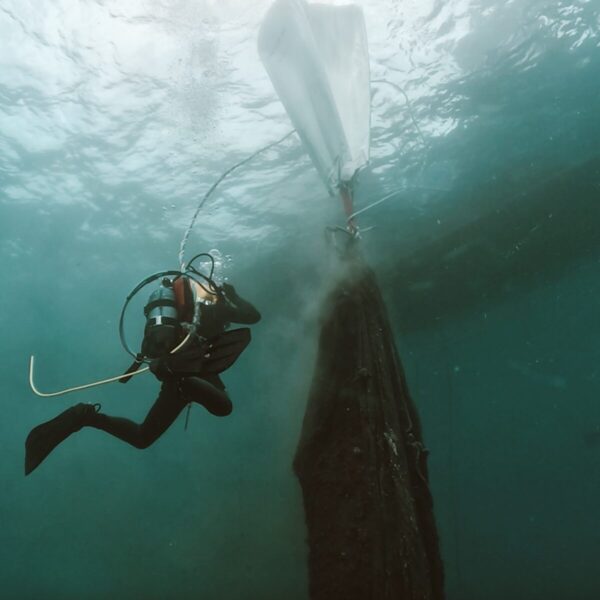
Cover photo: crucial fieldwork for collecting marine plastic © Gravity Wave