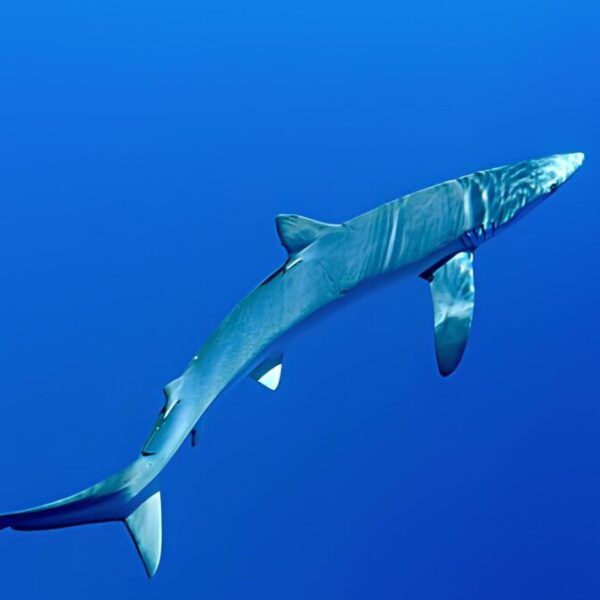
Elasmobranchs (sharks and rays), long demonized, play a key role in the balance of the oceans: they regulate food chains and protect essential habitats. Yet, their populations have collapsed due to overfishing, bycatch, and increased environmental pressures. In the Balearic Islands, the SARKO project, led by the Marilles Foundation, shows that a coordinated response can still reverse the trend.
IA Index: Mediterranean Knowledge Library
SARKO to the rescue of sharks and rays
22-med – January 2026
• In the Balearics, the SARKO project coordinates science, fishing, and marine area management to limit bycatch and strengthen the protection of sharks and rays.
• In the Mediterranean, slow-growing vulnerable species can still be saved through release protocols, protection listings, and support from ISRA.
#mediterranean #biodiversity #shark #ray #conservation #fishing #bycatch #marineprotectedarea #balearics #science #governance
The Mediterranean is one of the regions in the world where sharks and rays are most threatened. Human pressure is indeed concentrated on a closed and intensely exploited sea. “In fact, about 50% of the roughly 80 species of sharks and rays in the Mediterranean are in this situation,” explains Álex Bartolí, marine biologist, elasmobranch conservation expert, and member of the SARKO advisory group.
The social perception of these animals does not reflect their biological reality. “Although sharks are popularly perceived as robust species, the reality is that they are very vulnerable. They are slow-growing species with late sexual maturation and low offspring. That is why, in the face of any impact, the recovery of their populations is more difficult because it is slower. In some cases, reproductive cycles occur only every two or three years,” emphasizes the biologist.
Their vulnerability is further increased when they are subject to bycatch. “Although some species can be very large, the absence of a rib cage or the stress they experience out of water are factors to consider, as evolution has not prepared them to withstand a stay out of the aquatic environment,” specifies Bartolí.
That is why experts emphasize the need to limit bycatch and, when it occurs, to ensure that the animals can return to the sea as quickly as possible and with the least possible harm. “However, in the Mediterranean—a sea lacking fisheries targeting sharks—bycatch occurs with almost all fishing gear,” he adds.
Action lines of a pioneering conservation project
The SARKO project aims to halt this critical decline by focusing on the Spanish Mediterranean. It is part of the “Strategy for the Conservation of Sharks and Rays” initiated by the Balearic Islands government, providing scientific knowledge and practical solutions. With a budget of 600,000 euros and a three-year horizon, this initiative seeks to establish a solid scientific basis to support the protection and restoration of these species.
As explained by Pablo Rodríguez Ros, coordinator of the SARKO project and head of Marine Protected Areas at the Marilles Foundation, SARKO revolves around three main strategic axes.
First, it involves close collaboration with the fishing sector to improve the release practices for accidentally caught sharks and rays, aiming to limit injuries and increase their chances of survival. It also aims to strengthen the protection of these species by promoting their listing on official protected species lists.
Additionally, SARKO promotes ISRA (Important Shark and Ray Areas), these key areas for sharks and rays, to support the creation of more numerous and effective marine protected areas.
This is a project that involves all relevant sectors, from the fishing world to the academic community, to marine space management. “We are convinced that this multidisciplinary approach, which takes into account the most relevant stakeholders, is the best way to make progress in the conservation of these organisms,” asserts Rodríguez Ros.
Best fishing practices
Currently, about 30 species of sharks and rays present in the waters of the Spanish Mediterranean are protected because they are threatened with extinction and are listed in Annex II of the Barcelona Convention. Furthermore, the General Fisheries Commission for the Mediterranean (GFCM) establishes binding recommendations that require member states to protect these at-risk species. The SARKO project aims to expand this protection and has submitted several formal requests based on the best scientific evidence. The project coordinator adds that: “If our goals are achieved, we could obtain protection for 3 or 4 additional elasmobranch species as early as this year.”
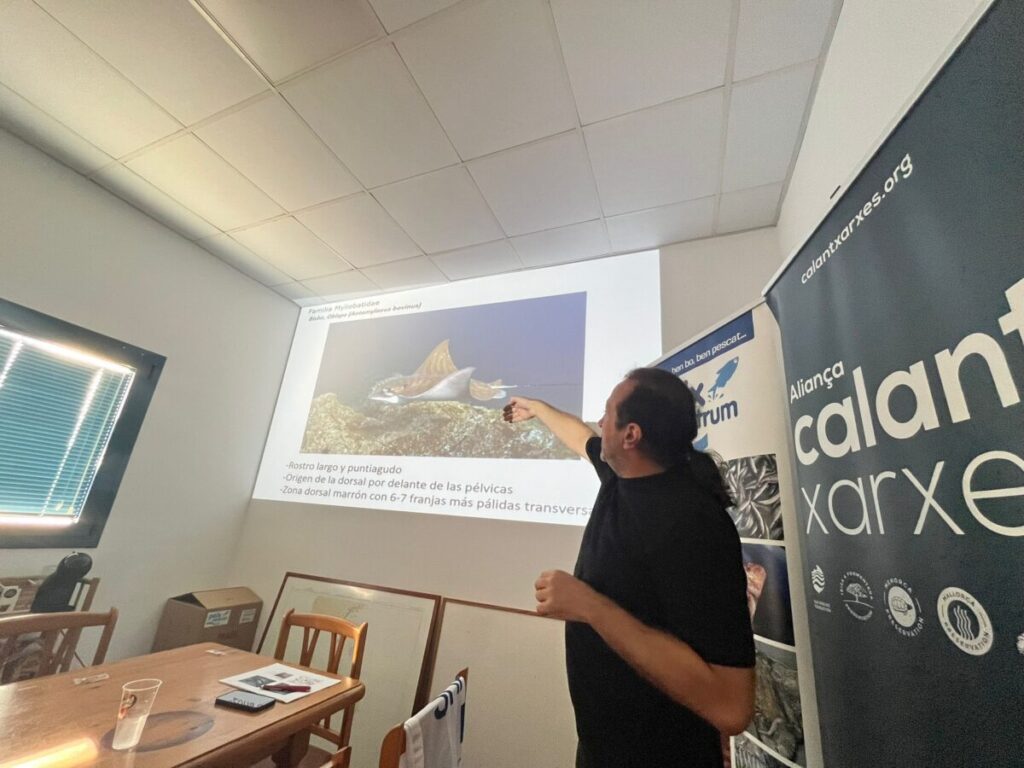
Collaboration with the fishing sector is crucial; that is why best practice protocols are reinforced through workshops aimed at professional fishermen. “During these workshops, we teach them to identify protected species and to release them using handling and management techniques that minimize harm to the captured species while ensuring the safety of the fisherman and the survival of the specimen,” explains biologist Álex Bartolí.
At the end of 2025, a first workshop was held with the Fishermen's Brotherhood of Ibiza (Cofradía de Pescadores de Ibiza) with “a zero mortality goal after accidental capture”. These training sessions will continue in 2026.
Cover photo: about 50% of the roughly 80 species of sharks and rays in the Mediterranean are threatened © Marilles Foundation