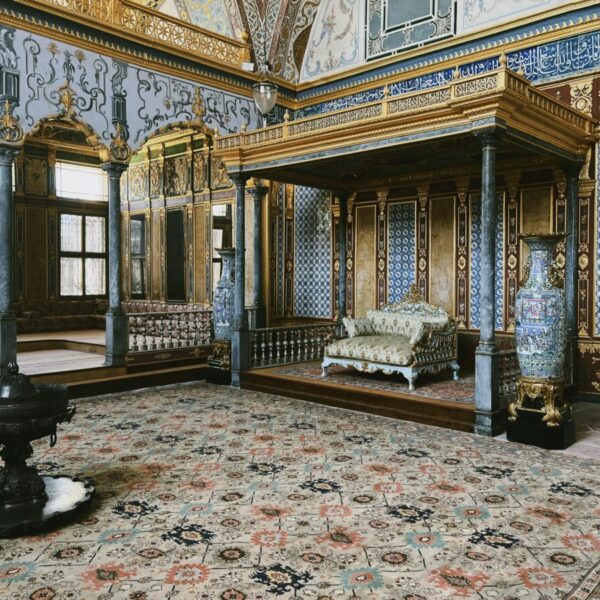
How to Overcome the Stereotypes of the Harem Created by Orientalist Imagery? The Franco-Tunisian historian, Jocelyne Dakhlia, has just published a monumental work that allows us to escape the fixed representations of Muslim women as well as the assumptions of despotism that underpinned this gaze, particularly in the Maghreb.
"Even if Europeans argue about things as elementary as beef and chicken farming, their common fantasies about the harem remain a very solid basis for unification", humorously observed Moroccan sociologist and feminist Fatéma Mernissi.
Confronting the Double Misunderstanding
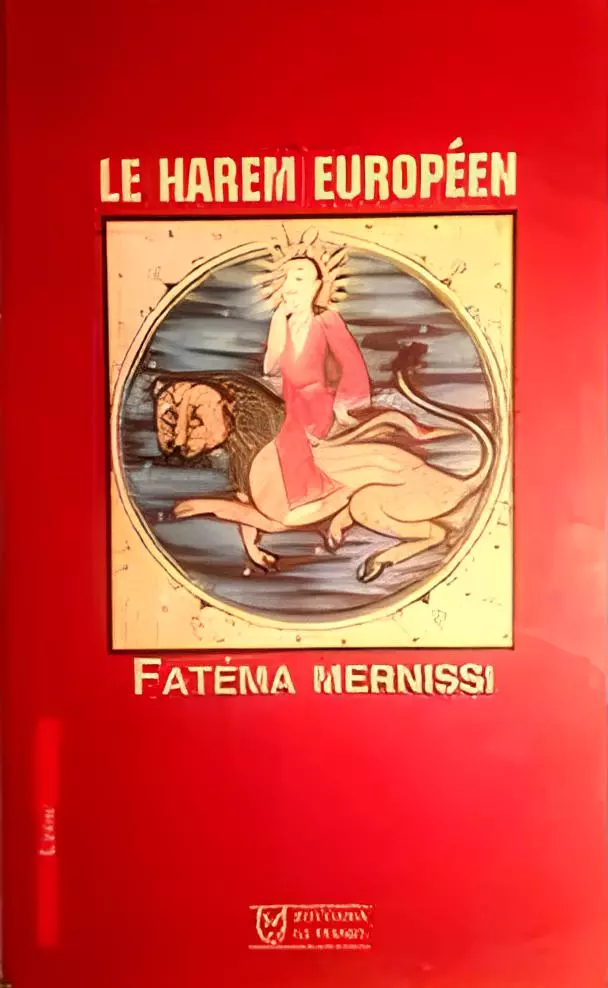
Her argument, in her book The European Harem (Ed. Le Fennec, 2003), is that while The Thousand and One Nights were long banned in Arabic, passed down orally, and incorporated into Western literature in 1704, one must understand the double misunderstanding behind it.
The first is that of an orientalism - this Orient fabricated by the West, according to Edward Said's formula - which has frozen the image of the Muslim woman as cloistered, submissive, and a permanent object of desire. The second relates to a patriarchal elite within Muslim societies themselves, which would not have allowed the emergence of this imaginary of intelligent women, irreducible to their bodies, capable of challenging the established order through intelligence, imagination, and other subterfuges to hold pieces of power.
These women, irreducible to the dominant immutable image, are represented in Mernissi's writings both in her personal history through her grandmother Yasmina, who literally lived in a harem in Fès, and by what she calls "the forgotten sultanas," referring to women who were once heads of state in Islam and erased from historical chronicles, like Sitt Al Mulk under the Fatimids, and many others. But she regularly returned to the fictional character of Scheherazade, who served as a benchmark for her as she demonstrated erudition, courage, and the ability to challenge what the despotic king Shahrayar believed he could impose on her as arbitrary rules.
Against "the Harem Theory"
Two decades later, precisely, the Franco-Tunisian historian, Jocelyne Dakhlia, known for her rigor, sense of nuance, and anthropological concern to give voice to marginal sources and seemingly ordinary stories to illuminate the grand narrative, publishes in three volumes and just under two thousand pages, the result of more than ten years of research, under the title Harems and Sultans: Gender and Despotism in Morocco and Beyond 14th-20th Century (Ed. Anacharsis, 2024).
To initiate her project of rewriting a history heavily biased by dominant historiography, the author chooses to start from an apparently trivial episode, very little relayed, dating back to 1672, specifically from a failed expedition of the sultan, Moulay Ismaïl, to take control of Marrakech. "When he was besieged between the mountains ..., he escaped under the cover of night, several of his women were forced to walk on foot ... one of them got lost in the snow, of which we could have no knowledge," reports historian Germain Moüette. Dakhlia seizes this passage and a string of other empirical examples to debunk the harem theory, a kind of general anthropological law defying historical facts, which would suggest that in Maghreb societies, women were "collectively confined, excluded from public space and thus from the political sphere."
In her approach, supported by a multitude of iconographic documents, maps, and theoretical and conceptual revisions on gender and power issues, the historian fights against generalizations, the hypersexualization of harems, and thus the essentialism that still fuels the idea that Muslim women are weakened and dominated beings, to be saved. This methodological undermining is conducted on several fronts, dismantling the prejudice of Muslim exceptionalism, contextualizing the male-female divides, and offering an original framework for understanding power relations and forms of authoritarianism.
In this sense, she first refers to the notion of human morphology in Galen, based on a unisex conception, which has long prevailed and would explain that harems were indeed gynaeceums, but also places for ephebes, eunuchs, and homosexuals, as she elaborates, with supporting images, on the notion of masculinity and hairiness, which help redefine gender boundaries through their cultural representations. Similarly, she multiplies, according to historical periods and power relations, how the fear of women, such as in the case of a mistress of the king of Morocco during the Portuguese expedition to Safi in 1513, of becoming "a slave and being treated harshly by her new masters." Through a series of intermediaries, Dakhlia shows that at the time, harems were plural, and the effects of patriarchal domination were just as fierce, if not more so, in the seraglios of Christian colonizers.
Rewriting History from Below
The methodical work carried out by the author allows for the renaming of eras and thus redefining the conceptual frameworks propagated. Thus, the three volumes of the book correspond to three periods: gynaeceums (from 1350 to 1550), seraglios (from 1550 to 1750), and then harems (from 1750 to 1930). It allows, in passing, to rewrite history from a transnational, ordinary, commercial, and usual prism, and not just from an elite perspective or overdetermined by the supposedly confined lives of the Palaces.
Jocelyne Dakhlia is particularly insightful regarding the resistances faced in this tedious work of rewriting history from below. First, she emphasizes, somewhat criticizing more classical writings on the subject, such as those of Fatéma Mernissi, which give greater attention to sultanas, queens, and other powerful women, as exceptions that mask or render invisible, over the long course of history, the active role of ordinary women.
She remains skeptical about the ability to mobilize counter-narratives that value another historical reading of power relations towards women, as national movements, while liberating their countries, have also been promoters of a neo-patriarchy and new forms of post-colonial despotism. And then, whether due to the neo-orientalist discourse, still so essentializing, which aligns with feminisms as a pro-Western movement, or identity trends within Maghreb societies, the incredible richness of historical emancipation struggles unfolded in this book is today off-screen. As if in this matter of gender equality, due to the screen notion of "harem" - not far from that of haram (forbidden) - which mutates and serves differently as an alibi for patriarchy, everything needs to be started anew.
Driss Ksikes is a writer, playwright, media and culture researcher, and associate dean for research and academic innovation at HEM (private university in Morocco).

Cover Photo: The Imperial Hall (Hünkâr Sofası) of the harem of the Topkapi Palace in Istanbul © Mehmet Turgut Kirkgoz