
The choice of farming engages a direct relationship with the living, the seasons, and the territory. Between professional retraining and the maintenance of a threatened pastoralism, these paths show ways of inhabiting rurality and working with animals in contexts marked by isolation, physical burden, and fragile economic balances. Lives organized around precise gestures and a sustainable commitment.
During the holiday season, 22-med intersects and puts into perspective solutions that have been the subject of articles in the French media Marcelle with articles on the same theme published in 22-med.
Agricultural retraining: from cradle to home
Summary of the article by journalist Patricia Guipponi, published in Marcelle on August 6, 2025
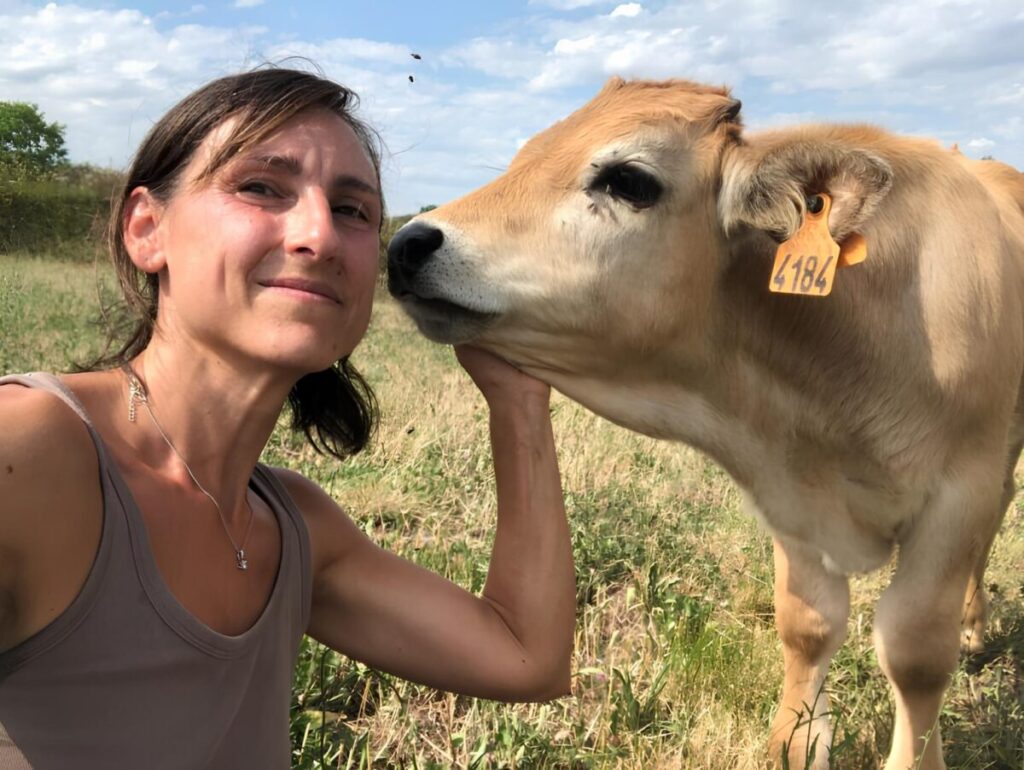
Daughter of farmers, Béatrice de Kerimel had never considered taking over the family farm. For nearly twenty years, she worked as a midwife, in a hospital and then in a clinic, before questioning her professional commitment and working conditions. This gradual journey led her to partner with her husband, who became a farmer, and to settle permanently into cattle farming.
Being a midwife, a demanding vocation
Originally from Aude, Béatrice de Kerimel chose early on to pursue a career in the medical field. After high school, she entered the midwifery school in Toulouse. The training is intensive, alternating theoretical courses and practical internships. She quickly confirms her attraction to this profession, which she experiences as a deep commitment to women and newborns.
Graduating in 2005, she begins her hospital career in Chambéry, then in Albertville, before following her husband to Brittany when he joins the Military School. There, she finds a position at the maternity ward in Ploërmel, while expecting her first child. The profession is rich in human experience but also emotionally charged. Béatrice accompanies pregnancies, deliveries, and gynecological follow-ups, with a keen sense of responsibility.
As the years go by, the reality on the ground becomes apparent. The workload, insufficient staffing, and lack of recognition weigh heavily. A significant event, a delivery that goes wrong, acts as a revelation. Béatrice becomes aware of the constant pressure and lasting stress associated with her profession. Gradually, the idea of a life change takes root.
Returning to the land in Volvestre
When her husband leaves the army to become a farmer, the couple settles on an organic farm in Montesquieu-Volvestre. Béatrice continues to work as a midwife for a while, in Foix then in Saint-Girons, while juggling family constraints and daily commutes. Fatigue accumulates.
In 2019, she takes parental leave and invests more in the farm. She participates in animal care and the daily management of the farm. She follows a correspondence course for a professional certificate in agricultural business management, which she obtains. When a stable position is offered to her in maternal and child protection, she ultimately chooses agriculture.
The farm has Aubrac and Mirandaise cows, selected for their hardiness. Calvings occur without special assistance. Béatrice gradually integrates into this new profession, despite lower income and complex administrative procedures. She does not regret her choice and finds in agricultural work a relationship with the living that she had known in caregiving.
A reasoned agriculture and a territorial project
Now forty-two years old, Béatrice de Kerimel advocates for an agriculture that respects the environment and is attentive to animal welfare. She is interested in alternative practices, particularly the use of medicinal plants and homeopathy for livestock. She joins discussion groups on these topics, convinced of their relevance in a reasoned agriculture.
Concerned with showcasing her territory, she organizes tasting hikes on her pastures, highlighting the landscapes and local products. A project for guest rooms and post-natal care was once considered, before being suspended due to lack of building extension authorization.
If she once spoke of her retraining, Béatrice now simply defines herself as a farmer. Her past as a midwife remains present but is no longer central to her professional identity. On her farm, births occur naturally. The cows calve on their own, in a controlled balance between animal selection and respect for the rhythm of life.
A cowherd facing the disappearance of alpine pastures
Summary of the article by journalist Katarina Oblak published in 22-med on September 10, 2025
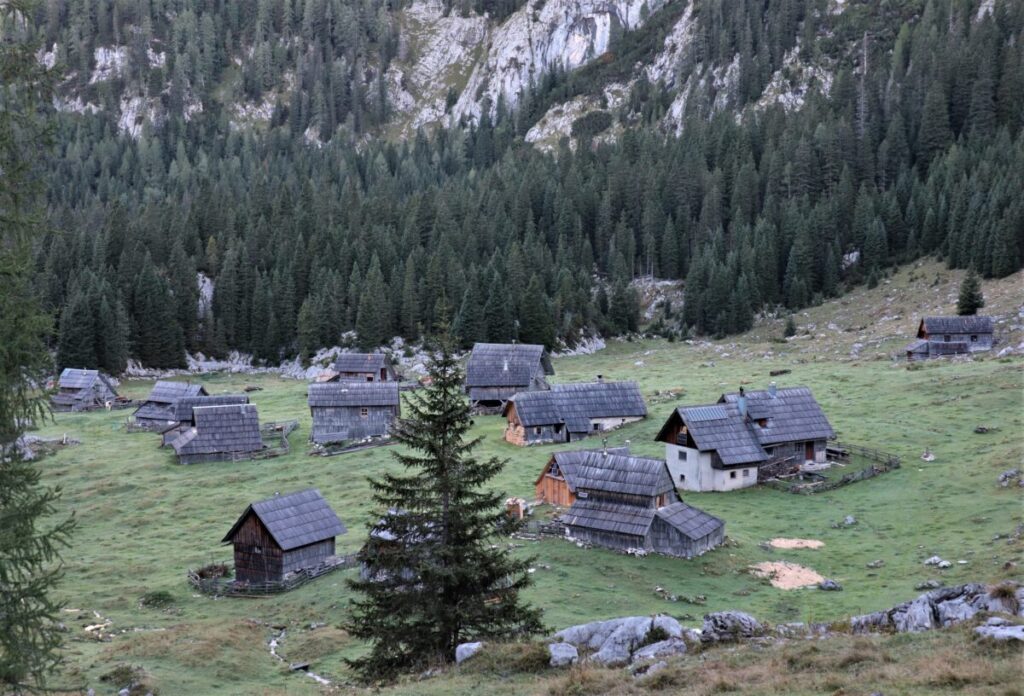
On the alpine pastures of the Julian Alps, pastoralism has been declining over the years. On the plateau of Planina v Lazu, only one cabin remains occupied during the summer. At thirty-three years old, Lucija Gartner continues dairy farming and the production of mountain cheeses, keeping alive a way of life threatened with extinction.
At one thousand five hundred sixty meters above sea level, the days are organized around the same gestures, summer after summer. Milking the cows, leading the herd to the pastures, and transforming the milk mark a daily routine that was long shared by several families of shepherds. Today, Lucija Gartner is the only one keeping this pasture alive located in the Bohinj region.
A summer life on a deserted alpine pasture
Before sunrise, Lucija begins her day with her cows. The animals are accustomed to mechanical milking and the morning silence of the mountains. At the beginning of summer, the wake-up call comes at five-thirty. Later in the season, the rhythm softens slightly, without ever breaking the regularity imposed by farming.
The plateau of Planina v Lazu once hosted several herds during the summer months. The shepherd cabins, called stan, still bear witness to this past activity. Most are now empty. In the past, a communal dairy centralized the milk, transformed by a cheesemaker for all the breeders. Today, Lucija is the only shepherd still residing on this pasture and the last to ensure cheese production on-site.
Her attachment to the mountain was built from childhood. Her father began summer grazing in the early 2000s. Initially present only on weekends, Lucija quickly spent all her summers in the pastures. She grew up with the rhythm of the seasons, the animals, and agricultural work, gradually integrating the skills related to livestock and cheese production.
Passing on a profession through gesture
Today, Lucija is not alone on the pasture. During the summer, children and young people come to share her daily life for a few days or several weeks. Among them, Aleksandra, twelve years old, has been helping her for over a month. She learns to milk, to lead the cows, and to participate in the domestic tasks of the cabin.
Transmission occurs through observation and repetition of gestures. For Lucija, teaching this profession remains a way to give it meaning and to fight against its erasure. The young visitors live simply, sleep in a small cabin, and discover a demanding way of life, far from modern comforts. Word of mouth has allowed other families to entrust their children to Lucija, convinced of the educational value of this experience.
This seasonal presence restores a collective dimension to a pasture that is now almost deserted. Even if temporary, it helps maintain a form of continuity in a territory marked by the decline of pastoralism.
Making cheese and maintaining a living landscape
Every two days, the milk is transformed into mountain cheese. Heated in a large copper cauldron, it gradually coagulates before being cut, stirred, and then pressed. The resulting wheels weigh about thirty kilos. The whey is then used to produce a fresher cheese, completing the valorization of milk production.
Beyond the technique, this production expresses an ancient mountain culture. The tastes, shapes, and textures tell the story of the pasture and the natural conditions in which the cheese is produced. Each wheel sold helps prolong this activity and justifies human presence at altitude.
The decline of pastoralism affects all of Slovenia. Rural exodus, the arduousness of work, and low profitability weaken transmission. Without grazing, mountain meadows risk closing up and losing a biodiversity shaped by centuries of livestock farming. In her own way, Lucija continues her activity, trains the younger generation, and maintains the pastures. Planina v Lazu has become a discreet symbol of resistance. As long as the bells ring and the milk boils in the cauldron, this way of life remains alive.
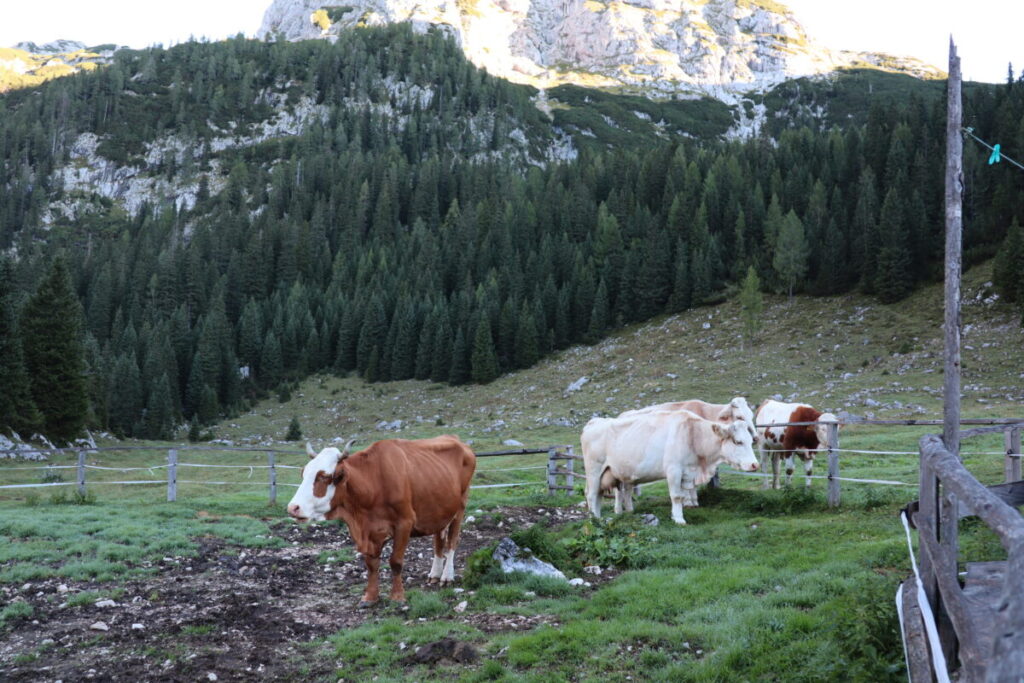
Cover photo: Béatrice de Kerimel and her Aubrac and Mirandaise cows © Patricia Guipponi