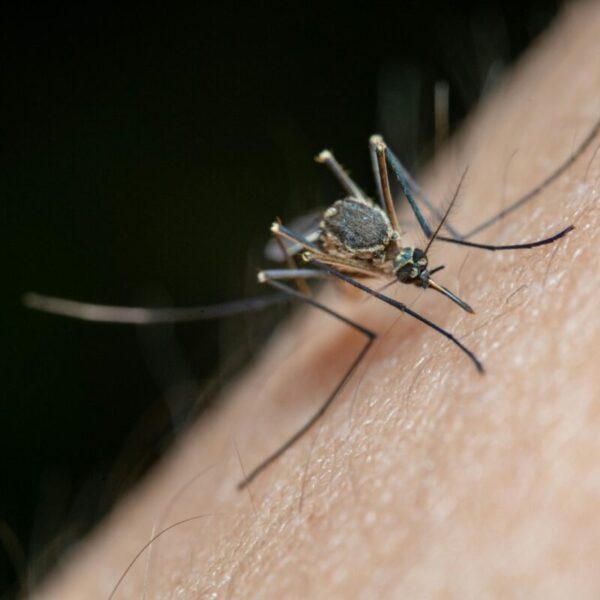
For several consecutive summers, Israel has been facing a resurgence of mosquito populations that carry the West Nile Virus (WNV). Transmitted by the bite of certain mosquitoes, it can be dangerous for humans, especially the elderly or immunocompromised individuals. This situation occurs within a climatic context of prolonged high temperatures and environmental changes favorable to proliferation. Meeting with Professor Jihad Bishara, head of the Infectious Diseases Unit at Rabin Medical Center – Beilinson Hospital.
By Caroline Haïat - Journalist
Index IA: Mediterranean Knowledge Library
West Nile Virus: Infectious disease specialist Jihad Bishara warns of a high risk
22-med – February 2026
• In Israel, the West Nile Virus is experiencing a marked resurgence, with an early outbreak starting in May and now widespread circulation until December.
• Infectious disease specialist Jihad Bishara points to the combined effect of climate change, environmental dynamics, and still too reactive prevention.
#israel #health #westnilevirus #mosquito #infectiousdisease #climate #prevention #publichealth #mediterranean

The majority of WNV infections are asymptomatic or present with flu-like symptoms (fever, headaches, muscle pain). However, about 1% of cases may progress to severe neurological forms (encephalitis, meningitis). Treatment remains primarily symptomatic, as there is still no specific antiviral therapy for the disease.
The first documented human outbreaks date back to the early 1950s. Entomological research conducted in the country shows that the species Culex pipiens, Culex perexiguus, and Aedes caspius are the main vectors for the transmission of WNV in different areas. A major outbreak occurred in 2000, with 417 confirmed cases and 35 deaths attributed to WNV infection. Since then, several dozen cases have been reported each year. The largest outbreak in the past two decades occurred in 2024. It began unusually early in May, with over 930 patients diagnosed and 72 deaths recorded.
Mosquitoes acquire the virus by biting certain birds that have high levels of viremia (the presence of the virus in the blood). They act as amplifying hosts, allowing the virus to replicate at high levels. Once infected, mosquitoes can transmit WNV to other birds and, incidentally, to humans and mammals.
The rise in temperatures and surveillance: significant issues
The increase in WNV cases observed in Israel is explained both by a genuine intensification of viral activity and by improved surveillance and reporting. Higher temperatures and changes in precipitation patterns have increased the propensity to transmit WNV, leading to more sustained mosquito activity and avian reservoirs, as well as greater viral circulation.
“The expanded use of new methods has increased the sensitivity and specificity of molecular diagnostics, contributing to the rise in the number of reported cases during the recent 2024 outbreak,” states Professor Jihad Bishara.
“The disease is primarily concentrated in two large geographical areas: the coastal plain and the central region, as well as the Arava and the Jordan Rift Valley. This is due to a combination of environmental, climatic, and biological factors,” he specifies. The Jordan Rift Valley serves as a major transit corridor for infected birds migrating between Africa and Eurasia, increasing the presence of WNV in the region. Rural residents are more exposed due to their proximity to mosquito breeding sites. Arab populations show a higher seroprevalence, possibly reflecting environmental and socio-economic factors.
“Stagnant water sources, resulting from a rainy winter combined with poor water management, provide ideal breeding sites for Culex mosquitoes. Irrigation practices increase both mosquito abundance and the incidence of the disease. Rapid urbanization, especially in unplanned colonies, as well as the conversion of agricultural land and intensive livestock farming, all amplify the risk of mosquito-borne diseases,” emphasizes Professor Bishara.
According to the infectious disease specialist, the current risk of WNV transmission in Israel is high, but it is not related to the emergence of new mosquito species or new viral strains.
“Outbreaks in Israel have not been associated with the emergence of a new, more pathogenic viral lineage. Although genetic modifications have been identified in Israeli strains, they have not led to a documented increase in clinical severity or transmissibility in recent years,” he assures.
A growing threat to public health
For the general public, the level of vigilance must be heightened, particularly for high-risk groups and in endemic areas during the summer and early autumn, a period that now extends from May to December. Preventive measures — mosquito control, elimination of stagnant water, use of repellents, and wearing protective clothing — are essential.
“The Ministry of Environmental Protection regularly collects mosquito samples throughout the country to detect the presence of the virus. When an infected mosquito is identified, the ministry immediately requests the relevant municipality to implement targeted pest control and dry up sources of stagnant water. However, effective implementation depends on the motivation and resources of each municipality. This creates disparities between affluent localities, which invest more in mosquito control, and more modest municipalities,” observes Professor Bishara.
As climate change reshapes environmental balances in Israel, the West Nile Virus emerges as a sustainable public health issue. State systems have not adapted quickly enough to the changing pace of the Israeli climate. Most of the activity from the Ministry of Environmental Protection occurs after infected mosquitoes or patients have already been identified. To curb the phenomenon, a much greater investment in systematic and annual preventive pest control is necessary.
Biography

Professor Jihad Bishara is a clinician and researcher in internal medicine and infectious diseases. Professor at the Faculty of Medicine at Tel Aviv University, he leads the Infectious Diseases Unit at Rabin Medical Center – Beilinson Hospital in Petah Tikva, Israel. As a specialist in infectious diseases, he is also mentioned in press communications regarding his role in the clinical management of major health challenges, particularly during epidemic crises in Israel.
He is the author of 185 publications and co-author of numerous peer-reviewed scientific articles. He has also presented his work at many national and international conferences. His contributions have been praised by prominent experts worldwide.