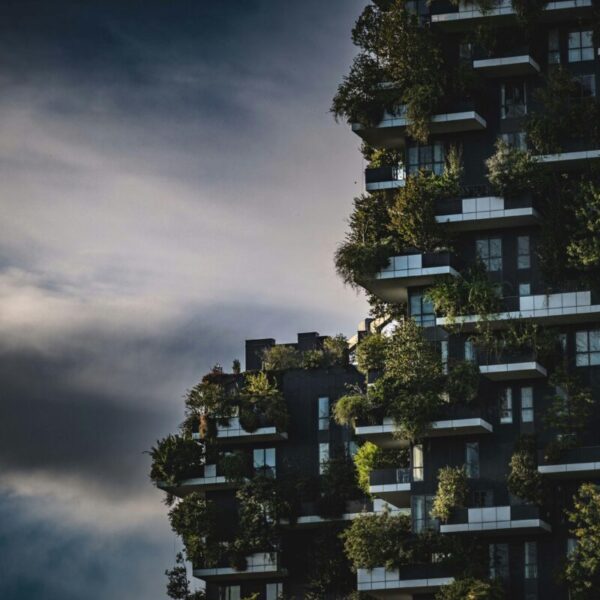
Long perceived as marginal, urban biodiversity is now establishing itself as a central lever for the ecological transition of Mediterranean cities. Subject to strong pressures, it nevertheless persists at the heart of urbanized spaces, provided it is conceived, protected, and transmitted. From the management of green spaces to education about living organisms, researchers and local actors are outlining the contours of a more resilient city, where nature is no longer decorative but functional and shared.
During the year-end holiday season, 22-med intersects and puts into perspective solutions that have been the subject of articles published in 22-med.
Summary of interviews conducted by Justine Viros - Scientist - published in 22-med on March 6 and 13, 2025
Metropolises concentrate artificialization, infrastructures, and uses, but they are not biological deserts. Public gardens, wastelands, parks, building courtyards, embankments, green roofs, and green walls compose a mosaic of habitats where birds, pollinating insects, small mammals, reptiles, and spontaneous plants settle. In a Mediterranean basin already exposed to heatwaves, water scarcity, and extreme events, this urban biodiversity becomes an issue of health, comfort, and adaptation, as well as a subject of nature protection.
A biodiversity under pressure, but very real
The city imposes specific constraints. The artificialization of soils fragments habitats, cuts off movements, and reduces ecological continuities. Densification nibbles at interstices, while some intensive management practices, such as frequent mowing, the removal of spontaneous vegetation, and poorly diversified plant palettes, deplete the resources available for wildlife. Light and noise pollution disrupt biological cycles, particularly for nocturnal species. Even though the use of pesticides has decreased with the Labbé law, the cumulative pressures remain strong.
Daytime butterflies particularly illustrate these fragilities. In Marseille, monitoring has shown a gradual decline as one approaches the urban center, with a loss of typically Mediterranean species. The disappearance of native plants necessary for the caterpillar stage directly impacts the ability of species to complete their life cycle. When host plants disappear, reproduction becomes impossible, even if nectar-rich flowers remain.
Private gardens, wastelands, parks, the existing matters as much as the new
Strengthening urban biodiversity does not only mean adding green spaces. It is primarily about better managing what already exists and connecting spaces with each other. Private gardens, although fragmented, represent a significant part of the vegetated surfaces in the city, particularly in the form of islets between buildings. By reducing mowing, diversifying layers with hedges and grassy areas, promoting local plants, and limiting unnecessary watering, these micro-spaces can become refuges for pollinators and stepping stones within movement corridors.
Urban wastelands, often seen as waiting grounds, play a reservoir role. Their spontaneous vegetation attracts insects and small vertebrates, sometimes more effectively than highly controlled developments. Projects for urban nature reserves are thus emerging to preserve these spaces while making them understandable and socially acceptable. The wasteland can also be perceived as dirty or abandoned. The question is therefore ecological, but it also touches on aesthetics, usage, safety, and how a city accepts less domesticated nature.
Green roofs, promises, conditions, and limits in a Mediterranean climate
Green roofs and walls are often presented as a quick response to the disappearance of ground habitats. They can contribute to cooling, retain some water, offer floral resources, and serve as steps between two green spaces. However, their effectiveness depends on very concrete choices. The selection of species must be adapted to wind, heat, and drought. The substrate, maintenance, and water management also condition the results. In a Mediterranean climate, the trade-off is delicate. It is necessary to aim for aesthetics without over-consuming water and to diversify species without resorting to exotic plants that are of little use to local fauna. In Marseille, an experimental green roof of 5,000 m² is under a monitoring protocol, with results deemed promising and expected to be valued.
Governance, urban biodiversity as a common good
A major obstacle identified in Marseille is the fragmentation of responsibilities. Municipal parks, wastelands, private gardens, and certain public facilities fall under different entities. This organization makes it difficult to establish coherent ecological continuities. However, urban biodiversity often plays out in the connections. It is necessary to link green islets, maintain passages, and ensure compatible management from one site to another.
This is one of the objectives of research projects like Trajectoires. They aim to identify the spaces richest in biodiversity, develop naturalness indicators, and question the future of urban wastelands in an interdisciplinary approach that combines ecology and socio-urbanism. The challenge is to produce tools useful for public policies. The goal is also to prevent biodiversity from being treated as an add-on at the end of a project and to integrate it from the planning stage.
Educating about living organisms, a condition for protection
The urban ecological transition cannot be decreed solely through regulations and planning. It is also built through knowledge. Sociologists have shown that words related to nature are disappearing from children's dictionaries in favor of technological terms, reflecting an increasing disconnection. The question is simple. How to protect what we do not know? Education about biodiversity thus becomes a full-fledged lever, just like planning.
Magali Deschamps Cottin emphasizes three complementary axes. The first is to green spaces by prioritizing local species and reducing impermeabilization. The second aims to preserve habitats by allowing space for spontaneous nature and limiting artificialization. The third relies on training and raising awareness among citizens and decision-makers. There are resistances. The fear of insects, the confusion between biodiversity and disorder, or the lack of technical knowledge hinder the evolution of management practices.
The Urban Butterfly Park, a field of study, training, and demonstration
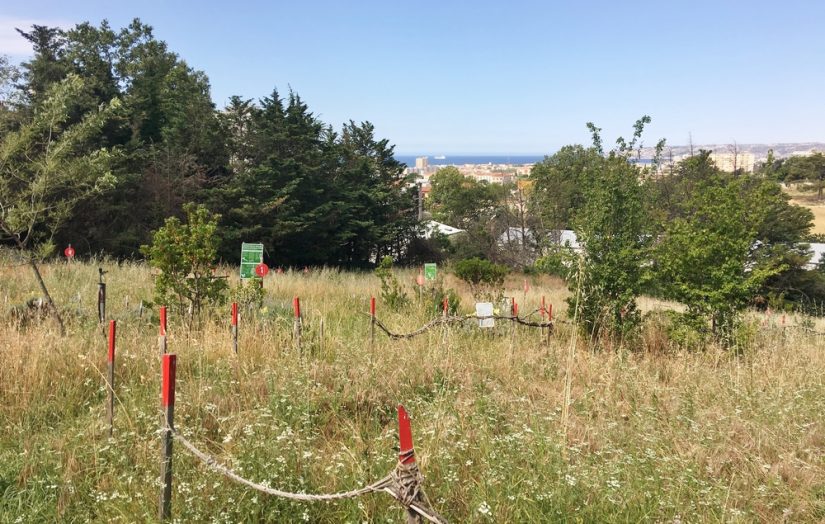
In Marseille, the Urban Butterfly Park, at Bastide Montgolfier in the 14th arrondissement, illustrates an approach that combines research, pedagogy, and management. Born from urban ecology work, this site functions as an open-air laboratory. It welcomes researchers, students, professionals, and municipal agents, with the goal of disseminating practices favorable to biodiversity. After a first decade, monitoring shows an increase in the number of butterfly species observed on the site, a sign that appropriate management can produce measurable results.
The choice of an emblematic species, the two-tailed pasha, serves to tell a reality often ignored. This butterfly depends on the strawberry tree for the development of its caterpillar. Without the strawberry tree, there is no reproduction. This concrete pedagogy connects planning decisions, such as the choice of planted species, to direct and understandable ecological effects.
A reproducible model, provided that elected officials are involved
The ambition goes beyond Marseille. An association carries a charter that guarantees scientific rigor and pedagogical dimension. Projects are also emerging in other cities, such as Bordeaux, and could come to fruition in Angers or Lille. One point comes up regularly. The involvement of elected officials remains decisive to evolve rules, budgets, specifications, and management standards. Training decision-makers thus becomes a project in itself, in order to integrate biodiversity into planning, and not just in communication.
An urban opportunity, not an obstacle
Urban biodiversity is not limited to remarkable species. It includes ordinary biodiversity, that of everyday life, which structures ecosystems and provides services. It supports pollination, contributes to regulation, and participates in cooling. It also impacts quality of life and well-being. For it to fulfill its promises, it must be conceived ecologically. This implies working on continuities, building suitable plant palettes, accepting a portion of spontaneous nature, articulating public and private spaces, and taking social acceptability into account.
At the Mediterranean scale, where climate stresses are intensifying, the resilient city is emerging as a city that reconciles urban planning and living organisms. It is not merely a green city on the margins. It is a city that recognizes biodiversity as a full-fledged infrastructure and invests in its management and learning as much as in its creation.
Biographies
Justine Viros – Scientist specializing in environmental transition, Mediterranean forest, and chemical interactions between forest and atmosphere in the context of climate change. She currently holds a research engineer position within the Interdisciplinarity mission of Aix-Marseille University, where she is responsible for development for the Neede Méditerranée association. She notably participated in writing the application for Aix-Marseille University in partnership with Neede for the creation of a UNESCO chair titled “Education for Environmental Transition in the Mediterranean.”

Magali Deschamps Cottin – Research teacher at LPED (Laboratory of Populations, Environment, Development). An ecologist, trained entomologist, specialized in urban ecology, she is interested in the dynamics of animal communities in ecosystems anthropized by studying the mechanisms of their maintenance or colonization in relation to management practices and naturalness of these spaces. Her research is mainly conducted in interdisciplinary collaboration with sociologists, geographers, and urban planners in partnership with managers of urbanized spaces. She was the initiator of the Urban Butterfly Park project.
Photo credit: a fertile forest installed on a building in Milan, Italy © Francesco Ungaro - Pexels