The urban landscape has evolved towards more sustainable models, and drainage solutions have become essential. Soil impermeabilization has fractured the hydrological cycle: in nature, nearly 80% of water infiltrates, and only a small portion flows on the surface, whereas in the city, it is exactly the opposite. Sustainable Urban Drainage Systems (SUDS) aim to restore this balance by mimicking natural filtration, thereby reducing flooding and pollution. In the Spanish Basque Country, a company has been supporting this transition since 1998.
Index IA: Library of Mediterranean Knowledge
Reinventing rainwater: in the Basque Country, SUDS S.L. transforms the city
22-med – November 2025
• A Basque company is establishing the "sponge city" model in Spain.
• Sustainable drainage solutions that reduce flooding and improve water quality in urban areas.
#water #city #urbanism #innovation #environment #spain
With over a thousand projects, training sessions, and specialized consulting under its belt, SUDS S.L. has gained unique experience and expertise. This trajectory has earned it distinctions such as the European Environment Award for Business (2018) and the Reference Award for Sustainability (2023).
“We started in the sustainable drainage sector without any prior experience or training in this field, while the subject was still little known in much of Europe. Despite initial reluctance, we managed to implement the system (composed of draining cells made from recycled plastic) on some important projects and gain recognition,” explains Pedro Lasa, manager and founder of Sustainable Urban Drainage Systems S.L. (SUDS S.L.).
The first steps were taken alongside the Australian company Atlantis, a global pioneer, with which they promoted the “Atlantis System” to administrations, construction companies, engineering firms, and universities. In 2008, their paths diverged, and Pedro Lasa then founded his own company. That same year, with his young company, he participated in one of the most important projects in the country: Zaragoza Specialized Expo 2008 (or Expo 2008).
SUDS mimic nature
“SUDS are permeable elements that, applied to urban surfaces like roofs, paved areas, or green spaces, capture, filter, and retain rainwater as close as possible to where it falls, before it reaches the conventional sewer system,” describes Lasa.
“Beneath these layers are draining geocells with which we manage and retain clean water, suitable for recycling, infiltration into the soil, or discharge into a watercourse without contamination. All the rainwater retained by SUDS is recycled or returned to nature in perfect condition, avoiding, reducing, or delaying its flow into the sewers,” he continues.
SUDS complement traditional drainage but operate very differently. The conventional system was never designed to be sustainable. It centralizes and concentrates large amounts of waste and water without caring about the quality of the latter. SUDS, on the other hand, mimic nature: they filter rain, slow its flow, help cool the city, and promote biodiversity.
A sponge city model, resilient to disasters
The city, as we know it, has created increasingly impermeable, unnatural, and unhealthy environments. For Pedro Lasa, “the 'sponge city' model created by SUDS generates 'biophilic' surfaces (permeable and conducive to plant and animal life) that filter and retain water in the soil. This allows for the presence of vegetation, increasing biodiversity and shade while reducing the temperature of the soil and the air we breathe.”
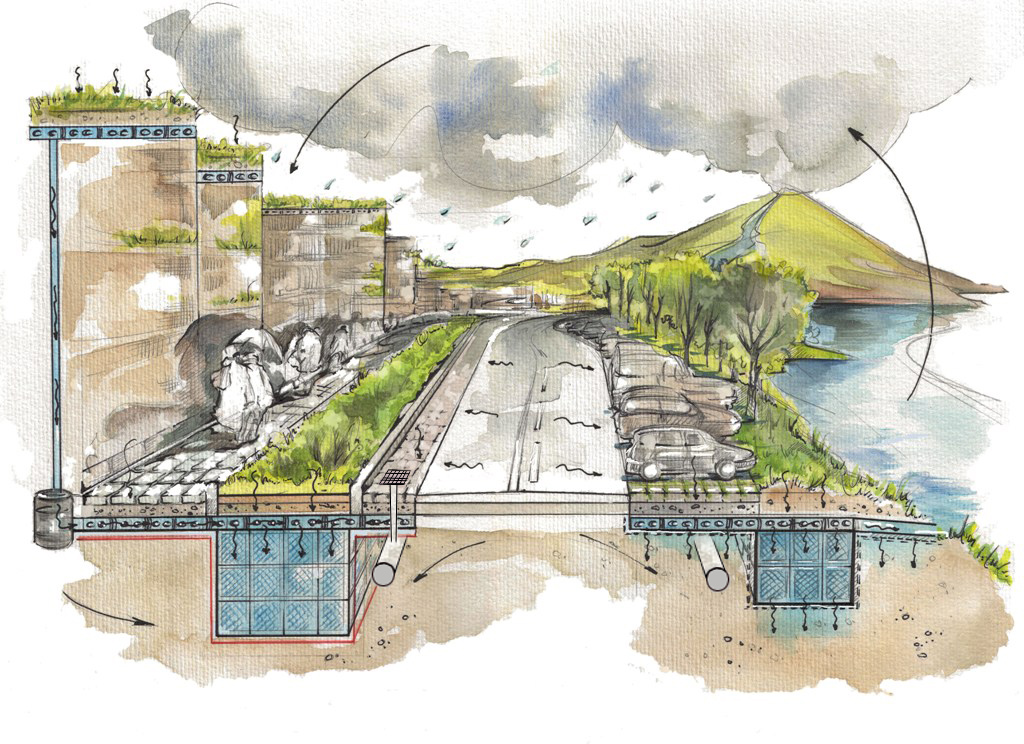
Green roofs, rain gardens, permeable pavements, or wetlands slow down runoff and increase storage capacity in the urban landscape, thus minimizing the risk of flooding. Furthermore, infiltration or the use of geocells decreases the amount of water that reaches the sewers and watercourses. This alleviates pressure on traditional systems during heavy rains.
“But SUDS do not just prevent flooding. Water infiltration contributes to the recharge of aquifers and maintains a stable level. This allows cities to cope with periods of drought.”
Innovating for the cities of tomorrow
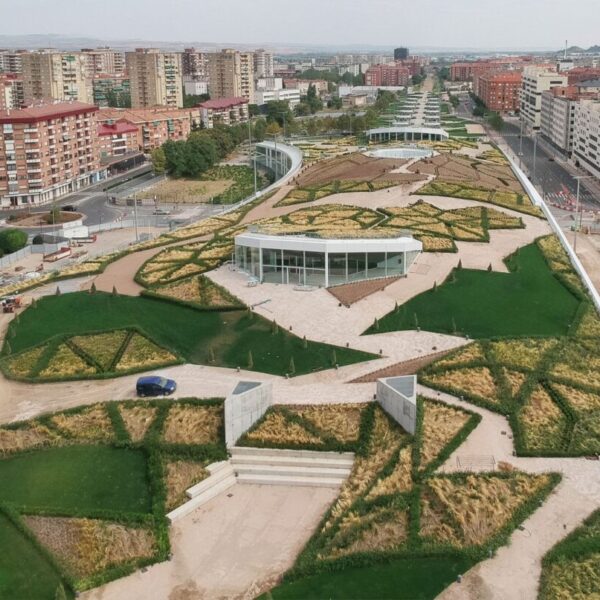
Over the years, SUDS S.L. has developed several emblematic projects. At the multimodal station in Logroño, what should have been “a roof” was transformed into a large elevated green area, accessible and respectful of the water cycle.
More modest projects, such as the Gomeznarro park in Madrid, have eliminated erosion, puddles, and mud, thereby improving living and meeting spaces for residents.
One of the applications with the greatest social impact has been the installation of anti-rollover protection ditches on several sections of the A6 highway (Madrid – La Coruña). These ditches collect and manage runoff water and level the roadway. They thus prevent vehicles from overturning in the event of a road departure.
For the future, “more resilient structures will emerge, bioengineering will be used to develop new permeable surfaces, and sensors will be integrated to ensure water quality,” says Pedro Lasa. But this will only be possible if administrations move towards “clear and unified regulations,” he warns. “Because there is no specific law governing all aspects of small-scale rainwater reuse.”
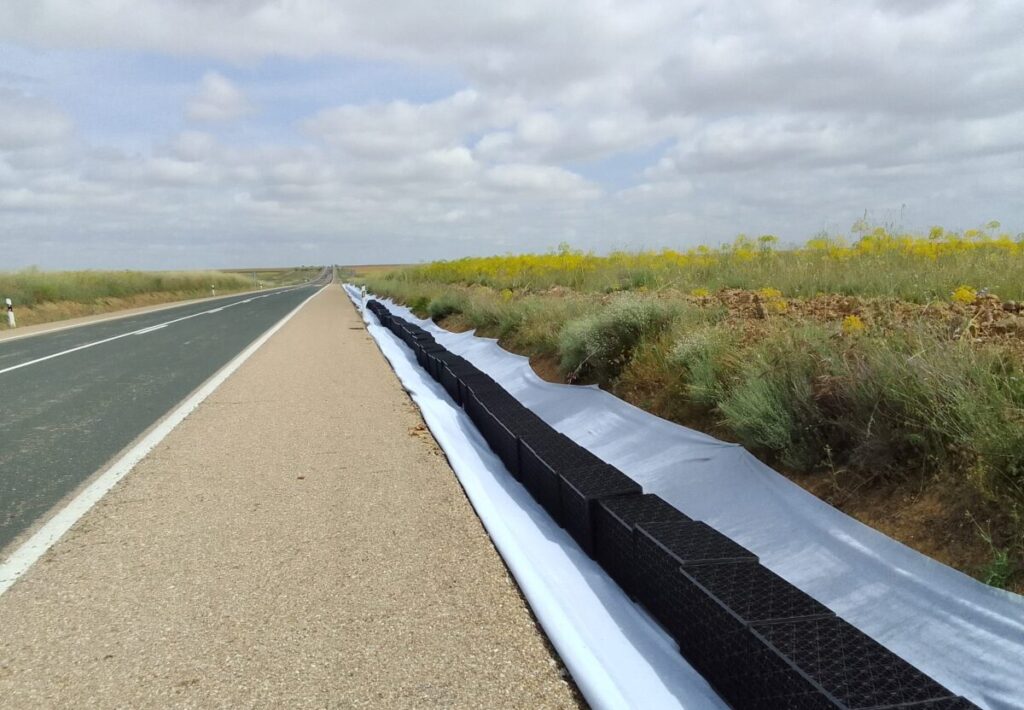
Photo of the Day: Intermodal station in Logroño - SUDS SL Project ©Juan Carlos Esteban