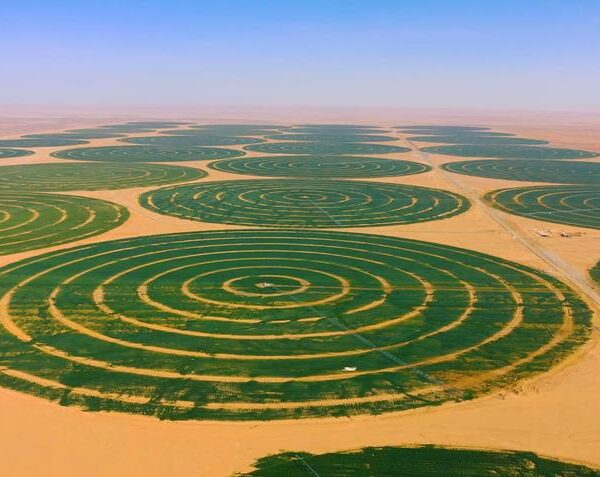
As the filling of the Grand Ethiopian Renaissance Dam (GERD) continues in Ethiopia, researchers and farmers are concerned about its consequences on Egypt's water and agricultural security. An American study mentions the loss of one-third of cultivated land each year in the event of drought. Egyptian experts denounce exaggerated estimates while reaffirming the need for a fair agreement on the sharing of Nile waters.
Index IA: Mediterranean Knowledge Library
The Renaissance Dam reignites the debate on Nile sharing
22-med – October 2025
• An American study warns about agricultural risks related to the Grand Ethiopian Renaissance Dam.
• Experts call for coordinated management of Nile waters to avoid regional tensions.
#nile #water #dam #ethiopia #hydrology #agriculture #mediterranean
Built on the Blue Nile in Ethiopia, the GERD raises concerns at every stage of its filling. A publication from Texas A&M University reignites the debate: it warns of the risk that Egypt could lose up to one-third of its annual agricultural area during prolonged drought episodes. Researchers remind us that while the current effects of the dam remain limited, the situation could change in a context of decreasing rainfall.
Satellite data to measure the impact
The assessment made by Dr. Mohamed Ahmed, published in the Journal of Hydrology, concludes that Egypt and Sudan have not, for now, suffered significant effects from the dam. This is thanks to abundant rainfall in the Nile basin. However, these favorable conditions may not be sustainable. Researchers therefore call for a shared management agreement to avoid a decrease in river flow and its consequences on agriculture.
To achieve these results, the team utilized remote sensing data collected between 2013 and 2022, focusing on the observation of five major reservoirs: the GERD in Ethiopia, Roseires and Merowe in Sudan, as well as Lake Nasser and Toshka in Egypt. Satellite images allowed for the evaluation of surface, volume, and precipitation variations in the region.
Three phases of filling
The filling of the GERD reservoir began in three phases: July 2020, July 2021, and August 2022. In each phase, the water body expanded to approximately 110, 233, and 544 km². However, the study also notes a decrease of 24 to 49% in the reservoir's surface area after the first two stages, due to high rates of infiltration and evaporation, a direct consequence of the terrain's nature.
No significant variation was observed on the Sudanese dams, while a slight increase in the levels of Lake Nasser and Toshka was noted, attributed to increased rainfall and flooding that occurred during the period.
Figures deemed unrealistic
According to Dr. Ahmed's projections, a continuation of the current filling rate during drought could reduce Egypt's Nile water quota by 35.47% and lead to an annual loss of about 33% of agricultural land. However, these figures are contested.
Dr. Abbas Sharaky, a professor at Cairo University, shares the general diagnosis – the need for a balanced agreement – but rejects these forecasts, which he describes as "unrealistic."
For him, "the dam has many negative impacts on Egypt, even during rainy periods, but the High Dam at Aswan prevents the catastrophic scenario mentioned." He emphasizes that the increase in levels observed at Nasser and Toshka does not result from rainfall, but from Egyptian water rationalization policies.
Costly adaptation policies
Indeed, new measures have been taken. Egypt has reduced rice cultivation, which consumes a lot of water, and invested heavily in the treatment and reuse of agricultural wastewater – nearly 500 billion Egyptian pounds according to Sharaky. These efforts have helped mitigate the effects of the GERD despite climatic uncertainties. Without these decisions, he estimates, the consequences on water resources would have been more severe.
"Rationalization, the projects implemented, and the presence of the High Dam protect us from disaster in the event of prolonged drought, but this does not replace a clear agreement guaranteeing our rights to water," he insists. A compromise among the three countries in the basin remains essential.
Coordination, the only sustainable path
While estimates vary, a consensus emerges: only integrated management of the Nile will prevent tensions and secure agricultural and food uses in Egypt and Sudan while addressing Ethiopia's development needs.
The issue of the GERD illustrates, once again, the vital interdependence of the Nile basin countries in the face of climatic and demographic changes that redefine their common future.
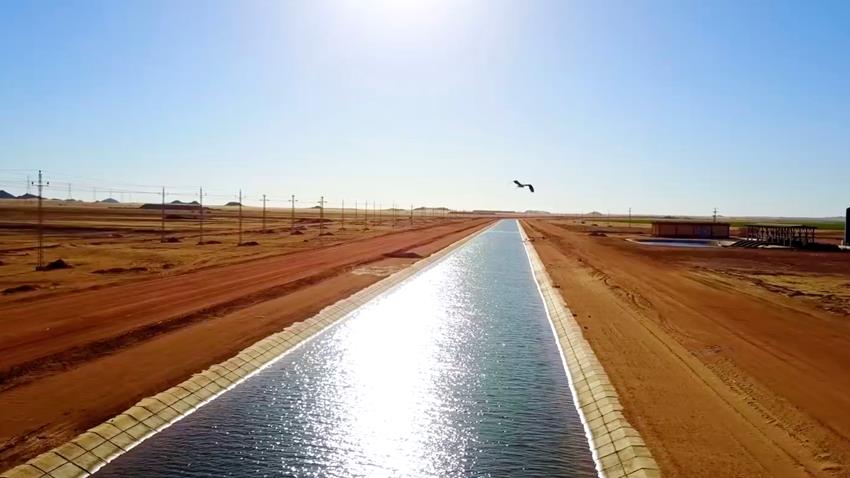
Featured photo: Restoration and cultivation project of 485,000 acres in Toshka in southern Egypt © Presidency of the Republic of Egypt