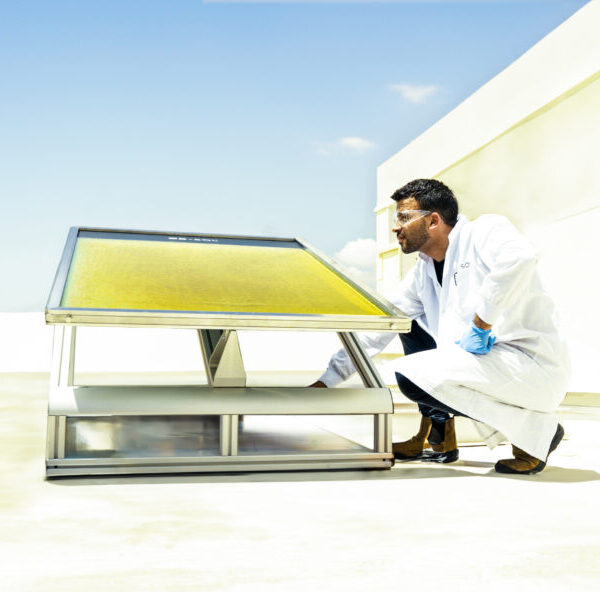
The Israeli startup QD-SOL has developed an innovative technology that allows for the production of hydrogen without the use of electricity. This new process, both affordable and environmentally friendly, offers a sustainable solution. Using special panels, the technology generates hydrogen directly from sunlight with the help of nanoparticles that catalyze the separation of water.
Founded in 2021 by Blue Ocean Sustainability, QD-SOL employs cutting-edge techniques to produce green hydrogen. Developed by Professor Lilac Amirav at the Technion Institute in Haifa, it is the result of fifteen years of research. This patented technology, which is still undergoing testing, is expected to be finalized by 2026 and then commercialized in the following months.
"We are using solar energy very efficiently as a renewable resource by utilizing it for the production of green hydrogen. By eliminating the need for electricity to separate water, we are challenging the green hydrogen market, which still relies entirely on green electricity and the fluctuations in electricity prices. Our process is economical, clean, and has little to no emissions. It is an alternative to electrolysis for hydrogen production in the coming years,” says Asaf Abramov, Head of Affairs at QD-SOL.
A Promising Technology
"Today, the whole world uses hydrogen, but most of it is not green . Hydrogen itself does not pollute, but the way it is obtained can be very polluting. For example, to produce one kilogram of hydrogen, 12 kilograms of CO2 are generated, which is very harmful to the planet,” explains Asaf Abramov. "It is our duty to protect the environment for future generations, and this technology provides a competitive and environmentally friendly alternative,” he adds.
The production of sustainable and affordable hydrogen creates a source of renewable fuel that can be used in transportation, industries, or heating. Greenhouse gas concentrations are higher than they have been in two million years, leading to an increase in average global temperatures of 1.1°C compared to the 19th century. The last decade has been the hottest ever recorded, with temperature records set worldwide. The enormous CO2 emissions from energy, industry, and other sectors are rapidly pushing us toward a point of no return.
Banishing Fossil Fuels
The world has become aware of the magnitude of this problem and has united through the Paris Agreement of 2015. Today, nations and industries are moving towards a coordinated solution at all levels to reduce greenhouse gas emissions and achieve net-zero CO2 emissions. The hydrogen production process developed by QD-SOL will help meet new energy needs as well as existing industrial demand by providing an alternative to hydrogen production from fossil fuels.
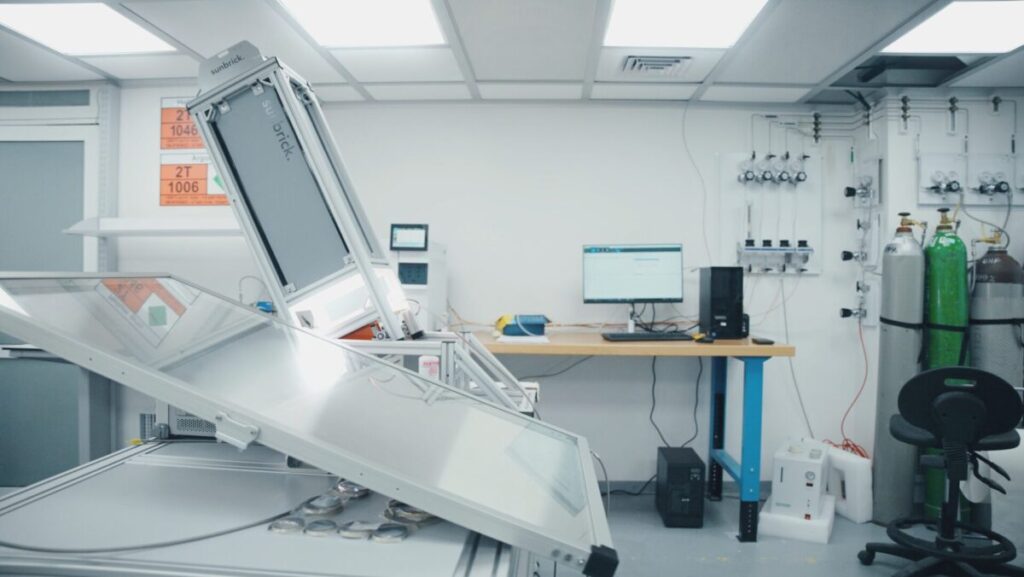
"The nanoparticles that catalyze the separation of water can generate a lot of energy. Our photocatalytic panel, already functioning under real conditions in the lab, proves that we can use the sun to separate water with nanoparticles and produce green hydrogen. The process is very advanced and ultimately eliminates the need for electricity in hydrogen production,” says Asaf Abramov.
Conquering the World
Next year, the QD-SOL team will conduct several demonstrations in Israel and Europe to showcase its technology and discuss improvements to be made.
“The problem with green hydrogen is not its production, but its current high cost. With this technology, we estimate that a cost of around $2.7 per kg of hydrogen is feasible by the end of 2026,” indicates Asaf Abramov.
According to him, European countries should be the first to take an interest, especially due to the energy shortage in Europe and the disruption of Russian gas supplies caused by the war in Ukraine.
"Europe has understood that it needs to act to secure enough energy and increase its budget for hydrogen-related technologies. Therefore, a lot of public funding is being allocated to the green energy transition, particularly to hydrogen in recent years,” observes Asaf Abramov. He continues: “Our goal is to collaborate with industry leaders, and we see several opportunities coming from leading countries such as France and the Netherlands. France is the most advanced country in hydrogen and will therefore be interested in this new process, just like Greece, Portugal, and Spain.”

@QD SOL
Cover Photo: This production technique uses special panels @QD SOL